You might feel confident in your general link building knowledge, but when it comes to search engines, one size rarely fits all. Bing link building requires a nuanced approach, distinct in several ways from strategies optimized purely for Google. Bing's algorithm, for instance, gives different weight to factors like social signals and the age of linking domains. Understanding these specific preferences is key to crafting a link building campaign that truly moves the needle on Bing. This piece will explore those critical differences, showing you how to adapt your efforts effectively and build links that Bing values, ultimately improving your site's visibility.
Key Takeaways
- Focus on High-Value Links: Earn backlinks from websites that are both respected in your field and directly related to your content; Bing sees these as strong trust signals for your site.
- Use Bing Webmaster Tools Strategically: Dive into Bing Webmaster Tools to understand your existing backlinks and how Bing views your site, paying attention to factors like social engagement to fine-tune your approach.
- Build with Great Content and Adapt: Create content that others naturally want to link to and cultivate genuine connections in your niche, while regularly reviewing your results to adjust your link-building plan for sustained Bing success.
What is Bing Link Building?
If you're aiming to improve your website's visibility on Bing, getting a handle on link building is a smart move. Essentially, it’s a core part of search engine optimization (SEO) that involves acquiring hyperlinks from other websites to your own. These links act like pathways for users moving between web pages and are also a significant factor in how search engines, including Bing, rank your website. Think of them as digital recommendations or endorsements from one site to another, signaling that your content is worth checking out.
Link Building: Its Role and Importance for Bing SEO
So, what exactly is link building? It's the process of getting other websites to link to yours. These incoming links, often called backlinks, tell search engines like Bing that your content is valuable and trustworthy. For businesses looking to enhance their presence on Bing, a thoughtful link building strategy can significantly improve search result rankings and increase overall brand awareness.
It's worth noting that link building is far from an outdated tactic. It has evolved and, in many ways, is more important than ever. Modern approaches to link building now prioritize the quality of links over sheer numbers and often work hand-in-hand with content marketing and public relations efforts. Adapting your strategy to these current best practices is key for achieving success on Bing.
How Bing's Algorithm Assesses Backlinks Compared to Google
While the fundamental ideas behind link building apply across different search engines, Bing's algorithm evaluates backlinks with its own set of criteria, which can differ from Google's. Understanding these distinctions can help you tailor your efforts more effectively for Bing. For example, Bing considers both the quantity and the quality of the backlinks pointing to your site.
According to insights from LinkGraph, Bing also tends to give more weight to social media signals, such as shares and likes, when determining a page's authority. It might also be slightly more accepting of keyword-rich anchor text, although using natural, descriptive language is still the recommended approach. Another interesting aspect is Bing's valuation of older, more established domains, which can influence the credibility of links from these sources. Recognizing these nuances allows you to refine your link-building activities specifically for Bing's search environment.
Effective Ways to Build Links for Bing
Building links for Bing involves a mix of proven SEO tactics with a few nuances specific to its algorithm. These effective strategies focus on quality and relevance to help you gain traction. By understanding what Bing values, you can tailor your link-building efforts for better results on this search engine. Let's explore some practical ways to acquire links that can positively influence your Bing rankings.
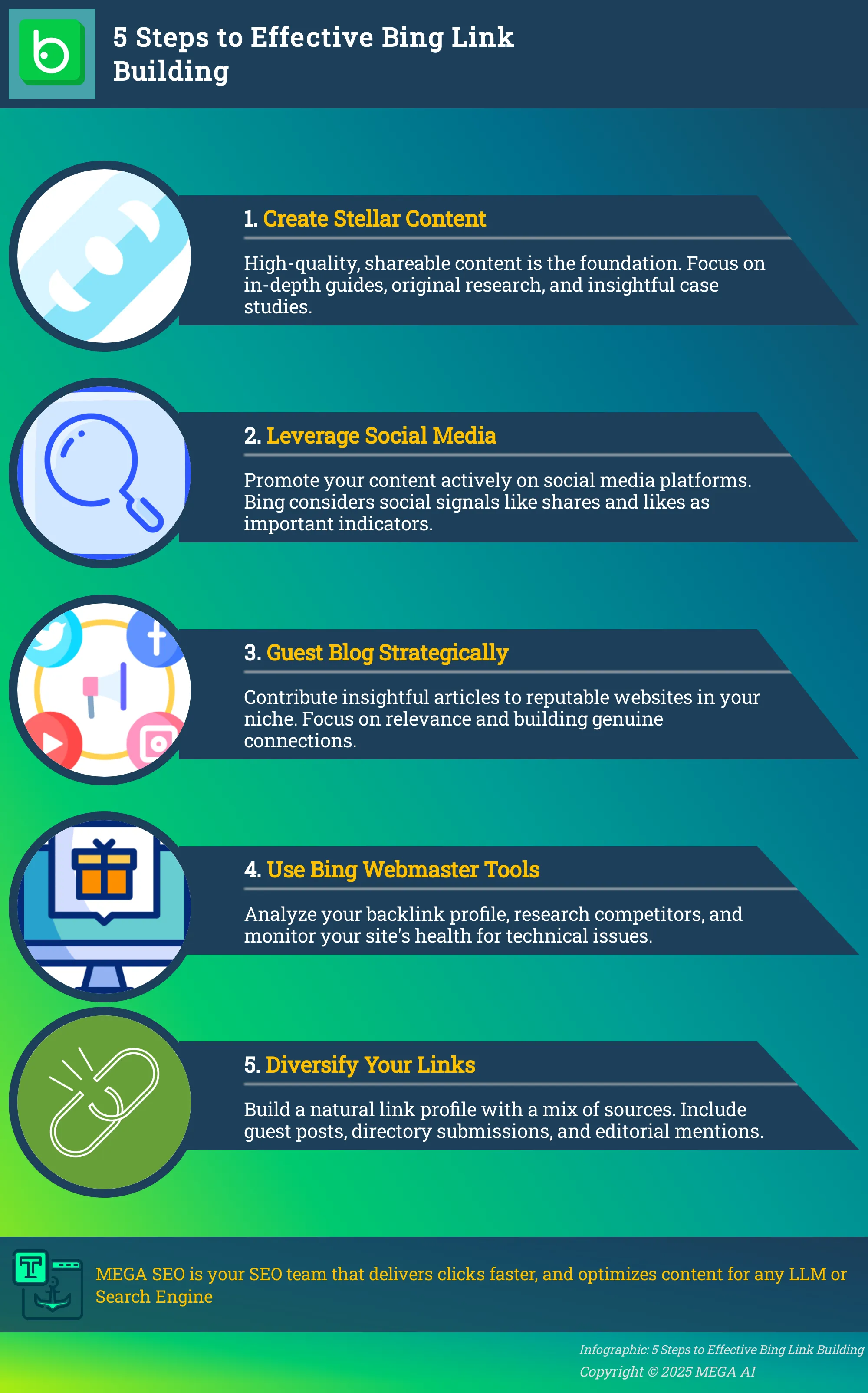
Create High-Quality, Shareable Content
The absolute cornerstone of any successful link-building strategy, whether you're focusing on Bing or Google, is the creation of content that people find genuinely valuable and feel compelled to share. This means going beyond surface-level information to produce in-depth guides, original research findings, or insightful case studies that truly serve your audience's needs. When your content offers unique perspectives or solves real problems, other websites are naturally more inclined to link to it as an authoritative and trustworthy resource. This organic approach is key to building sustainable domain authority.
Use Social Media Signals
Bing's algorithm gives notable consideration to social media signals, such as the volume of shares, likes, and overall engagement a piece of content receives. Content that resonates strongly on platforms like X (formerly Twitter), Facebook, or LinkedIn often receives more favorable treatment in Bing's search rankings. Therefore, it's a smart move to actively promote your best work across your relevant social channels and foster interaction. While Bing might be slightly more accommodating of keyword-rich anchor text from social shares compared to Google, it’s still best practice to ensure any anchor text used sounds natural and provides a clear, positive user experience.
Implement Guest Blogging and Outreach
Contributing well-crafted, insightful articles to other reputable websites within your industry—a practice commonly known as guest blogging—remains a highly effective method for earning valuable backlinks. This strategy extends beyond just securing links; it also plays a crucial role in helping to enhance your brand's authority and increase its visibility within your specific niche. When conducting outreach, concentrate your efforts on identifying sites that are genuinely relevant to your expertise and where your contributed content can offer tangible value to their existing readership, creating a win-win scenario.
Strengthen Local SEO with Directory Submissions
For businesses that serve a local clientele, strategically submitting your business information to high-quality, relevant online directories can provide a significant lift to your Bing SEO performance. The key here is discernment: focus on authoritative local or industry-specific directories rather than broad, low-value ones that offer little benefit. Accurately listing your business in these reputable directories helps improve your overall visibility and credibility in Bing's local search results. Always ensure your Name, Address, and Phone number (NAP) details are meticulously consistent across all online platforms, as this uniformity is vital for building trust with search engines and potential customers alike.
Use Bing Webmaster Tools for Link Building
If you're looking to give your website a real edge on Bing, getting familiar with Bing Webmaster Tools is a smart move, especially for your link-building strategy. Think of it as Bing’s command center for your site, similar to Google Search Console, but with its own set of powerful tools. It’s designed to give you a clear picture of how your site is performing in Bing search, and for link building, it’s invaluable. You can dig into your current backlinks, find new chances to earn links, and keep your site in top technical shape, which makes it much more appealing for others to link to. Let's walk through how you can make the most of this platform.
Key Link Analysis Features to Know
Bing Webmaster Tools isn't just for checking if Bing can find your site; it offers a deep dive into your site's SEO. As the folks at Marketing Labs UK explain, "Bing Webmaster Tools is like Google Search Console but arguably offers more features. It provides insights into website SEO performance, including backlinks, keyword monitoring, on-page optimization, and technical issues." When it comes to building links, the standout features are those that let you scrutinize your backlink profile. You can see exactly which websites are sending links your way, the specific anchor text they're using, and even how your link profile stacks up against your competitors. Getting a handle on these details is your first step toward a more effective link-building plan for Bing.
How to Use the Backlinks Report
The Backlinks report within Bing Webmaster Tools is where you'll spend a good amount of time understanding your site's link landscape from Bing's point of view. This report is more than just a simple list; it allows you to thoroughly analyze your backlink profile. You'll find details on the domains linking to you, the exact URLs on those sites that point to your pages, and the anchor text used in those links. By regularly checking this report, you can pinpoint your strongest links (and think about how to get more like them), identify any potentially low-quality links you might want to address, and notice patterns in how other sites are talking about your content. This insight is key for finding opportunities to earn more valuable links and boost your site's credibility with Bing.
How to Analyze Competitor Backlinks
One of the smartest ways to uncover fresh link-building opportunities is by looking at who’s linking to your competitors. Bing Webmaster Tools makes this straightforward with its Backlinks report, allowing you to compare your profile to competitors and see where they're getting their link juice. Simply pop a competitor's domain into the tool, and you can discover websites that link to them but haven't yet linked to you. These sites are prime candidates for your outreach efforts. Pay attention to the high-quality, relevant sites in their backlink list and brainstorm how you could earn a similar link – perhaps by creating even more comprehensive content or offering a unique resource. This kind of competitive research is fundamental to building a strong link strategy.
How to Monitor Site Health and Fix Issues
A website that's technically sound is far more likely to attract and keep good backlinks. Bing Webmaster Tools helps you stay on top of your site's technical health with tools like its Site Scan feature. It's a good practice to "conduct regular Site Scans to identify and fix on-page SEO issues," as Marketing Labs UK advises. These scans can flag problems such as broken internal or external links, pages that load too slowly, or errors that prevent Bing from crawling your site properly. Fixing these issues quickly means your link-building work won't be hampered by underlying technical glitches, making your site a much more attractive and reliable destination for other websites to link to.
Best Practices for Ethical Bing Link Building
When it comes to building links for Bing, think quality over quantity. Your goal is to earn links that Bing sees as genuine recommendations. This strategy helps you create a solid and lasting SEO foundation. Let's explore some key practices to guide your Bing link building.
Focus on Link Relevance and Authority
Think of relevance and authority as your main guides for link building. A link from a website closely tied to your industry is far more impactful than one from an unrelated site. Likewise, links from well-regarded, authoritative websites hold more value. As industry insights point out, "One of the most common mistakes in link building is relying on low-quality links from spammy websites...they can ultimately do more harm than good."
So, how do you apply this? Start by researching sites you'd like a link from. See if their content matches yours and if they're a reliable source. Several online tools can help you assess a site's authority. Prioritizing these factors helps ensure your link building positively impacts your Bing rankings. This commitment to quality aligns with Bing's Webmaster Guidelines.
Build Genuine Relationships with Other Websites
Link building is more effective when it's not just about asking for links. Try to build real relationships with other website owners and bloggers in your field. When you create genuine connections, chances for collaboration and natural link placements often follow. It’s like networking: authentic interactions make people more inclined to support you. Experts often say, "Put your energy into creating content that offers real value. Build genuine relationships with others in your niche."
A good starting point is to engage with content from sites you respect. Share their articles or leave insightful comments. When you decide to reach out directly, personalize your message and clearly outline how working together could benefit both of you. This method helps you get quality backlinks and also strengthens your brand's standing. These professional relationships can offer lasting advantages.
Diversify Your Link Profile
Putting all your link-building eggs in one basket isn't ideal. If your go-to method stops being effective, your progress could halt. A varied link profile, with backlinks from different kinds of trustworthy sources, looks more natural and is usually more robust. A frequent mistake is, "Using Only One Link-Building Tactic...it may be tempting to use it for all your link-building needs. This, however, comes with risks."
Aim for a healthy mix of link types. This might include links from guest articles, mentions in industry news, listings in respected local directories (particularly useful for local SEO), and links from resource pages. The important thing is that each link is given naturally and fits its context. Understanding the different types of backlinks can help you develop a comprehensive approach. This diversity shows Bing your site is a valuable resource.
Aim for Natural Link Growth
Search engines like Bing favor links that appear to be acquired naturally over time, not a sudden flood of artificial ones. This organic link growth often comes from creating great content that people want to share. If your content is valuable or engaging, others will link to it because it adds value to their own material. Keep in mind that "search engine policies now mean past overlooked errors can lead to penalties..."
Concentrate on regularly creating high-quality, linkable assets – think detailed guides, original studies, or helpful tools. After creating this content, promote it effectively through outreach and social media. While reaching out proactively is a valid part of a good strategy, steer clear of overly aggressive tactics. A consistent, organic rate of link building appears more trustworthy and is a more reliable way to improve your Bing rankings.
Common Bing Link Building Mistakes to Avoid
Building a strong backlink profile for Bing is a marathon, not a sprint. While it's tempting to look for shortcuts, some tactics can do more harm than good in the long run. Understanding common pitfalls helps you create a sustainable and effective link building strategy. If you sidestep these errors, you'll be well on your way to improving your site's visibility and authority on Bing. Think of it as building a sturdy house – you wouldn't want to use shoddy materials, right? The same principle applies to your website's backlinks. When you develop your strategy for Bing, being aware of what not to do is just as important as knowing what to do.
Taking the wrong approach can lead to penalties from Bing, which might mean your rankings drop or, in severe cases, your site gets removed from search results altogether. This isn't just a temporary setback; recovering from such penalties can be a lengthy and resource-intensive process. Moreover, investing time and money into flawed link building techniques is simply inefficient. You want your efforts to contribute positively to your site's growth, not create problems you'll have to fix later. By learning to identify and avoid these common mistakes, you can focus on building a high-quality, resilient backlink profile that genuinely supports your SEO goals. Let's explore some frequent missteps so you can keep your link building efforts clean and productive, ensuring your hard work pays off with better search performance.
Steer Clear of Buying Links or Link Schemes
It might seem like an easy win to purchase links or participate in link schemes to quickly increase your backlink count. However, this approach is a significant gamble. Bing, much like other search engines, is adept at identifying artificial link patterns. Relying on low-quality links from spammy or irrelevant websites can lead to penalties, diminishing your search rankings or even getting your site de-indexed. These schemes often involve exchanging money or services purely for links, without any genuine editorial endorsement. Instead of trying to game the system, focus your energy on earning links organically. This means creating valuable content that people naturally want to share and link to, and building genuine relationships within your niche. This path might take more effort, but it builds a foundation of trust.
Avoid Over-Optimizing Anchor Text
Anchor text is the clickable text in a hyperlink. While it's important for SEO, going overboard with exact-match keyword anchor text can signal manipulative practices to Bing. If every single one of your backlinks uses the exact same keyword phrase, it looks unnatural. Real websites tend to attract links with a diverse range of anchor texts, reflecting how people genuinely reference content. Imagine if all your friends referred to you using your full job title every single time they mentioned you – it would sound pretty strange. Similarly, your backlink profile should feature a mix of anchor text types: branded (your company name), naked URLs (e.g., www.yourwebsite.com), generic phrases (like "click here" or "learn more"), and variations of your target keywords. This diversity appears more organic to search engines.
Don't Neglect Linking Domain Quality
When it comes to backlinks, quality trumps quantity every time. A single link from a highly authoritative and relevant website can be far more valuable than dozens of links from low-quality or irrelevant sites. Building links from low-authority websites not only offers little SEO benefit but can also associate your site with spammy neighborhoods online, potentially leading to penalties. Focus your efforts on acquiring links from reputable sources within your industry or niche. These are typically websites with established credibility, good content, and a healthy engagement level. Before pursuing a link, take a moment to assess the potential linking domain's authority and relevance to your own content. This careful selection process is key to a strong backlink profile.
Adhere to Bing's Webmaster Guidelines
Bing, like all major search engines, provides Webmaster Guidelines that outline best practices for website owners. These guidelines explicitly detail what types of link practices are considered manipulative and should be avoided. Ignoring these rules can lead to penalties, as search engine policies are continuously refined to combat spam and low-quality content. It's crucial to familiarize yourself with these guidelines and ensure your link building activities are compliant. This includes avoiding tactics like hidden links, excessive link exchanges, and links from automatically generated content. Staying informed about what Bing considers acceptable practice, as detailed by experts, is fundamental to a successful and sustainable SEO strategy. Remember, these guidelines are there to help create a better, more trustworthy search experience for everyone.
Measure and Improve Your Bing Link Building
Building links for Bing isn't a set-it-and-forget-it activity. To ensure your efforts are truly making an impact and to refine your approach over time, you'll need to consistently measure your results and be ready to adapt. Think of it as tending a garden; regular attention and adjustments help it flourish and yield the best results. This ongoing process of analysis and improvement is key to long-term success.
Key Metrics for Tracking Success
To understand how your Bing link building is performing, you’ll want to keep a close eye on a few key indicators. Your Bing Webmaster Tools dashboard is an invaluable resource here. Make it a habit to regularly check the "Search Performance" and "SEO Reports" sections. These areas offer rich insights into how users are finding your site and how Bing perceives your incoming links. Pay particular attention to metrics such as the number of referring domains, the authority and relevance of those domains, and any shifts in your keyword rankings for the pages you're actively building links to. The Backlinks report is especially helpful for analyzing your backlink profile and can even help you spot new opportunities by seeing who links to your competitors.
Set Achievable Goals and Timelines
When you're mapping out your link building strategy for Bing, it’s important to set goals that are both ambitious and realistic. Focus your energy on creating genuinely valuable content that people naturally want to share, building authentic relationships with other site owners, and maintaining solid technical SEO practices. These foundational elements are crucial for sustainable success with Bing. Rather than aiming for a specific, often arbitrary, number of links overnight, establish practical timelines for your activities. For instance, you might set a goal to identify a certain number of outreach prospects each month or to publish a new piece of link-worthy content every quarter. This methodical approach helps you stay on track and measure your progress effectively.
Adapt Your Strategy Based on Performance
Even the most seasoned marketers can encounter challenges with link building. What works effectively today might need some adjustments tomorrow as search engine algorithms evolve and your competitive landscape shifts. This is why regularly reviewing your performance metrics is so important. If you notice that certain types of links aren't significantly impacting your Bing rankings, or if a particular outreach approach isn't yielding the desired results, don't hesitate to adjust your strategy. By identifying what isn't working, you can avoid common link building mistakes and redirect your efforts more effectively. This iterative process of measuring, learning, and adapting will ultimately lead to a stronger, more successful link building campaign for Bing and save you valuable time in the long run.
How Content Supports Bing Link Building
Content is the absolute cornerstone of any successful link building effort, and this principle is especially vital when you're aiming to improve your site's visibility on Bing. Think of it this way: without compelling, valuable content, what genuine reason does another website have to link to yours? High-quality, relevant content acts as a powerful magnet, naturally drawing in the kind of backlinks that Bing's algorithm values. It’s not just about churning out words; it’s about crafting pieces that offer authentic value—content that answers pressing questions, solves specific problems, provides unique, data-backed insights, or offers comprehensive resources. This inherent value is precisely what motivates other site owners, bloggers, and content creators to reference your work. Each of these references, or backlinks, signals to Bing that your site is a credible, authoritative, and trustworthy source of information within your niche.
Moreover, Bing pays close attention to how users interact with your content, which includes looking at signals from social media platforms. Engaging content that sparks conversations, gets shared widely, and earns likes can indirectly bolster your link building efforts by significantly increasing its visibility and overall reach. When a larger, more relevant audience sees your content, the probability of it being linked to by other websites naturally increases. Therefore, a content strategy that meticulously prioritizes exceptional quality, deep user engagement, and smart, targeted promotion is fundamental to earning the types of backlinks that can meaningfully improve your rankings on Bing. This holistic approach moves beyond the outdated tactic of simply acquiring links for quantity's sake, focusing instead on building a sustainable and respected online presence that is recognized for the genuine value it provides to users.
Develop Linkable Assets
Creating content that other websites genuinely want to link to is the heart of effective link building. These "linkable assets" are pieces of content so valuable, informative, or unique that they naturally attract backlinks. Instead of just writing standard blog posts, think about developing resources like in-depth research reports, comprehensive guides that cover a topic exhaustively, or interactive tools that solve a specific user problem. Data visualizations, such as infographics or charts presenting original data, are also highly shareable and can attract links organically. The key is to produce something that stands out and provides a distinct benefit, making it an easy choice for others to cite as a reference or resource on their own platforms. This strategy encourages organic link acquisition, which is favored by search engines like Bing.
Optimize Content for Bing Users and Its Algorithm
Once you have great content, it's important to ensure it’s optimized for both Bing's users and its algorithm. Bing emphasizes the quality and quantity of backlinks, but it also considers how well your content meets user needs. This means understanding the search intent behind keywords relevant to your audience on Bing and crafting content that directly addresses that intent. Make your content easy to read, well-structured with clear headings, and engaging with multimedia elements like images or videos where appropriate. Bing also gives more weight to social media signals, so content that is easily shareable and encourages social interaction can enhance its visibility and link potential. Remember, content that resonates with users is more likely to be shared and linked to, signaling its value to Bing.
Promote Content Effectively to Earn Links
Creating outstanding content is only half the battle; you also need to actively promote it to ensure it reaches the right audience and earns those valuable backlinks. Don't just publish and hope for the best. Utilize social media platforms to share your content widely; increased visibility is crucial for attracting links, especially on Bing where social signals carry weight. Engage with communities and influencers in your niche who might find your content useful. Another powerful approach is PR-driven link building. By creating truly valuable assets like original research, detailed guides, or compelling data visualizations, you can attract natural links from reputable sources looking for authoritative information to share with their audiences. Strategic outreach to relevant websites and publications can also help get your content in front of people who are in a position to link to it.
Use Social Media to Support Bing Link Building
Social media might not be the first channel you consider for link building, but it plays a surprisingly significant role when you're aiming to improve your site's visibility on Bing. If enhancing your rankings on Bing is a goal, integrating your social media activities with your link building strategy is a smart approach. It’s about crafting a more complete online presence that Bing’s algorithm can recognize and value. Think of your social media platforms as powerful amplifiers for your content, helping it reach a broader audience and, in turn, attract those important backlinks. Let's explore how you can make your social media efforts contribute more effectively to your Bing SEO.
Why Social Signals Matter to Bing
Bing pays close attention to social media activity when it evaluates a webpage's relevance and authority. It’s not solely about the quantity of links pointing to your site; Bing also considers the general buzz and engagement your content generates. Research indicates that Bing assesses both the quantity and quality of backlinks, but it places more emphasis on social media signals like shares and likes. This means a strong, active social media presence can directly influence your rankings on Bing. When people are actively sharing and engaging with your content on social platforms, it signals to Bing that your content is valuable and trustworthy, which can give your link building efforts an additional lift.
Strategies to Increase Social Media Engagement
To effectively use social media for your Bing link building, you need a clear plan to encourage people to discuss and share your content. Simply publishing a blog post and hoping for engagement isn't enough. You should actively promote your content across all your relevant social media channels. Consider which platforms your target audience frequents most and customize your sharing strategy for each. Encourage interaction by posing questions, creating polls, or developing visually appealing posts. The more visible your content becomes on social media, and the more engagement it garners, the greater the likelihood that other websites and bloggers will discover it and decide to link back to it. This indirect method of earning backlinks is particularly beneficial for Bing.
Convert Social Mentions into Backlinks
The core of turning social media attention into actual backlinks lies in creating content that people genuinely find useful and feel compelled to share. Concentrate on producing high-quality, valuable, and engaging material that naturally encourages others to link to it. This could take the form of in-depth guides, original research findings, compelling infographics, or practical tools. When your content truly connects with your audience, they are more inclined to mention it on social media and, more importantly, link to it from their own websites or blogs. This principle of creating valuable content is effective for earning links that both Bing and Google recognize. Consistently developing link-worthy assets is a fundamental aspect of any successful SEO strategy, including your initiatives to rank higher on Bing.
The Future of Link Building for Bing
The landscape of search engine optimization is always changing, and link building for Bing is part of that evolution. As Bing refines its algorithms and how users experience its search results, understanding what’s on the horizon is important for your site's visibility. Staying informed helps you adapt your strategies proactively, ensuring your efforts continue to deliver. The focus is steadily moving towards more sophisticated, user-centric approaches, and preparing for these shifts will offer a competitive advantage.
Upcoming Trends in Bing's Algorithm
Search engines are continually improving their ability to understand the real value behind each link. It's anticipated that Bing will further enhance its capacity to identify link quality. We've seen how "search engines like Google have become increasingly adept at identifying spammy or irrelevant links," and it's quite plausible that "As Bing continues to evolve, it is likely to adopt similar strategies to ensure that only high-quality, relevant links contribute to a site's ranking." This means the source, context, and authority of your backlinks will carry even more weight. Low-quality or manipulative link building tactics will likely face stricter evaluation, making a thoughtful SEO strategy more crucial than ever.
The Increasing Role of User Engagement
How people interact with your content is becoming a more significant signal for search engines, including Bing. Genuine engagement often leads to organic link acquisition. As industry insights suggest, "Building genuine relationships with others in your niche is becoming essential. Engaging with your audience and fostering community can lead to more organic backlinks." This involves more than just publishing content; it means actively participating in relevant conversations, responding to comments, and cultivating a loyal audience. When your audience finds your valuable content and shares it, these actions can naturally become backlinks. It's also a good practice to "regularly check your backlinks to make sure your strategy stays effective and strong."
Prepare for AI and Machine Learning in Search
Artificial intelligence and machine learning are already transforming how search engines function, and their impact will only increase. For link building, this means algorithms will become even more advanced at recognizing patterns and understanding the true intent behind links. It's clear that "As AI and machine learning become more integrated into search algorithms, it is crucial to stay updated on best practices." Practices that might have gone unnoticed previously could lead to issues as these systems grow more intelligent. Keeping up-to-date with search engine guidelines and adapting to these technological advancements is essential. This highlights the need for authentic, high-quality link building focused on user value, rather than trying to outsmart an increasingly sophisticated system.
Related Articles
- Link Building Strategies: The Complete Guide
- Basics of Link Building: Guest Blogging, Broken Link Building, Skyscraper Technique, and Resource Page Link Building - MEGA SEO | Blog
- Bing SEO in 2024: The Definitive Guide
- Basics of Link Building: Definition, Importance, and Types of Links - MEGA SEO | Blog
- Bing Driving Traffic & Conversions: The Ultimate Guide
Frequently Asked Questions
If I'm already building links for Google, do I need a separate strategy for Bing? While many core link building principles apply to both, Bing does have its own nuances. For instance, Bing tends to place more emphasis on social media signals and might be a bit more lenient with keyword-rich anchor text, though natural language is always best. It's wise to be aware of these differences and use tools like Bing Webmaster Tools to specifically monitor your site's performance and backlink profile on Bing.
What's the biggest mistake people make when trying to get links for Bing? A common pitfall is focusing on the quantity of links over their quality and relevance. Acquiring links from low-authority or unrelated websites can actually harm your Bing rankings. Another frequent error is participating in link schemes or buying links, which Bing's guidelines clearly advise against and can lead to penalties.
How can creating good content actually help me get links on Bing? High-quality, valuable content is the foundation of earning good links. When you produce informative guides, original research, or useful tools that genuinely help your audience, other websites are more likely to reference your work and link to it naturally. This organic endorsement signals to Bing that your site is a credible resource, which can positively influence your rankings.
Is using Bing Webmaster Tools really necessary for link building? While not strictly "necessary" to get any links at all, Bing Webmaster Tools is an incredibly valuable resource that can significantly improve your link building effectiveness. It allows you to see who is linking to you, analyze your competitors' backlinks for opportunities, monitor your site's health for issues that could deter linkers, and understand how Bing views your site. Using it helps you make more informed decisions.
Besides getting links, what else helps Bing see my site as trustworthy? Bing looks at a variety of signals. Strong user engagement on your site, positive social media activity around your content, and excellent technical site health all contribute to how trustworthy your site appears. Ensuring your site is easy to use, loads quickly, and provides a good experience for visitors complements your link building efforts by showing Bing your site is a quality destination.