
Want more customers for your BigCommerce store? You need BigCommerce SEO optimization. This guide is your key to unlocking organic traffic and higher search rankings. We'll cover everything from optimizing product pages to using BigCommerce's built-in SEO features. Plus, we'll tackle technical SEO and content marketing, offering practical solutions to common challenges. Get ready to watch your BigCommerce business grow.
Key Takeaways
- BigCommerce SEO drives organic growth: Optimizing your store for search engines attracts free traffic, leading to more customers and sales. Use BigCommerce’s built-in features like SEO-friendly URLs and rich snippets as a starting point for your strategy.
- Compelling content and a technically sound website are essential: Write unique product descriptions, optimize images, and create a logical site structure. Address technical aspects like mobile responsiveness and canonical tags to improve search engine crawlability and indexing.
- Track your progress to maximize results: Monitor key metrics like organic traffic, keyword rankings, and conversions. Use analytics tools to understand what’s working and refine your approach over time. Consistent monitoring and analysis are key to long-term SEO success.
What is BigCommerce SEO and Why Is It Crucial?
BigCommerce SEO is the process of optimizing your BigCommerce online store to rank higher in search engine results pages (SERPs) like Google. It involves strategically using keywords, improving site structure, creating high-quality content, and implementing technical best practices to attract organic (non-paid) traffic. Essentially, it’s about making your store easily discoverable by potential customers searching for products like yours.
What is BigCommerce SEO?
BigCommerce understands the importance of SEO and offers several built-in features to help you get started. These include customizable SEO-friendly URLs, automatically generated rich snippets, and easy management of your robots.txt file. While BigCommerce handles some SEO elements automatically, you’ll still need a comprehensive strategy to maximize your visibility. Think of BigCommerce as providing a solid foundation, while you build the rest of your SEO house through tools like MEGA SEO.
How SEO Drives BigCommerce Sales and Visibility
Effective BigCommerce SEO translates directly into increased visibility and sales. When your store ranks higher in search results, more potential customers find your products. This increased visibility drives more organic traffic to your website, leading to higher conversion rates and ultimately, more sales. A well-executed SEO strategy is an investment that pays off over time, building a sustainable stream of organic traffic and establishing your brand as a leader in your niche. It’s not just about showing up in search results; it’s about showing up in front of the right customers at the right time.
BigCommerce’s Built-in SEO Power
BigCommerce understands the importance of SEO for online stores. That’s why they’ve incorporated several key SEO features directly into their platform. These built-in tools can give you a head start in improving your search engine rankings. Let’s explore some of the most impactful features:
SEO-Friendly URLs in BigCommerce
BigCommerce simplifies URL creation by automatically generating SEO-friendly URLs for your products and categories. This automation saves you time and ensures that your URLs are structured logically. You can further customize these URLs to incorporate relevant keywords, making them even more effective for search engines and user experience. BigCommerce also ensures each page has a unique URL, which prevents duplicate content issues that can negatively impact your rankings. Learn more about how BigCommerce approaches SEO strategy.
Automated SEO-Friendly URL Features
One of BigCommerce’s standout features is its automated SEO-friendly URL generation. When you create product and category pages, BigCommerce automatically creates clean, descriptive URLs. This automation saves you time and ensures your URLs follow SEO best practices. These URLs have a logical structure, making them easy for both search engines and users to understand. For example, a product URL might look like www.yourstore.com/product-category/product-name, clearly showing the product and its category. BigCommerce also allows you to customize these auto-generated URLs. You can incorporate relevant keywords, giving your pages an extra SEO boost and improving their visibility in search results. This control ensures your URLs are functional and strategically crafted to attract organic traffic.
Preventing Duplicate Content with Unique URLs
Duplicate content can be a major SEO problem, confusing search engines and potentially harming your rankings. BigCommerce addresses this by ensuring every page on your site has a unique URL. This built-in feature is a game-changer for SEO. By automatically assigning unique URLs, BigCommerce eliminates the risk of unintentional duplicate content, keeping your site clean and search-engine friendly. This automated process streamlines your workflow and safeguards your site against potential ranking penalties associated with duplicate content. A clean site structure, free of duplicate content issues, improves your site’s crawlability, allowing search engines to easily index your pages and understand your content. This contributes to better visibility in search results and stronger overall SEO performance. For more advanced SEO automation and content optimization, consider exploring tools like MEGA SEO.
Using Rich Snippets and Schema in BigCommerce
Rich snippets enhance your search results by displaying additional information directly in the listings. BigCommerce product pages automatically include microdata, also known as rich snippets, which can significantly improve your click-through rates. These snippets showcase important details like product ratings, pricing, brand, and availability, making your listings stand out from the competition and attracting more potential customers. For more details, explore BigCommerce’s SEO features.
Automated 301 Redirects in BigCommerce
Managing 301 redirects is crucial for maintaining a healthy website structure and preserving your SEO efforts. BigCommerce streamlines this process by automatically creating 301 redirects when you change or move pages. This automation ensures that old links continue to direct visitors to the correct pages, preventing broken links and preserving your search engine rankings. Learn more about how BigCommerce handles redirects.
Automated Redirects for Out-of-Stock Products
When a product goes out of stock on your BigCommerce store, you might be tempted to simply remove the product page. However, this can lead to broken links and a negative impact on your SEO. BigCommerce’s automated 301 redirects solve this problem. If you choose to hide a product when it's out of stock, BigCommerce automatically creates a redirect to a relevant category page or a similar product. This ensures a smooth customer experience and preserves your link equity, preventing customers from landing on a dead-end 404 page and keeping your site structure organized. You can learn more about managing product visibility in BigCommerce’s knowledge base.
General Automated 301 Redirects
Beyond out-of-stock products, BigCommerce’s automated 301 redirect system works seamlessly when you change a product’s URL or move a page within your site hierarchy. For instance, if you restructure your categories or rename a product, BigCommerce automatically redirects the old URL to the new one. This is a huge time-saver and ensures that any existing backlinks to your old URLs don't lead to 404 errors. This automatic redirect management is a key feature for maintaining a healthy site structure and preserving your hard-earned search engine rankings. Explore BigCommerce’s SEO checklist for more optimization tips.
BigCommerce Site Speed Optimization
Website speed is a critical factor for both user experience and search engine rankings. BigCommerce prioritizes site speed by utilizing a Content Delivery Network (CDN). A CDN distributes your website’s content across multiple servers globally, reducing loading times for visitors regardless of their location. This improved site speed contributes to a better user experience and can positively impact your search engine rankings. Explore BigCommerce’s approach to SEO for more information.
BigCommerce's Content Delivery Network (CDN)
Website speed is a critical factor for both user experience and search engine rankings. BigCommerce prioritizes site speed by utilizing a Content Delivery Network (CDN). This network distributes your website’s content across multiple servers globally. This reduces loading times for visitors regardless of their location. This improved site speed contributes to a better user experience and can positively impact your search engine rankings. For more information about BigCommerce’s CDN and other performance features, take a look at this resource.
Lazy Loading and WebP Images
Implementing lazy loading can significantly enhance your site's performance. Lazy loading works by loading images only when they are visible in the user's viewport. This means that images below the fold won’t load until the user scrolls down to see them. This saves bandwidth and speeds up the initial page load. Additionally, using WebP images can reduce file sizes without sacrificing quality, further improving load times. WebP images offer superior compression compared to traditional formats like JPEG and PNG. This results in smaller file sizes and faster downloads. Groove Commerce offers additional tips for optimizing BigCommerce sites.
Removing Unnecessary Code
Streamlining your website's code by removing unnecessary scripts and styles can lead to faster load times. A clean, efficient codebase improves performance and enhances the overall user experience. Minimize render-blocking resources. Leverage browser caching to further optimize your site's speed. For more technical tips, check out this resource from Groove Commerce.
Regular Site Speed Tests with PageSpeed Insights
Regularly testing your site speed with tools like Google PageSpeed Insights can help you identify areas for improvement. PageSpeed Insights provides a detailed analysis of your website's performance. It highlights specific areas that need attention. Monitoring your site's performance allows you to make informed decisions about optimizations. It ensures that your site remains competitive in search rankings. Consider using MEGA AI’s automated tools to stay on top of technical SEO and ensure your site is always performing at its best.
Managing Your Robots.txt in BigCommerce
The robots.txt file plays a vital role in controlling how search engines crawl your website. BigCommerce provides a simple interface for managing your robots.txt file, allowing you to specify which parts of your site should be indexed and which should be excluded. This control empowers you to fine-tune your SEO strategy and ensure that search engines focus on the most important content on your site. See how BigCommerce simplifies SEO.
Easy robots.txt Editing in BigCommerce
Managing your robots.txt file is crucial for optimizing your BigCommerce store for search engines. BigCommerce simplifies this process with a user-friendly interface for editing this file. This feature lets you specify which parts of your site search engines should index and which to exclude, giving you greater control over your SEO strategy.
This control empowers you to fine-tune your SEO strategy, ensuring search engines focus on the most important content. Effectively managing your robots.txt helps guide search engines to prioritize your most valuable pages. This prioritization enhances your site’s visibility and drives more organic traffic. For more on BigCommerce’s SEO management, explore their SEO features.
Optimize Your BigCommerce Product Pages for SEO
Optimizing your product and category pages is crucial for driving organic traffic and increasing sales. Think of these pages as your storefront windows—they need to be attractive and informative to draw customers in.
Craft Compelling BigCommerce Product Descriptions
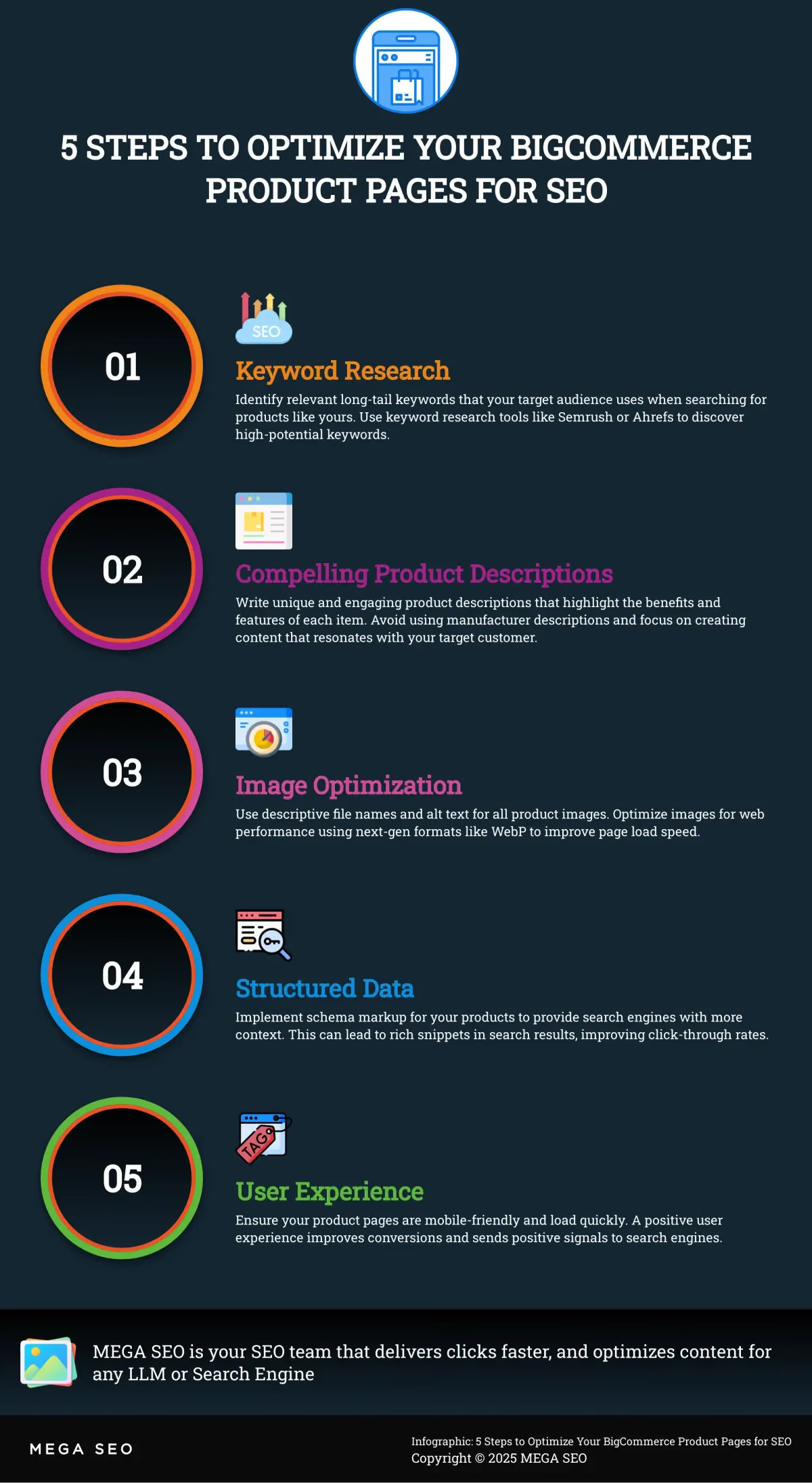
One of the biggest SEO hurdles for ecommerce businesses is creating unique product descriptions. Resist the urge to simply copy and paste manufacturer descriptions. Not only is duplicate content a red flag for search engines, but it also misses a valuable opportunity to connect with your target audience. Craft engaging descriptions that highlight the benefits of each product and speak directly to your customer’s needs. Think about what makes your products special and why someone should buy from you. As one online retailer noted, writing unique product page content for every item can be a real SEO nightmare, but it’s a necessary one.
Optimize BigCommerce Product Images and Alt Text
High-quality images are essential for any ecommerce site, but they also play a significant role in SEO. Optimize your product images by using descriptive file names and alt text. Alt text not only helps search engines understand the content of your images, but it also improves accessibility for users with visual impairments. Consider using next-gen image formats like WebP for better compression and faster loading times, which can positively impact your search rankings. Image optimization is a key factor in BigCommerce SEO.
Structured Data for BigCommerce Products
Structured data, also known as schema markup, is a way to provide search engines with more information about your products. This helps search engines understand the context of your content and can lead to rich snippets in search results, like product ratings and prices. These enhanced search results can significantly improve your click-through rates. Adding structured data is a simple yet effective way to give your products a search visibility boost.
Effective Category Structures for BigCommerce SEO
A well-organized category structure is essential for both user experience and SEO. Use clear and descriptive category names that accurately reflect the products within them. Avoid overly complex or nested categories, which can make it difficult for both users and search engines to find what they’re looking for. A logical and intuitive category structure can improve your site’s crawlability and indexing, leading to higher rankings.
Concise, Keyword-Rich Category Descriptions
Write concise, keyword-rich category descriptions that effectively communicate the essence of each category. This practice not only helps with SEO but also enhances the user experience by providing clear information about what customers can expect. Think of your category descriptions as concise summaries—they should entice customers to click through and explore the products. By incorporating relevant keywords, you improve your chances of ranking higher in search results for those specific terms.
Category Description Character Count (Under 320 Characters)
Optimize your category descriptions to be under 320 characters. This character limit ensures that your descriptions are succinct and focused, making them more likely to be read by potential customers. Search engines also favor concise descriptions for clarity and relevance. A shorter description forces you to use keywords strategically, maximizing their impact without overwhelming the reader. Think of it as a tweet for your category—short, sweet, and to the point.
Internal Linking in BigCommerce
Internal links connect pages within your website and play a vital role in SEO. Link relevant products and categories together to improve site navigation and distribute link equity throughout your site. For example, link from a product page to related products or from a blog post to a relevant category page. Effective internal linking not only helps search engines understand the relationship between your pages, but also keeps users engaged by providing them with easy access to related content.
Internal Linking for Navigation
Think of internal links as the hallways of your BigCommerce store. They guide customers and search engines from one product to another, creating a seamless shopping experience. A well-planned internal linking strategy improves site navigation by connecting related products, categories, and content. For example, link "related products" on individual product pages or link from a blog post about sustainable living to your "eco-friendly products" category page. This not only keeps customers engaged by suggesting other items they might like, but also helps search engines understand the relationships between your pages, improving your overall site architecture and SEO.
External Linking for Credibility
External links, also known as backlinks, are like endorsements from other websites. They act as votes of confidence, signaling to search engines that your BigCommerce store is a trusted source of information. When reputable sites link to your content, it boosts your credibility and can significantly improve your search rankings. Building these valuable backlinks requires a strategic approach. Consider guest blogging on relevant industry websites, forming partnerships with complementary businesses, and creating high-quality, shareable content that others naturally want to link to. These efforts can establish your store as an authority in your niche and drive more organic traffic to your site.
BigCommerce Metadata Best Practices
Metadata and title tags are crucial for BigCommerce SEO. They’re like a storefront window display—they tell search engines and potential customers what your site is about. Let’s explore how to optimize them:
Writing Effective BigCommerce Meta Titles
Your meta title is the headline that appears in search engine results. Think of it as your first impression. A compelling title improves your click-through rate, which is a key ranking factor. Keep your titles concise (under 60-65 characters) and descriptive, including your primary keyword and, if possible, your store name. Think about what would entice you to click. Effective title tags are essential for attracting clicks from search results.
Craft Engaging BigCommerce Meta Descriptions
Meta descriptions are the short snippets of text that appear under the title in search results. While they don’t directly impact ranking, they significantly influence whether someone clicks your link. Craft descriptions under 320 characters that accurately reflect your page content and include your main keyword. A clear, concise, and enticing description can dramatically improve your click-through rate. For more tips on writing compelling descriptions, check out this resource.
Maximum Meta Description Length
Meta descriptions have a character limit, so make every word count. Aim for descriptions under 320 characters to ensure the full snippet displays in search results. A truncated description might miss crucial information that could entice a click. Think of your meta description as a mini-advertisement for your page; it needs to grab attention and accurately represent the content within. Concise and compelling descriptions are key to maximizing your click-through rate.
Regular Meta Description Updates
SEO is an ongoing process, and your meta descriptions should be too. Regularly review and update your descriptions to ensure they remain relevant and engaging. Consider refreshing descriptions seasonally, when you update products, or after running A/B tests to see what resonates best with your audience. Keeping your meta descriptions fresh and aligned with your current offerings can significantly impact your click-through rates and overall SEO performance.
Optimizing H1 Tags in BigCommerce
H1 tags are the main headings on your page. They tell both search engines and users what the page is about. Each page should have only one H1 tag, which should include your primary keyword. Use a clear header structure (H2, H3, etc.) to organize your content and make it easier for both search engines and readers to understand. This structured approach, similar to using structured data, helps search engines grasp the context and hierarchy of your content. Think of it as creating a well-organized library—easy to browse and find what you’re looking for.
Technical SEO for BigCommerce Stores
Technical SEO can feel intimidating, but it’s crucial for any BigCommerce store. It ensures search engines can easily crawl and index your website. Addressing these technical aspects improves your visibility and ranking.
Mobile-First BigCommerce Design
More people shop on their phones than ever before, so your BigCommerce store needs to look great and function perfectly on any device. A responsive design automatically adjusts your website’s layout and content to fit different screen sizes, creating a seamless shopping experience. If your site isn’t mobile-friendly, you risk losing customers and seeing lower search rankings. Google prioritizes mobile-first indexing, meaning it primarily uses the mobile version of your site for indexing and ranking.
Mobile-First Indexing
With the rise of mobile shopping, Google has shifted to mobile-first indexing. This means Google predominantly uses the mobile version of your site for indexing and ranking. A responsive design, which adapts seamlessly to different screen sizes, is crucial for a positive user experience and strong SEO performance. If your BigCommerce store isn't mobile-friendly, it will negatively impact your visibility in search results.
Google AMP
Implementing Google AMP (Accelerated Mobile Pages) can significantly improve your site's mobile performance. AMP is a framework for creating fast-loading mobile pages, which enhances user experience and can potentially boost your search rankings. Prioritizing AMP ensures your content loads quickly on mobile devices, reducing bounce rates and encouraging conversions. Fast-loading pages are key to keeping mobile users engaged with your BigCommerce store.
BigCommerce Site Architecture and Crawlability
A well-organized site architecture is essential for both users and search engines. It helps search engine bots easily discover and index all your important pages. A clear and logical structure, with a hierarchical organization of categories and subcategories, makes it easier for customers to find products and improves your site’s crawlability. Use a sitemap to guide search engines through your content.
Enabling Breadcrumbs
Breadcrumbs are a vital navigational tool that enhances user experience and SEO for your BigCommerce store. By providing a clear path showing users their location within your site, breadcrumbs help visitors easily return to previous pages or categories. This improves usability and aids search engines in understanding your site’s structure. A clear and logical structure, with a hierarchical organization of categories and subcategories, makes it easier for customers to find products and improves your site’s crawlability. Enabling breadcrumbs contributes to this structure, allowing both users and search engines to navigate your site more effectively.
Furthermore, breadcrumbs can enhance your search engine results by appearing as rich snippets, which can improve your click-through rates. Effective internal linking helps search engines understand the relationship between your pages and keeps users engaged by providing easy access to related content. Enabling breadcrumbs is a simple yet powerful way to improve both user experience and SEO performance for your BigCommerce store.
XML Sitemaps for BigCommerce
An XML sitemap acts as a roadmap for search engines, listing all the important pages on your BigCommerce site. It helps search engines quickly discover and index your content, especially new or updated pages. Submit your sitemap through Google Search Console and Bing Webmaster Tools to ensure your site is properly indexed. A properly formatted sitemap can significantly improve your site’s visibility in search results.
Using Canonical Tags in BigCommerce
Canonical tags are crucial for managing duplicate content, a common issue on e-commerce sites. They tell search engines which version of a page is the preferred one to index, preventing confusion and potential ranking penalties. While BigCommerce has some built-in canonicalization, you might need to implement custom canonical tags to address specific duplicate content issues. This is especially important for product variations or pages with similar content.
Local and International BigCommerce SEO
If you have a physical store or target customers in specific geographic locations, optimizing for local SEO is essential. Claim and optimize your Google Business Profile, ensuring accurate and consistent information across all platforms. For businesses targeting international audiences, consider implementing hreflang tags to specify the language and region for each version of your site. This helps search engines deliver the right content to the right users, improving your international visibility.
Content Marketing and BigCommerce SEO
Content marketing is essential for BigCommerce SEO. It attracts and engages your target audience, positions your brand as an authority, and boosts your search engine rankings. Here’s how to make the most of content marketing:
Creating Engaging BigCommerce Blog Content
A consistently updated blog is a key asset for BigCommerce SEO. Begin with keyword research to learn what your audience searches for. As BlueTuskr explains in their guide to BigCommerce SEO, “Effective keyword research lays the groundwork for all your SEO activities.” Use these keywords throughout your blog posts while prioritizing valuable, informative content. Optimize posts with relevant meta titles, descriptions, and header tags. Link internally to other relevant site pages and share your blog content on social media. Explore creating customized posts to further elevate your content.
Video and Voice Search Optimization
Video and voice search are changing how people find information online. Video content can significantly enhance user engagement and improve SEO rankings, as search engines increasingly prioritize multimedia. Consider creating product demos, tutorials, or behind-the-scenes looks at your business. This caters to the growing trend of video consumption and provides valuable content that resonates with your audience. When optimizing for voice search, consider how people speak naturally. They tend to ask questions conversationally, so incorporate natural language and long-tail keywords into your website copy. Understanding how users phrase their voice search queries, which often differ from traditional text-based searches, is key to optimizing your BigCommerce store for voice search results. Tools like MEGA SEO can help optimize your content for both traditional search engines and emerging technologies like voice search.
Build Resource Pages for BigCommerce SEO
Go beyond blog posts by developing detailed buyer guides and resource pages. These become go-to sources for your audience, providing comprehensive information. SEO.ai emphasizes this in their BigCommerce SEO tips, explaining that these resources “can enhance user engagement.” Buyer guides and resource pages naturally attract backlinks, which are essential for higher search rankings. Ensure these pages are well-organized, easy to follow, and optimized with relevant keywords.
User-Generated Content for BigCommerce
User-generated content (UGC), such as customer reviews, is invaluable for BigCommerce SEO. Search Engine Journal highlights this in their discussion of ecommerce SEO, noting that UGC “can significantly boost your SEO.” Encourage reviews and feature them on product pages. Integrate UGC into your social media and consider showcasing testimonials on your blog or website. This fresh content builds trust and improves SEO.
Leveraging Yotpo and Other Review Apps
Integrating user-generated content (UGC) into your BigCommerce store can significantly enhance your SEO efforts. As noted by Search Engine Journal, "UGC, such as customer reviews, is invaluable for BigCommerce SEO." It provides fresh content and builds trust with potential customers. Encouraging reviews and featuring them prominently on product pages can lead to improved search rankings and increased conversion rates.
Utilizing review apps like Yotpo can streamline this process. Yotpo allows you to collect and display customer reviews effectively, enhancing the credibility of your products. Showcasing authentic customer feedback enriches your site's content and creates a more engaging shopping experience. Other review apps, like Stamped.io and Judge.me, offer similar functionalities and BigCommerce integrations, providing options for various business needs and budgets.
Moreover, integrating UGC into your social media strategy can further amplify your reach. This fresh content builds trust and improves SEO, making it a crucial component of your overall digital marketing strategy. MEGA AI can help you generate and manage high-quality SEO-optimized content, including incorporating user-generated content, streamlining your content creation process, and boosting your online presence.
Measuring BigCommerce SEO Performance
After putting in the work to optimize your BigCommerce site, how do you know if it’s paying off? Tracking key performance indicators (KPIs) and leveraging analytics tools are essential for gauging the effectiveness of your SEO strategies.
Key BigCommerce SEO KPIs
Think of KPIs as your SEO report card. They show you what’s working and what needs improvement. Some of the most important KPIs to monitor include:
- Organic traffic: This metric measures the number of visitors coming to your site from search engine results pages (SERPs). An increase in organic traffic suggests your SEO efforts are attracting more potential customers.
- Keyword rankings: Tracking your keyword rankings shows you where your site appears in search results for relevant keywords. Improving your rankings means increased visibility and potentially more organic traffic.
- Click-through rate (CTR): CTR measures how often people click on your site in search results. A higher CTR indicates that your titles and meta descriptions are compelling and relevant to searchers.
- Bounce rate: Your bounce rate tells you the percentage of visitors who leave your site after viewing only one page. A high bounce rate might suggest issues with site design, content relevance, or user experience. For more information on improving bounce rates, take a look at these tips to reduce bounce rate.
- Conversions: Ultimately, the goal of SEO is to drive conversions, whether that’s sales, sign-ups, or other desired actions. Tracking conversions helps you connect your SEO efforts to tangible business outcomes.
Using BigCommerce Analytics
BigCommerce offers built-in analytics to help you monitor key metrics. You can track sales data, conversion rates, and other important information directly within your BigCommerce dashboard. This data can provide a valuable overview of your store’s performance and help you identify areas for improvement.
Google Analytics and Search Console for BigCommerceGoogle Analytics and Search Console
While BigCommerce’s built-in analytics are helpful, integrating with Google Analytics and Google Search Console provides a more comprehensive view of your SEO performance. Google Analytics offers in-depth data on user behavior, traffic sources, and conversions. Search Console gives you insights into how Google sees your site, including keyword rankings, crawl errors, and indexing issues. Connecting these tools to your BigCommerce store is a crucial step in maximizing your SEO efforts.
Essential BigCommerce SEO Tools and Apps
Effective SEO relies on having the right tools. Here are some of the top SEO tools and apps that can help you improve your BigCommerce store’s visibility:
MEGA SEO
MEGA SEO integrates with various platforms, including BigCommerce, offering automated solutions for keyword research, content generation, and technical SEO improvements. It helps you identify valuable keywords, create optimized content, and fix technical issues that could be hindering your search rankings. MEGA SEO focuses on building sustainable growth through effective SEO strategies, not quick fixes. Its Maintenance Agent can even analyze your existing content, automatically update it to improve clickthrough rates, and identify opportunities to add new content to boost rankings.
Yoast SEO for BigCommerce
While Yoast SEO doesn’t directly integrate with BigCommerce the same way it does with WordPress, it remains a valuable tool for content optimization. You can use Yoast’s SEO analysis to fine-tune your product descriptions, blog posts, and other website content before publishing it on your BigCommerce store. This helps ensure your content is readable, keyword-rich, and aligned with SEO best practices.
SEMrush for BigCommerce
SEMrush is a comprehensive SEO toolkit offering a wide range of features, including keyword research, site audits, and competitive analysis. For BigCommerce users, SEMrush can help identify high-potential keywords, uncover technical SEO issues, and analyze competitors’ strategies. Tracking your SEO performance over time is also simplified with SEMrush’s detailed reporting.
Ahrefs for BigCommerce
Ahrefs is well-regarded for its robust backlink analysis and keyword research capabilities. Understanding your backlink profile is crucial for SEO success, and Ahrefs provides the insights you need to build high-quality links. It also helps you research competitors’ backlinks, allowing you to discover new link-building opportunities for your BigCommerce store.
Moz Pro for BigCommerce
Moz Pro offers a suite of SEO tools covering keyword research, site audits, rank tracking, and more. Moz Pro’s site crawl feature can help BigCommerce users identify and fix technical SEO problems, while its rank tracker monitors your progress on search engine results pages. Moz Local is also a helpful tool for businesses with physical locations, helping manage local SEO listings.
Clearscope for BigCommerce
Clearscope is a powerful content optimization platform for creating high-quality, SEO-friendly content. By analyzing top-performing content in your niche, Clearscope offers keyword suggestions and content recommendations to enhance your writing. This is particularly beneficial for BigCommerce users looking to improve product descriptions and blog posts, ensuring they are comprehensive and relevant to search queries. Clearscope helps you create content that resonates with your target audience and ranks well in search results.
Google Keyword Planner for BigCommerce
Google Keyword Planner is a valuable tool for identifying high-potential keywords to drive traffic to your BigCommerce store. Researching keywords relevant to your products helps optimize your content and product pages, aligning them with customer searches. This tool aids keyword discovery and provides insights into search volume and competition. This data allows you to make informed decisions about your SEO strategy.
BigCommerce SEO Manager App
The BigCommerce SEO Manager App simplifies SEO management. You can easily edit meta titles, descriptions, and other important SEO elements for your product and category pages. This streamlined approach helps you implement best practices without extensive technical knowledge, making SEO enhancements accessible for all store owners. The SEO Manager App puts you in control of your store’s SEO.
Leveraging Page Builders for BigCommerce SEO
Using page builders can enhance your BigCommerce store’s design and functionality, simplifying SEO best practices implementation. These tools help create visually appealing layouts and optimize content placement, improving user engagement and search engine rankings. Page builders ensure your product pages are attractive and optimized for SEO, driving more organic traffic.
Common BigCommerce SEO Challenges
Even with BigCommerce’s built-in SEO features, some challenges can still pop up. Let’s explore some common roadblocks and how to address them.
Handling Duplicate Content in BigCommerce
Duplicate content can be a headache for ecommerce SEO. Think product variations, multiple URLs for the same page, or even manufacturer descriptions copied across different retailer sites. As one retailer shared, optimizing unique product page content for every single item can be a nightmare, from filling in metadata to crafting unique product descriptions. One way to tackle this is by using canonical tags to specify the preferred version of a page. Another strategy is to consolidate similar product pages, especially if they have minimal differences. If you’re using manufacturer descriptions, rewrite them to make your product descriptions unique. This not only helps with SEO but also creates a more distinctive brand voice.
Managing Out-of-Stock Products in BigCommerce
Out-of-stock products present a tricky situation. You don’t want to delete the page and lose any SEO value it has, but you also don’t want to frustrate customers. A common approach is to display an “out of stock” message on the product page and offer related product recommendations. This keeps customers on your site and potentially leads to a sale. For temporarily out-of-stock items, consider allowing customers to sign up for back-in-stock notifications. This captures valuable leads and demonstrates customer interest. If a product is permanently discontinued, use a 301 redirect to guide users (and search engines) to a similar product or category page. This preserves SEO value and provides a better user experience than a dead-end 404 page.
Target Long-Tail Keywords in BigCommerce
Effective keyword research is the foundation of any SEO strategy. While short-tail keywords are important, long-tail keywords—longer, more specific phrases—often drive more qualified traffic. For example, instead of targeting “shoes,” you might target “women’s running shoes for flat feet.” Long-tail keywords reflect specific customer searches, leading to higher conversion rates. BigCommerce allows you to optimize product pages, category pages, and blog content with targeted keywords. Use tools like Semrush or Ahrefs to discover relevant long-tail keywords for your niche. Remember, keyword stuffing is a no-go. Focus on naturally incorporating keywords into your content to provide value to your customers.
BigCommerce SEO and User Experience
While SEO is crucial, it shouldn’t come at the expense of user experience. BigCommerce sometimes presents limitations in terms of customization, which can impact both SEO and UX. For example, rigid URL structures or challenges in mobile optimization can hinder your SEO efforts and frustrate users. Prioritize mobile responsiveness to ensure your site looks and performs well on all devices. Use clear and concise navigation to help users easily find what they’re looking for. Optimize page load speed to minimize bounce rates. While adhering to SEO best practices, always keep the user in mind. A positive user experience not only improves conversions but also sends positive signals to search engines, ultimately benefiting your SEO in the long run.
Focusing on 2024 SEO Trends
Staying ahead of SEO trends is crucial for maintaining visibility and driving organic growth. For BigCommerce stores, focusing on Google’s E-E-A-T framework and Core Web Vitals is more important than ever. These elements play a significant role in how Google assesses the quality and relevance of your site.
Google's E-E-A-T Framework
E-E-A-T stands for Experience, Expertise, Authoritativeness, and Trustworthiness. It's Google’s way of evaluating the credibility of content and the websites that host it. For BigCommerce stores, demonstrating E-E-A-T is essential for building trust with both Google and your customers. Learn more about E-A-T and its importance for SEO.
Expertise
Google prioritizes content created by experts, especially for topics that impact a person's well-being, such as health, finances, or safety. In the context of BigCommerce, this means showcasing the expertise behind your products. Are your products developed by certified professionals? Do you have a team with specialized knowledge? Highlight these credentials to build trust and demonstrate expertise.
Experience
Experience refers to firsthand knowledge or involvement. For BigCommerce stores, this could involve sharing customer testimonials, showcasing real-world applications of your products, or highlighting the experience of your team. Demonstrating experience adds authenticity and credibility to your brand, which can positively influence your SEO performance.
Authoritativeness
Authoritativeness relates to the credibility of your website and content creators. For BigCommerce stores, this means building a reputation as a trusted source of information in your niche. High-quality content, positive customer reviews, and secure website practices all contribute to authoritativeness. Think of it as building a strong online presence that inspires confidence in your brand.
Trustworthiness
Trustworthiness is paramount online. For BigCommerce stores, this means ensuring your website is secure, your content is accurate, and your business practices are transparent. Displaying trust badges, providing clear contact information, and offering secure checkout processes all foster trust with your customers and improve your trustworthiness in the eyes of Google.
Core Web Vitals
Core Web Vitals are a set of metrics that measure the user experience of a webpage. These metrics focus on loading performance, interactivity, and visual stability—all crucial for a positive user experience and good search ranking. Learn more about Core Web Vitals. Optimizing Core Web Vitals is essential for BigCommerce SEO success.
- Largest Contentful Paint (LCP): LCP measures how quickly the main content of a page loads. Aim for an LCP of 2.5 seconds or less.
- First Input Delay (FID): FID measures how quickly a page becomes interactive. A good FID score is less than 100 milliseconds.
- Cumulative Layout Shift (CLS): CLS measures the visual stability of a page. A good CLS score is less than 0.1.
Addressing these metrics improves user experience and boosts your BigCommerce store’s visibility in search results. Tools like MEGA SEO can help you identify and address Core Web Vitals issues, ensuring your BigCommerce store provides a seamless and engaging user experience.
Start Optimizing Your BigCommerce Store for SEO
Getting started with SEO on your BigCommerce store can feel overwhelming, but by breaking it down into smaller steps, you can make steady progress. Familiarize yourself with BigCommerce’s built-in SEO tools to automate many technical aspects of SEO, like creating SEO-friendly URLs for your products and categories. This automation frees up your time to focus on more complex optimization tasks. Thorough keyword research is also essential. Understanding your customers’ search terms is fundamental to optimizing your site’s content and structure.
Before you dive in, it’s helpful to be aware of some common SEO challenges. Many BigCommerce users struggle with things like duplicate content or managing out-of-stock products effectively for SEO. Knowing these potential roadblocks ahead of time can save you headaches. As you implement your SEO strategies, consistently track your key metrics. Pay close attention to organic traffic, keyword rankings, click-through rates, bounce rates, and conversions. This data will inform any necessary adjustments to your SEO strategy.