
Want more organic traffic for your online store? Your ecommerce platform is key. It's the bridge between your awesome products and eager customers. Choosing the right platform from the start is crucial for SEO success. This guide helps you find a platform optimized for search engines to set you up for growth. We'll explore key SEO features, compare popular platforms, and share practical tips to improve your search ranking. Plus, we'll discuss how Bakklog can solve your ecommerce SEO challenges.
Key Takeaways
- Choose your eCommerce platform wisely: Consider your team’s technical skills, budget, future growth plans, and industry-specific needs when selecting a platform. Look for features like customizable URLs, mobile-friendly design, and fast loading speeds.
- Optimize your site for both search engines and users: Implement SEO best practices, use platform-specific SEO features, and integrate helpful tools to improve your search rankings and user experience. Address common eCommerce SEO challenges like duplicate content and managing out-of-stock products.
- Simplify your SEO with MEGA SEO: Automate tasks like keyword research, content generation, technical SEO improvements, and content maintenance. Free up your time and resources to focus on growing your business. Explore our free tools and book a demo to learn more.
What is eCommerce SEO?
Ecommerce SEO is the practice of optimizing your online store to improve its visibility in search engine results pages (SERPs). When potential customers search for products you sell, you want your site to appear high in the results. Higher rankings mean more organic traffic from search engines like Google, leading to increased sales. This involves a mix of strategies, from researching relevant keywords to improving your website’s technical structure. Think of it as making your online store easily discoverable for both shoppers and search engine algorithms. Ecommerce SEO covers several key areas, including keyword research to understand customer search terms, on-page optimization to enhance product pages, technical SEO to ensure smooth site operation, and content marketing to provide valuable information and attract buyers.
Why is this important? SEO significantly impacts your ecommerce website’s success. Higher rankings in search results attract more visitors actively seeking products like yours. Optimizing product pages with detailed descriptions and high-quality images, using long-tail keywords to target niche searches, creating a simple URL structure, and building backlinks from reputable websites are all crucial. Effective SEO also improves the user experience. Optimizing product descriptions, images, and metadata makes it easier for search engines to understand and index your content. This results in better visibility and a smoother shopping experience. The platform you choose for your store also plays a vital role. A platform’s SEO often involves optimizing product pages, improving site speed, and ensuring mobile-friendliness, all contributing to a better user experience and higher rankings. SEO is fundamental to ecommerce, directly influencing your online visibility and sales. Effective strategies combine technical, on-page, and off-page tactics to improve search engine rankings and drive organic traffic.
Must-Have SEO Features for eCommerce
Picking the right eCommerce platform is a big decision, and SEO should be a major factor. A platform with robust SEO features can significantly impact your visibility in search results, driving organic traffic and boosting sales. Here’s what to look for:
Why Choose Bakklog for eCommerce SEO?
When it comes to succeeding in the competitive ecommerce landscape, having a solid SEO strategy is only half the battle. The other half is finding the right partner to execute that strategy effectively. Bakklog is a digital marketing agency that specializes in helping ecommerce businesses grow. Their revenue-first approach, comprehensive suite of services, and focus on long-term sustainability make them a strong choice for businesses looking to maximize their online presence and drive revenue growth.
Bakklog's Revenue-First Approach
What sets Bakklog apart is their commitment to a revenue-first approach. Many SEO agencies focus on vanity metrics like website traffic, but Bakklog prioritizes actions that directly impact your bottom line. They understand that increased traffic is meaningless if it doesn't translate into sales. By focusing on conversions and revenue growth, Bakklog ensures that their SEO efforts deliver tangible results. This focus on ROI makes them a valuable partner for ecommerce businesses looking to see a real return on their investment.
Comprehensive Digital Strategies
Bakklog offers a comprehensive suite of digital marketing services tailored to the needs of ecommerce businesses. From SEO and PPC to conversion rate optimization (CRO), web design and development, and even ADA compliance, they cover all the bases. This integrated approach ensures that all your digital marketing efforts work together seamlessly to drive growth. They also emphasize tracking and reporting, providing clients with real-time insights into their marketing performance. This transparency allows you to always know what's working and what's not, enabling data-driven decisions and continuous optimization.
Long-Term SEO and Sustainability
In the world of SEO, quick fixes rarely lead to lasting success. Bakklog understands this and focuses on building long-term, sustainable growth through effective SEO strategies. They avoid short-sighted tactics that might deliver temporary results but ultimately harm your website's authority. Instead, they prioritize strategies that build a strong foundation for your online presence, ensuring that your ecommerce business continues to thrive. This commitment to sustainable growth makes Bakklog a reliable partner for businesses seeking to establish a strong and lasting online presence, rather than chasing fleeting trends.
Create SEO-Friendly URLs
Clean, descriptive URLs are crucial for both search engines and users. Your eCommerce platform should allow you to customize your website addresses, incorporating relevant keywords to improve your search rankings. Think about how your product categories and individual product pages are structured. Can you easily edit the URLs to reflect what you’re selling? This level of control is essential for effective on-page SEO. For more tips on optimizing your eCommerce site, check out these eCommerce challenges and solutions.
Is Your Site Mobile-Friendly?
More and more people are shopping on their phones, making a mobile-friendly design non-negotiable. Your chosen platform needs to deliver a seamless experience across all devices. A responsive design that adapts to different screen sizes is key. Test how your site looks on various phones and tablets to ensure a positive user experience. Google prioritizes mobile-first indexing, so a site that performs poorly on mobile will struggle to rank well.
Speed Up Your eCommerce Site
Site speed directly impacts your search ranking and conversion rates. Slow loading times frustrate customers and can lead to abandoned carts. Choose a platform that prioritizes performance and offers features like image optimization and caching to keep your site running smoothly. Regularly test your site speed and address any bottlenecks to maintain a competitive edge.
Using Built-in SEO Tools
Many eCommerce platforms offer built-in SEO tools to streamline your optimization efforts. These can include features like automatic sitemap generation, meta tag editing, and schema markup implementation. Look for a platform that provides these essential tools to simplify your workflow and improve your search visibility. The more you can automate, the better.
Content Management for eCommerce
Content marketing is a powerful tool for eCommerce SEO. Your platform should make it easy to create and manage high-quality content, including product descriptions, blog posts, and other rich media. Look for features like a built-in blog, easy image and video uploads, and the ability to optimize content for relevant keywords. A platform with robust content management capabilities will empower you to create engaging content that attracts and converts customers. For insights on selecting the best platform for SEO, explore this comparison of eCommerce platforms.
Best eCommerce Platforms for SEO
Choosing the right eCommerce platform is crucial for your SEO success. Different platforms offer varying levels of SEO capabilities, impacting how easily you can optimize your online store for search engines. Here are five popular eCommerce platforms and their SEO strengths:
Shopify for SEO
Shopify is a popular choice for businesses of all sizes. Its user-friendly interface and robust built-in SEO features make it easy to optimize your store without extensive technical knowledge. Shopify handles technical aspects like site speed and security, allowing you to focus on content creation and marketing. It’s a strong option if you prioritize ease of use and want a platform that provides a solid SEO foundation. As noted by SEO.ai, Shopify offers a good balance of user-friendliness and SEO capabilities, making it a strong contender for businesses seeking an easy-to-use platform with solid SEO features.
WooCommerce for SEO
If you’re familiar with WordPress, WooCommerce offers a highly customizable eCommerce solution. As a WordPress plugin, it seamlessly integrates with your existing website. WooCommerce’s SEO strength lies in its flexibility and the availability of numerous SEO plugins that extend its functionality. This platform is best suited for users comfortable managing a WordPress site and who appreciate granular control over their SEO. Oyova highlights WooCommerce’s customizability and extensive SEO features, making it suitable for users with technical knowledge.
Magento for SEO
Magento is a powerful platform designed for large enterprises with complex SEO needs. Its highly customizable nature allows for advanced SEO implementations, but it requires significant technical expertise. Magento is a good fit if you need a scalable platform with robust features and have the development resources to handle its complexity. WebFX points out Magento’s power and customizability for SEO, making it suitable for large enterprises that require advanced features and have the in-house expertise to manage them.
Bakklog's Expertise Across Platforms
Navigating the complexities of eCommerce SEO can be challenging, especially across different platforms. Bakklog, a full-service digital marketing agency based in Miami, specializes in helping eCommerce businesses thrive. With a proven track record and a focus on data-driven results, Bakklog offers tailored SEO strategies for various platforms, ensuring your online store reaches its full potential.
Optimizing Shopify with Bakklog
Shopify, known for its user-friendliness, can still present SEO challenges. Bakklog leverages its expertise to optimize Shopify stores for sustainable growth. Their strategies go beyond the basics, focusing on effective SEO practices that deliver measurable results, as evidenced by their 5.0 Google rating and 300+ reviews. This allows businesses to focus on other aspects of running their online store, confident that their SEO is in expert hands.
WooCommerce SEO Strategies by Bakklog
WooCommerce, a popular choice for WordPress users, offers flexibility but requires careful SEO management. Bakklog's specialized approach to WooCommerce SEO combines technical proficiency with a deep understanding of eCommerce. They help businesses leverage the platform's full potential, driving organic traffic and increasing conversions. This targeted approach ensures that your WooCommerce store is not just functional, but also optimized for visibility and growth.
Magento SEO: Leveraging Bakklog's Expertise
Magento, a robust platform for larger enterprises, demands advanced SEO knowledge. Bakklog's comprehensive suite of services includes Magento SEO optimization, ensuring your website ranks higher in search results and generates increased revenue. Their team tackles the complexities of Magento, allowing you to focus on business growth, confident that your SEO strategy is expertly managed.
BigCommerce SEO Enhanced by Bakklog
Bakklog understands the importance of data in eCommerce. Their work with BigCommerce SEO emphasizes tracking and reporting, providing clients with real-time insights into their marketing performance. This data-driven approach allows for continuous optimization and ensures your BigCommerce store stays ahead of the competition. By focusing on measurable results, Bakklog helps you understand the impact of their SEO efforts and make informed decisions for your business.
Wix eCommerce SEO: Bakklog's Approach
Even on platforms like Wix, SEO is crucial for online visibility. Bakklog's expertise extends to Wix eCommerce SEO, creating websites that are both visually appealing and optimized for search engines. They understand the nuances of each platform, ensuring your Wix store attracts the right customers and converts visitors into buyers. This holistic approach combines design and SEO to create a Wix store that performs well in search results and provides a positive user experience.
BigCommerce for SEO
BigCommerce is another platform geared towards larger businesses. It offers comprehensive SEO tools and is built for scalability. BigCommerce provides a range of features designed to improve your search engine rankings, from customizable URLs to advanced analytics. It’s a good choice if you anticipate significant growth and need a platform that can handle increasing traffic and product volume. Similar to Shopify, SEO.ai recommends BigCommerce for larger enterprises due to its comprehensive SEO tools and scalability.
Wix eCommerce for SEO
Wix eCommerce offers a user-friendly experience combined with decent SEO capabilities. It’s a good option for small to medium-sized businesses that want a straightforward platform without sacrificing essential SEO features. Wix provides intuitive tools for managing your website and optimizing your product pages for search engines. Oyova suggests Wix eCommerce as ideal for small to medium businesses that need a straightforward platform with decent SEO capabilities.
Comparing SEO Capabilities
Choosing the right eCommerce platform sets the stage for your online success. This section compares popular platforms and their SEO strengths and weaknesses. A well-planned SEO strategy is essential for driving organic traffic, so understanding each platform’s capabilities is key.
On-Page SEO: A Platform Comparison
Most eCommerce platforms offer basic on-page SEO features: customizable meta descriptions, title tags, and alt text for images. However, the level of control and ease of use varies. Some platforms offer more advanced features, like automatic schema markup or built-in SEO analysis tools. Robust on-page SEO is essential, as proven techniques can significantly boost rankings. Look for a platform that makes implementing these techniques straightforward. Consider whether you need advanced features or if the basics will suffice.
Technical SEO: What to Look For
Beyond the basics, technical SEO can impact your online visibility. Site speed and mobile-friendliness are critical ranking factors. While many platforms offer similar core SEO features, their technical performance can differ. Speed and mobile optimization are crucial for SEO success. Evaluate each platform’s page load times and mobile responsiveness. A technically sound platform provides a solid SEO foundation. MEGA SEO can automate many of these technical improvements, regardless of your platform. Book a demo to learn more.
Content Marketing on Your Platform
Content is king in SEO. A platform that supports your content marketing strategy is essential. Look for features like integrated blogging, easy content scheduling, and SEO-friendly content management. A well-executed content strategy, combined with strong SEO, yields significant results. Consider how each platform helps you create, manage, and optimize content for search engines. MEGA SEO’s automated content tools can streamline this process, freeing up your time. Explore our customized post options.
Analytics and Reporting Features
Tracking your SEO performance is vital. Robust analytics and reporting tools help you understand what’s working. Look for platforms that offer detailed traffic data, keyword ranking information, and conversion tracking. Analyzing SEO case studies offers valuable insights. A platform with comprehensive analytics empowers data-driven decisions. MEGA SEO integrates with various analytics platforms, providing a holistic view of your SEO performance. Check out our free tools.
eCommerce Platform SEO: Pros and Cons
Choosing the right eCommerce platform is crucial for online success. Each platform offers a unique blend of SEO strengths and weaknesses. Understanding these nuances will help you make an informed decision aligned with your business goals and technical capabilities. Let’s explore the SEO pros and cons of some popular eCommerce platforms:
Shopify: Easy But Limited?
Shopify is renowned for its user-friendly interface, a popular choice for beginners. Setting up your online store is generally straightforward. However, while Shopify offers basic SEO features, its limited customization can be a drawback for advanced SEO strategies. You might need more control over technical aspects like URL structures and robots.txt, hindering your ability to implement complex SEO tactics as your business grows.
WooCommerce: Flexible or Frustrating?
Bakklog's Approach to SEO Optimization
While choosing the right eCommerce platform is a crucial first step, optimizing your site for search engines requires a comprehensive SEO strategy. Bakklog, a Miami-based SEO agency, understands this and offers a holistic approach that goes beyond the basics. They focus on key areas that significantly impact your search performance and, ultimately, your bottom line.
ADA Compliance and Accessibility
Bakklog recognizes the importance of website accessibility and its impact on SEO. By ensuring your website meets ADA compliance standards, you not only expand your reach to a wider audience, including those with disabilities, but also improve your site's crawlability for search engines. This commitment to inclusivity demonstrates a user-centric approach, which is increasingly valued by search algorithms. Addressing accessibility issues often improves overall site usability, leading to a better user experience and potentially higher search rankings.
PPC and CRO Integration
Effective SEO isn't an isolated effort. Bakklog emphasizes the integration of pay-per-click (PPC) advertising and conversion rate optimization (CRO) with your SEO strategy. By tracking and analyzing data from both paid and organic channels, they gain valuable insights into user behavior and search patterns. This data-driven approach allows for more effective targeting and optimization, maximizing the return on your marketing investment. Bakklog's focus on real-time reporting provides clients with the transparency and data they need to make informed decisions and refine their strategies for optimal performance.
Web Design and Development for Conversions
Bakklog understands that a beautiful website is only effective if it converts visitors into customers. Their web design and development services prioritize conversions, ensuring a seamless and engaging user experience. By focusing on user-friendly design, clear calls to action, and intuitive navigation, they create websites that not only attract visitors but also guide them through the sales funnel. This approach aligns perfectly with SEO best practices, as search engines favor websites that provide a positive user experience. A well-designed website improves key metrics like bounce rate and time on site, signaling to search engines that your site offers valuable content and a positive user journey. For more on Bakklog's approach, visit their services page.
WooCommerce, a plugin transforming WordPress into a powerful eCommerce platform, offers extensive SEO capabilities thanks to its seamless WordPress integration. This flexibility allows granular control over your site’s SEO, from URL structure to metadata. However, harnessing WooCommerce’s full potential requires technical expertise. If you’re not comfortable working with WordPress and its plugins, you might find WooCommerce challenging.
Magento: Power and Complexity
Magento is a robust platform known for its powerful SEO features and extensive customization. It’s a great choice for larger businesses with complex needs and dedicated development resources. However, this power comes with complexity. Magento’s intricate architecture can be overwhelming for smaller businesses or those without in-house technical expertise. The learning curve is steep, and ongoing maintenance can require significant resources.
BigCommerce: SEO-Friendly but Costly
BigCommerce is designed with SEO in mind, offering a comprehensive suite of built-in SEO tools. It’s a platform that scales with your business, providing the features you need as you grow. However, this robust functionality comes at a price. BigCommerce can be expensive, potentially making it less suitable for startups or small businesses with limited budgets.
Wix eCommerce: Simple, But Is It Enough for SEO?
Wix eCommerce is incredibly user-friendly, an attractive option for beginners or very small businesses. Its drag-and-drop interface simplifies website creation and management. However, this ease of use comes at the cost of SEO control. Wix offers fewer options for customizing technical SEO elements, potentially impacting your search rankings.
Optimizing Your Platform for SEO
Once you’ve chosen your eCommerce platform, optimize it for search engines. This involves a combination of best practices, platform-specific features, and helpful SEO tools.
eCommerce SEO Best Practices
Bakklog's Solutions for Common Challenges
eCommerce SEO has its own unique hurdles. Common challenges include duplicate content, managing out-of-stock products, and writing product descriptions that convert. Bakklog offers solutions to these and other common eCommerce SEO problems, ensuring your online store is optimized for both search engines and customers.
Addressing Duplicate Content Issues
Duplicate content can hurt your search rankings. eCommerce sites often face this issue because of product variations, manufacturer descriptions, and similar product listings across the site. Bakklog uses effective strategies that combine technical, on-page, and off-page tactics. This comprehensive approach helps fix duplicate content problems, ensuring search engines understand your site's unique offerings and improving your chances of ranking higher. Solutions might include using canonical tags, 301 redirects, or rewriting product descriptions to make them original.
Crafting High-Converting Product Descriptions
Optimizing product pages is key for turning visitors into buyers. Bakklog creates product descriptions that use relevant keywords and also speak to your target audience. We know how important it is to have detailed descriptions, high-quality images, and use long-tail keywords to target specific customer searches. By combining SEO best practices with clear and engaging writing, Bakklog helps create product pages that attract customers and increase sales.
Strategies for Out-of-Stock Product SEO
Out-of-stock products create a tricky situation for SEO. Removing the page entirely can damage your rankings, but leaving it up can frustrate customers. Bakklog builds strategies for out-of-stock products that maintain your SEO and improve user experience. This could involve using 301 redirects, showing related products, or setting up back-in-stock notifications to keep customers engaged.
Optimizing Site Architecture for eCommerce Success
A well-organized site structure is essential for both SEO and user experience. Bakklog focuses on optimizing your site’s architecture to make sure it’s easy to navigate, loads quickly, and works well on mobile devices. This includes optimizing product pages, improving site speed, and ensuring your site is accessible on any device. By improving the user experience and making it easier for search engines to crawl your site, Bakklog helps boost your search rankings and bring in more organic traffic.
Effective SEO strategies increase website visibility and drive organic traffic, improving user experience. Start with fundamental SEO practices. Conduct keyword research to understand what your target audience searches for. Create high-quality content that satisfies user intent and incorporates relevant keywords. Build a strong internal linking structure to guide users and search engine crawlers. Don’t forget external links from reputable websites, which signal authority to search engines. These best practices form the foundation of successful SEO, regardless of your platform. For real-world examples, explore these SEO case studies.
Maximize Platform SEO Features
Your eCommerce platform choice significantly impacts SEO success. Each platform offers unique SEO features. Shopify, for instance, provides tools for managing meta descriptions and title tags, while WooCommerce offers greater flexibility through plugins. Understanding and using these platform-specific features can give you an edge. Consider ease of use, SEO tools, customization, and scalability when choosing a platform. This guide on the best eCommerce platforms for SEO offers helpful insights.
Integrating Third-Party SEO Tools
Most platforms offer similar core SEO features, like meta tag customization and URL optimization. Integrating third-party SEO tools can further enhance your optimization. Tools like SEMrush, Ahrefs, and Moz provide advanced features for keyword research, competitor analysis, and technical SEO audits. SEO can be technical, and addressing issues that affect user experience is a big part of it. These tools can help you identify and fix technical SEO problems, track progress, and stay ahead. Learn how businesses use these tools in these eCommerce SEO case studies. MEGA SEO integrates with various platforms and automates many of these SEO tasks, streamlining your workflow. Book a demo to see how MEGA SEO can transform your SEO strategy.
Common eCommerce SEO Challenges
Running an online store comes with its own set of SEO hurdles. Thankfully, many are predictable and manageable with the right approach. Let’s break down some common eCommerce SEO challenges and how to tackle them:
Eliminate Duplicate Content
Duplicate content can dilute your SEO efforts and make it tough for search engines to understand which pages to rank. Regularly auditing your site for duplicate content is key to maintaining a strong SEO presence, as highlighted by VOCSO’s SEO challenges for small businesses. MEGA SEO can automate this process, identifying and resolving duplicate content issues across your site.
Writing Effective Product Descriptions
Compelling product descriptions are essential for both SEO and the user experience. They influence search rankings and also boost conversions by giving potential customers the information they need. Craft unique and engaging copy for each product, highlighting key features and benefits. Bakklog emphasizes the importance of optimized product descriptions in their guide to common eCommerce SEO problems. MEGA SEO’s content generation features can help you create unique, SEO-friendly product descriptions at scale.
SEO for Out-of-Stock Products
Running out of stock is inevitable, but how you handle it impacts your SEO. Instead of removing product pages, which can lead to broken links, consider implementing strategies like a “notify me” feature or suggesting alternative products. This keeps customers engaged and reduces bounce rates, an important factor for SEO, as discussed in Spyne’s overview of eCommerce challenges. With MEGA SEO, you can automatically update product pages with relevant information when items are out of stock.
Why Partner with Bakklog for eCommerce SEO?
eCommerce SEO can be tricky. Partnering with an agency like Bakklog gives you the expertise and support you need to succeed. Bakklog offers a comprehensive approach, combining technical skills with strategic insights to drive real results.
Proven Results and Client Success
Bakklog is a full-service digital marketing agency in Miami with a proven track record. A 5.0 Google rating and over 300 reviews speak for themselves. They focus on sustainable growth through effective SEO, not quick fixes. Their commitment to client success shows in their transparent approach and focus on measurable results.
Data-Driven and Transparent Approach
Bakklog believes in transparency and data-driven decisions. Clients get real-time insights into their marketing performance through a 24/7 dashboard. You’re always in the loop about your SEO campaigns and can see the impact of Bakklog's work. This data-driven approach allows for continuous improvement and keeps your SEO strategy aligned with your business goals.
Key Partnerships and Integrations
Bakklog knows the value of collaboration. They partner with Leadinfo, a B2B lead generation platform, to identify website visitors and create targeted marketing strategies. This helps them understand your audience better for more effective targeting. Their partnership with Cookiebot ensures compliance with data privacy regulations like GDPR and CCPA. This protects your business and builds trust with your customers.
Improve Your Site Architecture
A well-organized site structure is crucial for SEO. It makes crawling easier for search engines and improves the user experience, leading to better engagement and conversions. QueryClick discusses the importance of site architecture in their post on SEO challenges. MEGA SEO can analyze your site architecture and suggest improvements, ensuring your site is easy to navigate.
Choosing an eCommerce Platform
Picking the right eCommerce platform is a big decision. It’s not just about selling your products; it’s about setting your business up for online visibility and growth. Here’s what to consider:
Your Technical Skills
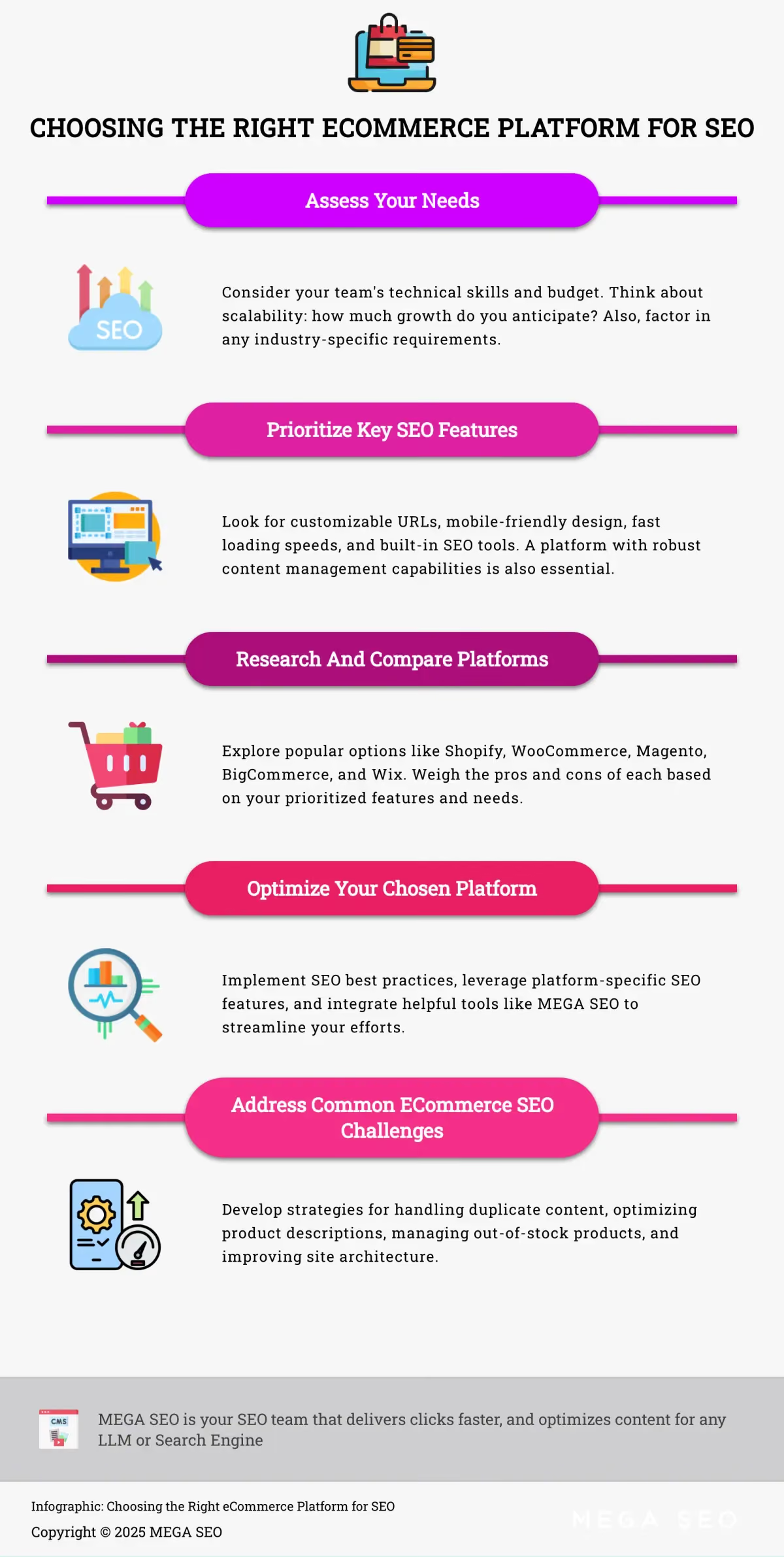
Your comfort level with technology plays a big role in platform selection. If you’re comfortable coding or have developers on your team, a platform like Magento, known for its flexibility and open-source nature, might be a good fit. If you’re looking for a more user-friendly experience, platforms like Shopify or Squarespace are great options. They offer intuitive interfaces, allowing you to focus on your products and marketing. Consider your current technical skills and available resources when making your decision.
Budget and Resources
Budget is always a factor. eCommerce platforms come with varying price tags, from affordable monthly subscriptions to hefty annual fees. As a small business, you’re likely juggling multiple priorities, and SEO can sometimes feel like a luxury. But it’s essential for long-term success. Look for a platform that offers a good balance of features and affordability. Some platforms offer built-in SEO tools, while others require third-party integrations, which can add to the cost. Assess your budget and resources to find a platform that meets your needs. Small businesses often face unique SEO challenges, so a cost-effective solution is key.
Scalability for the Future
Think about the future. Where do you see your business in five years? Choosing a scalable platform is crucial. If you anticipate significant expansion, a platform like BigCommerce, designed for larger enterprises, might be a good choice. Magento is another option known for its scalability and ability to handle large product catalogs and high traffic. Consider your long-term goals when selecting a platform.
eCommerce SEO by Industry
Every industry has its own nuances. Some industries require highly specialized features. Research platforms that cater to your specific industry. Some platforms are better suited for fashion retailers, while others are designed for digital products. Look for features that align with your industry’s demands, such as inventory management or specific payment gateways. The right platform will support your unique business requirements.
Pick the Right Platform for Your SEO
Picking the right eCommerce platform is a big decision, especially when SEO is a top priority. The ideal platform supports your SEO strategy now and as your business grows. This section helps you assess your needs and choose a platform that sets you up for long-term success.
What Are Your SEO Needs?
Before comparing platforms, take stock of your current situation. What’s your business size, and what are your must-have features? A small business with limited resources might prioritize ease of use and affordability, while a larger enterprise might need advanced features and customization. As one article points out, the best platform depends on your business size and individual needs. Shopify works well for businesses of all sizes, while Wix is generally better for small to medium-sized businesses. Platforms like BigCommerce and Magento are often a good fit for larger enterprises needing more complex features. Understanding your specific needs is the first step in choosing the right platform. This resource on the best eCommerce platforms for SEO offers a helpful overview of what each platform offers.
SEO vs. Other Platform Features
While SEO is crucial, it’s not the only factor. Most platforms have pros and cons regarding SEO features, so finding a perfect fit is rare. Think about your overall business needs. Do you need robust analytics, multi-channel selling, or specific integrations with other tools? Balancing SEO features with other essential functionalities will ensure you choose a platform that supports your entire business. This WebFX article offers a good overview of the various factors to consider. Remember to think about ease of use, customization options, and scalability alongside SEO capabilities.
Your Long-Term SEO Strategy
Your eCommerce platform should support your SEO goals not just for today, but for years to come. Consider where you see your business in the future. Will you need advanced SEO functionalities like custom schema markup or complex redirects? A fully customizable platform like Magento offers maximum control, but it also requires technical expertise. If you lack in-house developers, a user-friendly platform like Shopify or Squarespace might be a better fit. Think about your long-term SEO strategy and choose a platform that can scale with your business. This will save you from migrating to a new platform later. This article comparing eCommerce platforms for SEO offers additional insights.
eCommerce SEO Tools and ResourcesSEO Tools and Resources
The right tools and resources can significantly impact your eCommerce SEO success. From optimizing your product pages to analyzing your website traffic, these tools can streamline your workflow and improve your search rankings. Let’s explore some essential categories:
Essential SEO Plugins and Extensions
Plugins and extensions add SEO functionality to your eCommerce platform. If you’re using WooCommerce, explore WordPress plugins that offer features like automated sitemaps and schema markup. These tools can make managing your SEO much easier. Shopify users also have access to various SEO apps within the Shopify App Store. Look for tools that align with your specific needs and technical skills.
Analytics Tools for eCommerce
Understanding your website’s performance is crucial for effective SEO. Google Analytics is a powerful free tool that provides insights into your website traffic, user behavior, and conversions. Consider supplementing Google Analytics with other analytics platforms to get a comprehensive view of your website’s performance.
Keyword Research for eCommerce
Keyword research forms the foundation of any successful SEO strategy. Tools like Semrush, Ahrefs, and Moz Keyword Explorer can help you identify relevant keywords, analyze search volume, and understand competitor strategies. Thorough keyword research is essential for optimizing your product descriptions, category pages, and blog content. MEGA SEO also offers automated keyword research tools designed specifically for eCommerce businesses. Our tools can help you discover high-potential keywords and integrate them seamlessly into your content. Book a demo to see how MEGA SEO can simplify your keyword research process.
Technical SEO Audit Tools
Technical SEO focuses on optimizing the technical aspects of your website to improve its crawlability and indexability. Tools like Screaming Frog, Google Search Console, and SEMrush Site Audit can help you identify technical issues like broken links, slow loading times, and crawl errors. Addressing these technical issues can significantly impact your search rankings and user experience. MEGA SEO also offers automated technical SEO audits and solutions, making it easy to identify and fix technical problems on your eCommerce website. Explore our free tools to get started.