
It can take over 30 interactions to win a new B2B customer. For a small business with a lean team and a tight budget, that number sounds less like a strategy and more like an impossible task. How can you manage that many touchpoints without burning out your team or your budget? The answer isn't about outspending your competition; it's about working smarter. The core B2B buyer need for helpful, consistent information hasn't changed. This guide provides a practical framework for building a manageable multi-touchpoint strategy that builds trust and drives growth.
Key Takeaways
- Adapt to the new buyer-led journey: B2B buyers now research extensively on their own and make decisions by committee, so your strategy must consistently deliver valuable content across multiple channels to build the trust required for a sale.
- Create a cohesive multi-channel experience: Guide buyers by layering different interactions that build on each other. Use educational content to establish authority, email to nurture leads, and direct calls to close deals, ensuring every touchpoint provides genuine value.
- Work smarter with automation and AI: A complex strategy is manageable for small businesses that use technology effectively. Automate repetitive tasks like content publishing and ad management to ensure consistency, freeing up your time for direct customer engagement.
Understanding the B2B Sales Landscape
Before you can build a winning multi-touchpoint strategy, you need to understand the field you’re playing on. Selling to other businesses, or B2B sales, operates under a different set of rules than selling directly to consumers (B2C). The journey from initial interest to a final purchase is longer, involves more people, and requires a deeper level of trust. Recognizing these distinctions is fundamental to creating a sales process that doesn't just generate leads, but consistently turns them into loyal customers. This landscape shapes every interaction you have, influencing the type of content you create, the channels you use, and the way you measure success.
B2B vs. B2C Sales: Key Differences
The most significant difference between B2B and B2C sales lies in the complexity of the decision-making process. B2C purchases are often driven by emotion and individual need, leading to a relatively short sales cycle. In contrast, B2B sales typically involve higher-priced products or services, which means the stakes are higher. As a result, the B2B sales cycle is much longer and requires input from multiple decision-makers within the company. You aren't just selling to one person; you're selling to a committee that may include a department head, a finance manager, and an end-user, each with their own priorities and concerns. This requires a strategy that builds consensus and provides value to different stakeholders over an extended period.
Common B2B Sales Methodologies
To manage the complexities of B2B transactions, many businesses adopt a formal sales methodology. Think of these as a playbook or a guiding philosophy for your sales team. Some popular approaches include Solution Selling, where the focus is on solving a customer's specific problem, and Account-Based Sales, which treats an entire company as a single market, tailoring all communications to its specific needs. Another well-known framework is The Challenger Sale, which encourages sales reps to teach prospects something new about their business. Choosing a methodology helps create a consistent and repeatable process, ensuring every member of your team approaches customer interactions with a clear, unified strategy that prioritizes building relationships and demonstrating value.
Key Performance Indicators (KPIs) for B2B Sales
You can't refine your strategy if you don't measure its effectiveness. Key Performance Indicators (KPIs) are the specific metrics you track to understand what’s working and where you need to improve. For B2B sales, common KPIs include your win rate, which is the percentage of leads that become customers, and the average deal size. Another critical metric is sales velocity, which measures how quickly deals move through your pipeline from first contact to close. Tracking these numbers gives you a clear picture of your sales health. For small businesses, using automated SEO and content tools can directly influence these KPIs by improving lead quality and nurturing prospects more efficiently, helping you close more deals, faster.
Why B2B Sales Now Require 30 Touchpoints
If it feels like closing a B2B deal takes more effort than it used to, you’re not imagining it. The path from a potential lead to a paying customer has become longer and more complex. Industry research suggests it can now take over 30 interactions to convert a B2B buyer. This isn't because your product is less valuable or your sales pitch is off; it's because the buyer's journey itself has fundamentally changed.
Today’s buyers are researchers first. Before they ever speak to a sales representative, they are well into their decision-making process. In fact, B2B buyers now engage with an average of 13 pieces of content before choosing a vendor. They are reading your blog posts, checking your social media, and comparing your solution to competitors on their own time. This self-directed research means you need a deep library of helpful content just to be part of the conversation. Your SEO strategy is no longer just about getting found; it's about providing value at every step of their independent investigation.
Adding to the complexity, you’re rarely selling to just one person. Decisions are now made by committees, with each stakeholder bringing their own questions and priorities to the table. The finance lead wants to know about ROI, the technical user needs to understand implementation, and the department head is focused on strategic alignment. Each of these multiple stakeholders requires different information to feel confident, multiplying the number of touchpoints needed to get everyone on board.
This environment has also created a trust deficit. With so much information available, buyers are naturally skeptical. A single ad or a cold email is easy to ignore. Trust is built through consistency and repeated exposure to your brand's expertise across multiple channels. Since 75% of B2B purchasers rely heavily on content to make decisions, your ability to show up consistently with valuable insights is what separates you from the noise. This requires a coordinated effort across your website, social media, and even Paid Ads to stay top-of-mind and build the credibility needed to win the deal.
What Changed in the B2B Buying Journey?
If you feel like closing a deal is harder than it used to be, you’re not imagining it. The straightforward sales process of a few years ago—a discovery call, a demo, a proposal—has been replaced by a much longer and more complex journey. Today’s B2B buyers are more independent, informed, and cautious than ever before. They conduct extensive research on their own time, across multiple channels, long before they ever speak to a salesperson.
This shift means buyers interact with your brand in dozens of small ways before making a decision. They might read a blog post from a Google search, see an ad on LinkedIn, watch a video, and check reviews, all before you even know they exist. Each of these interactions is a "touchpoint," and the number of them required to build enough trust for a sale has grown dramatically. For small businesses with limited time and resources, managing this new reality is a significant challenge. Understanding what changed is the first step toward adapting your strategy to meet modern buyers where they are.
Why B2B Decisions Are More Complicated Than Ever
One of the biggest changes in the B2B world is the disappearance of the single decision-maker. Today, purchasing decisions are often made by a committee, with individuals from finance, IT, and operations all weighing in. This adds layers of complexity and extends the timeline, as each person has different priorities and concerns that need to be addressed. As a result, B2B marketers face longer sales cycles and a greater need to build relationships with multiple stakeholders. It’s no longer about convincing one person; it’s about building consensus across a team. This group dynamic is a major reason why a simple sale can now require more than a dozen interactions to get across the finish line.
Why Buyers Don't Trust Traditional Marketing
Let’s be honest: buyers are tired of being sold to. They’ve been bombarded with generic email blasts, aggressive cold calls, and exaggerated claims for years. This has led to a natural decline in trust for traditional marketing tactics. The bar for getting someone’s attention and earning their confidence is much higher now. Buyers are looking for authenticity and genuine value, not another sales pitch. To succeed, you have to create content with integrity and focus on helping, not just selling. Every piece of content you create is an opportunity to prove you’re a credible, trustworthy partner, which is essential in a low-trust environment.
The Power of Peer Recommendations in Early Discovery
The first place a potential customer looks for a solution is rarely Google anymore. Instead, they turn to their most trusted resource: their network. Buyers trust their friends and colleagues far more than any advertisement or company website. The search often begins with a simple question posted in a private Slack channel, a LinkedIn group, or a direct message to a respected peer. This shift means that by the time a buyer lands on your website, they've already been influenced by opinions you can't control. Building a strong reputation and delivering a consistently positive customer experience is critical, as these are the foundations of the word-of-mouth referrals that get you into the initial consideration set.
The Emotional and Psychological Drivers of B2B Buyers
It’s a common misconception that B2B decisions are purely logical, driven by spreadsheets and feature comparisons. The truth is, business purchases are deeply personal. People buy based on feelings that connect to their own professional success and security. They choose a solution because they believe it will help them earn a promotion, make their job easier, or prevent a costly mistake that could put their reputation on the line. Your marketing needs to speak to these underlying emotional drivers. Instead of just listing what your product does, show how it helps your customer win, relieves their stress, and makes them look good to their team and their boss.
How Modern Buyers Use AI for Research
The research phase of the buying journey is also getting a major upgrade. A growing number of buyers now use AI tools for purchasing decisions, turning to platforms like ChatGPT to quickly summarize markets, compare vendors, and get answers to specific questions. This means your content needs to be optimized not just for traditional search engines, but for language models as well. If your website doesn't clearly and concisely state what problems you solve and for whom, you risk being excluded from these AI-generated shortlists. To compete, businesses need a strategy that ensures their value proposition is easily discoverable by these new gatekeepers, which is where automated tools like MEGA AI's SEO platform can provide a critical advantage.
Cutting Through Information Overload and Buyer Skepticism
The internet gives buyers access to a nearly infinite amount of information, which is both a blessing and a curse. While they can research solutions independently, they are also drowning in content from every direction. This information overload makes it difficult to distinguish signal from noise, leading to increased skepticism. Buyers now consume a large volume of content before feeling ready to make a purchase because they’re trying to validate claims and find a source they can rely on. To cut through the clutter, your message must be consistent, clear, and reinforced across many different channels, from your website’s SEO content to your social media presence.
Why Do B2B Buyers Need So Many Touchpoints?
It’s not your imagination—getting a B2B customer to sign on the dotted line takes more effort than it used to. The journey from initial awareness to a final purchase has become longer and more complex. Buyers are more cautious, have more options, and face more internal pressure to make the right choice. This shift requires a more persistent and strategic approach, where multiple interactions build the trust and confidence needed to close a deal. Let's break down the key reasons behind this change.
The Impact of Content Saturation
The barrier to publishing content has all but disappeared. Today, every company is a media company, flooding the internet with blog posts, social media updates, and videos. This content saturation has created a low-trust environment where it’s difficult for buyers to distinguish valuable information from noise. As marketing expert Nick Avaria explains, this reality means you have to engage with your audience through multiple touchpoints just to prove you’re a credible authority. A single touchpoint gets lost; a consistent presence builds familiarity and trust over time.
Winning the Battle for Your Buyer's Attention
We live and work in an attention economy where your buyer’s focus is the most valuable and scarce resource. They are constantly bombarded with messages from competitors, colleagues, and other platforms. Research shows that B2B buyers need to interact with a significant amount of content before they feel ready to make a decision. Your strategy must account for this. By creating multiple touchpoints through channels like SEO and paid ads, you increase the chances of capturing their attention at different stages of their journey, keeping your brand top-of-mind when they are finally ready to act.
Why B2B Buyers Play It Safe
A B2B purchase is rarely an impulse buy. It’s a significant investment that can impact a company’s budget, workflow, and even an employee’s career. Because the stakes are high, buyers are naturally risk-averse. They need reassurance that they are making the right decision. According to Aexus, closing a deal can require 8 to 15 touchpoints, or even more for complex sales. Each interaction—whether it’s a case study, a demo, or a helpful article—serves as another piece of evidence that builds confidence and helps justify the purchase internally.
Selling to a Committee, Not a Person
In most B2B scenarios, you aren’t selling to a single individual. You’re selling to a buying committee with multiple decision-makers, each with their own priorities and concerns. The marketing manager cares about features, the CFO is focused on ROI, and the IT director is concerned with integration. B2B marketing strategies must navigate these longer sales cycles by engaging every stakeholder. This means your touchpoints need to be varied enough to address different pain points and provide value to everyone involved in the decision-making process.
How the Attention Economy Impacts B2B Sales
The modern marketplace runs on a finite resource: your buyer’s attention. In what’s known as the attention economy, every business is competing for the same limited focus from potential customers. This constant competition for visibility is a primary reason why the B2B sales cycle has become so much longer. A single ad, email, or blog post is no longer enough to make a lasting impression.
Buyers are overwhelmed with information from every direction. To earn their trust and eventually their business, you need to show up consistently and helpfully across multiple channels over time. Each touchpoint serves as a small, persistent reminder of your value. It’s not about interrupting their day but about being a reliable resource they can turn to when they are finally ready to solve their problem. For small businesses and startups, this means finding a sustainable way to maintain a presence without draining precious time and resources.
How to Stand Out When Everyone's Shouting
Every company with a website is now a publisher. Your competitors, industry publications, and even your potential customers are all creating content, adding to an endless stream of information. In this environment, a single touchpoint is like a whisper in a crowded stadium. To be heard, your message needs to be consistent and strategically placed.
The goal is to create a presence that feels both familiar and valuable. When a buyer sees your brand pop up in a search result, then again in their social feed, and later in an industry newsletter, it builds recognition. This repetition isn't about being loud; it's about being reliably present. It signals that you are an established and active player in your field, which is a crucial step in building the trust required for a B2B purchase.
Cutting Through the Clutter in Crowded Markets
Simply producing a high volume of content isn’t enough to capture a buyer’s attention. With so much clutter, B2B buyers have become selective about what they engage with. They need to interact with a significant amount of content before feeling ready to make a purchase, but that content must be relevant and helpful to their specific problems.
Your touchpoints must be designed to cut through the noise by offering genuine value. An educational blog post that solves a common problem, a targeted ad that speaks to a specific pain point, or a case study that provides a clear solution are all examples of strategic touchpoints. Each one should be a deliberate effort to help your buyer, not just to sell to them. This approach builds authority and makes your brand a go-to resource instead of just another vendor.
Turning Likes and Views into Real Conversations
Vanity metrics like likes and views can feel good, but they don’t directly translate into sales. The real challenge is transforming passive engagement into meaningful business conversations. Since research shows that three-quarters of B2B buyers rely on content to make purchasing decisions, each piece of content is an opportunity to guide them one step closer to a conversation.
Think of each touchpoint as a stepping stone. A social media post can lead to a blog article, which can lead to a newsletter subscription, which can then lead to an invitation for a product demo. This sequence of interactions builds a relationship over time. It allows you to demonstrate your expertise and build trust gradually, so when you finally ask for a sales call, the prospect is already warmed up and understands the value you offer.
What Types of Touchpoints Actually Work?
With buyers needing more interactions before making a decision, the key isn't just to create more noise. It's about creating a series of meaningful, connected experiences that guide a prospect from awareness to a confident purchase. Not all touchpoints are created equal. A successful strategy layers different types of interactions to build trust, demonstrate value, and stay present in the buyer's mind. The goal is to be helpful and relevant at every step, not just persistent. Here are five types of touchpoints that are essential for any modern B2B marketing plan.
Build Authority with Educational Content
Before a buyer is ready to hear a sales pitch, they need to understand their problem and the potential solutions. This is where educational content shines. High-quality blog posts, guides, and articles that address your audience’s pain points establish your brand as a credible authority. Generating leads requires you to create educational content and nurture relationships across multiple touchpoints. Instead of pushing a product, you’re offering genuine help. For small businesses, consistently producing this content can feel overwhelming. This is where an AI-powered agent like MEGA AI’s Lindsay can manage the entire process, from identifying relevant topics to writing and optimizing articles that attract organic traffic.
Engage Authentically on Social Media
Social media platforms are crowded, and buyers have become adept at tuning out generic corporate posts. As one expert notes, marketing is a low-trust environment where "everybody now is a media company." The touchpoints that cut through are the ones that feel authentic. This means sharing your educational content, participating in relevant conversations, and showing the human side of your brand. It’s less about direct selling and more about building a community and being a valuable resource. While you can use paid ads to amplify your message, the core of your social strategy should be genuine engagement that builds familiarity and trust over time.
Nurture Leads with Smart Email Campaigns
Once a prospect shows interest—by downloading a guide or signing up for a newsletter—email becomes a powerful tool for nurturing that relationship. The key is to move beyond generic email blasts. Effective lead nurturing uses personalization and automation to deliver relevant information based on a prospect's behavior and interests. You can send case studies related to their industry, share articles that address their specific challenges, or invite them to a webinar. Each email is another touchpoint that keeps your brand on their radar and gently moves them through their decision-making process, providing value at every step.
Making Demos and Sales Calls Count
Digital touchpoints are great for building awareness and educating prospects, but high-value B2B sales often require a human connection. A demo or sales call is a critical late-stage touchpoint where you can answer specific questions, address final concerns, and tailor your solution directly to the buyer's needs. Research shows that closing a B2B deal can require 8 to 15 touchpoints, with these direct conversations being some of the most important. This is the opportunity to solidify the trust you've built through other channels. Offering a clear path to book a demo gives serious buyers the direct access they need to make a final decision.
Equipping Your Internal Champion
In most B2B sales, you aren't selling to an individual; you're selling to a committee. Within that group, you'll often find an "internal champion"—someone who sees the value in your solution and advocates for it. Your job is to make their job easier. This person needs the right materials to promote the idea internally and build consensus with their colleagues. Think of these materials as targeted touchpoints for the rest of the buying committee. Provide your champion with clear case studies, ROI calculators, and shareable demo recordings. Each asset helps them answer questions from different stakeholders, whether it's the finance team asking about cost savings or the IT department concerned with implementation.
Proving ROI in the Final Decision
As buyers move toward a final decision, the conversation inevitably shifts to the bottom line. Stakeholders need to see a clear justification for the expense. This is where your series of touchpoints comes together to build a compelling business case. Every piece of content you've shared—from educational articles to detailed case studies—serves as evidence. When making a final decision, the committee wants proof of return on investment, and your content should provide it. By consistently demonstrating value and showing how your solution solves their specific financial pain points, you give your champion the data they need to get the purchase approved.
Stay Top-of-Mind with Retargeting
Buyers rarely make a purchase on their first visit to your website. They get distracted, continue their research elsewhere, or simply aren't ready. Retargeting ads are a subtle and effective way to stay top-of-mind. By showing targeted ads to people who have already visited your site, you can remind them of your value proposition without being intrusive. Every interaction is an opportunity to build trust, and a well-placed retargeting ad can be the gentle nudge that brings a prospect back. An AI agent like MEGA AI’s Erle can manage these campaigns, ensuring your ads are seen by the right people at the right time.
Actionable Methods for Understanding Your Buyers
To make your 30+ touchpoints effective, you need to know who you’re talking to. A generic, one-size-fits-all approach will get lost in the noise. The goal is to understand your buyers so deeply that every interaction feels relevant and helpful. This requires a bit of upfront work, but it’s the foundation of a strategy that builds real relationships and drives sales. By segmenting your audience, creating detailed personas, and mapping their journey, you can turn a complex process into a manageable plan.
Customer Segmentation
Customer segmentation is the process of dividing your potential customers into groups based on shared characteristics. This is especially important in B2B, where you’re rarely selling to just one person. As we’ve covered, decisions are now made by committees, with each stakeholder bringing their own questions and priorities to the table. The finance lead wants to know about ROI, the technical user needs to understand implementation, and the department head is focused on strategic alignment. Sending the same message to all three is a recipe for failure. By creating distinct segments for each role, you can tailor your content and touchpoints to address their specific concerns, making your communication far more effective.
Developing Customer Personas
Once you have your segments, the next step is to develop customer personas. A persona is a detailed profile of a semi-fictional person who represents your ideal customer within a segment. This process brings your data to life, helping you understand your buyers' goals, challenges, and motivations on a human level. This is critical because trust is built through consistency and repeated exposure to your brand's expertise. Since 75% of B2B purchasers rely heavily on content to make decisions, your ability to show up with valuable insights is what separates you from the noise. Creating personas ensures the content you produce speaks directly to the people you want to reach, building the credibility needed to win their business.
Mapping the Customer Journey
A customer journey map is a visual representation of every interaction a customer has with your brand, from their first moment of awareness to the final purchase and beyond. Mapping the customer journey helps you find problems and desires at each stage. This helps you understand common problems for each group. For example, what questions does a technical user have during the initial research phase? What information does a finance lead need when comparing solutions? By outlining these steps, you can identify gaps in your current process and pinpoint exactly where new touchpoints are needed. This map becomes your strategic guide for delivering the right message at the right time, ensuring each of your 30+ interactions serves a clear purpose.
How Small Businesses Can Create a Multi-Touchpoint Strategy
Creating a strategy that involves dozens of touchpoints might sound overwhelming, especially for a small business with limited resources. The key isn't to do everything at once but to build a consistent, integrated system that works for you. It’s about showing up in different places with a clear message that helps your ideal customer solve a problem. By focusing on a few core channels and delivering real value at each step, you can build the trust and familiarity needed to turn a prospect into a customer.
A successful multi-touchpoint strategy doesn't require a massive marketing team. It requires a smart plan that leverages content, automation, and direct engagement to build a relationship over time. The goal is to be a helpful resource, not just another company trying to make a sale. Let's walk through five practical ways you can start building this strategy for your business.
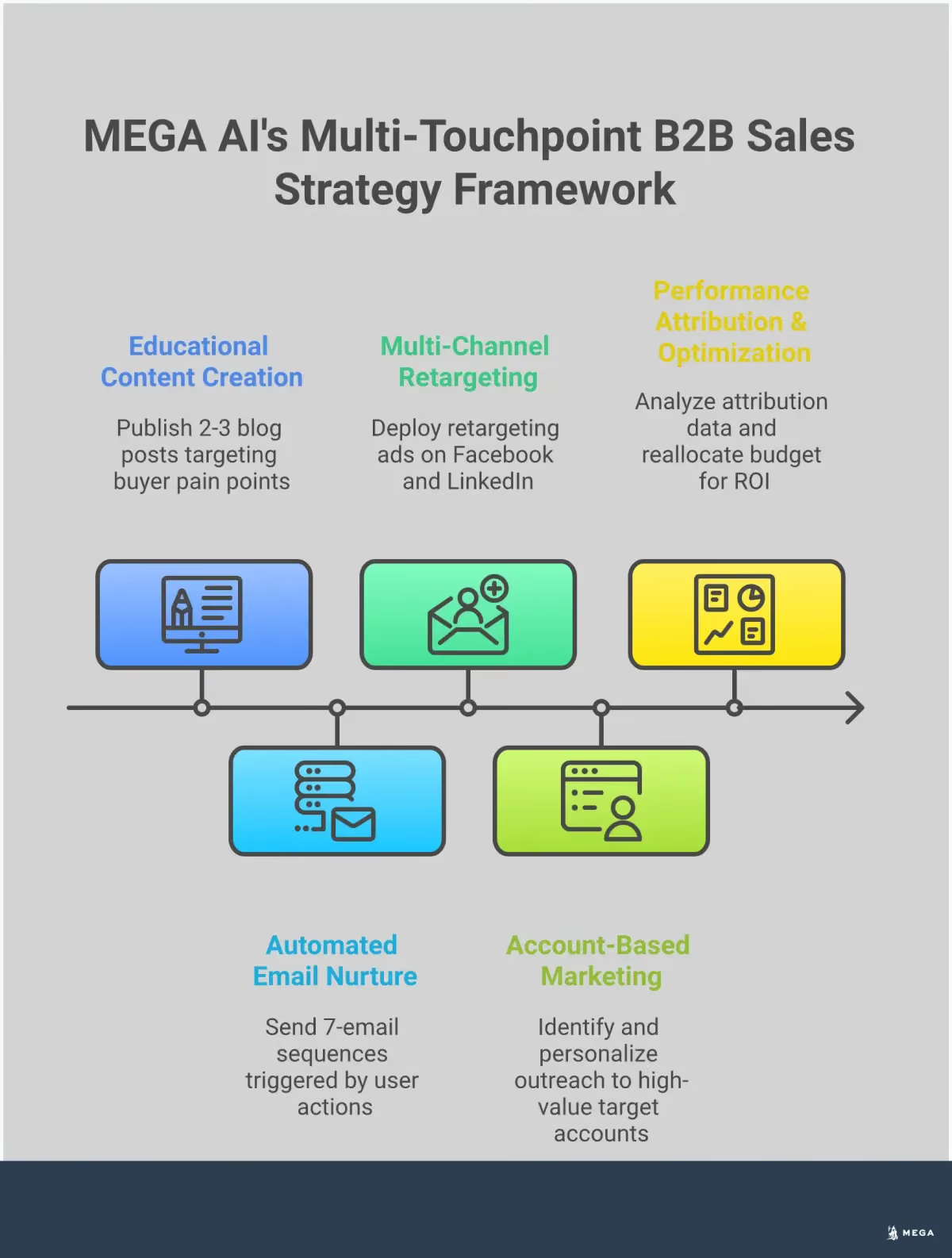
Create a Consistent Content Marketing Plan
A strong content plan is the foundation of any multi-touchpoint strategy. It’s how you build authority and attract potential customers through search engines and social media. Focus on creating educational content that directly addresses your audience’s biggest challenges, such as blog posts, how-to guides, or case studies that showcase your expertise. The goal is to become a trusted resource they turn to for information. A consistent publishing schedule keeps your brand visible and provides fresh material to share across all your other channels, creating a steady stream of valuable touchpoints that nurture relationships long before a sales conversation ever happens.
Develop a Lead-Nurturing Email Strategy
Once a potential customer shares their email address, you have a direct line of communication. A lead-nurturing strategy uses a series of automated emails to guide prospects through their buying journey. Instead of sending generic newsletters, segment your audience and send targeted content based on their interests and actions. For example, if someone downloads a guide on SEO, you can follow up with emails that offer more advanced tips or a relevant case study. Personalization and automation are essential here, as they allow you to deliver the right message at the right time without manual effort, making each email feel like a helpful, one-on-one conversation.
Use Social Media to Build Relationships
For B2B companies, social media is less about direct selling and more about building community and credibility. Use platforms like LinkedIn to share your content, engage in industry discussions, and connect with potential customers on a more personal level. It’s an opportunity to show the human side of your brand and build rapport. By consistently sharing valuable insights and participating in relevant conversations, you create low-pressure touchpoints that keep your business top-of-mind. Over time, this consistent presence helps you optimize every touchpoint and establish your brand as a knowledgeable and approachable expert in your field.
Host Webinars for Direct Engagement
Webinars offer a powerful way to connect with your audience in a live, interactive format. They allow you to demonstrate your product, share deep insights on a specific topic, and answer questions in real time. This direct engagement is incredibly effective for building trust and moving interested prospects closer to a decision. You can host webinars on industry trends, customer success stories, or educational topics that provide immense value to your audience. Offering engaging content at every stage of the buyer's journey, not just at the point of sale, is crucial for building the confidence needed for a B2B purchase.
Focus on High-Value Leads with ABM
Account-Based Marketing (ABM) is a highly focused approach that can make a multi-touchpoint strategy more manageable for small businesses. Instead of marketing to a broad audience, you identify a select list of high-value companies that are a perfect fit for your services. Then, you create personalized campaigns designed to engage key decision-makers within those specific accounts. This strategy combines targeted content, personalized outreach, and advertising to surround your ideal customers with a consistent message. An account-based approach ensures your marketing efforts are concentrated where they will have the greatest impact, leading to more efficient use of your resources and higher conversion rates.
Using Technology to Manage Multiple Touchpoints
Managing dozens of touchpoints for every potential customer can feel like an impossible task, especially for a small business. The good news is you don’t have to do it all manually. The right technology can help you create, manage, and optimize a complex buyer journey efficiently, turning a daunting process into a manageable one. By leveraging automation, AI, and integrated data, you can deliver a consistent and personalized experience that guides buyers toward a decision.
Use Automation for Consistent Outreach
Consistency is key to staying top-of-mind, and automation is how you achieve it without burning out your team. Tools that handle automated email workflows or schedule social media posts ensure your message gets out regularly. This is where autonomous agents shine. For example, an AI agent can consistently publish new blog posts or manage ad campaigns, creating a steady drumbeat of touchpoints that build familiarity and trust with your audience over time. This frees your team to focus on strategy instead of repetitive execution.
Personalize at Scale with AI
Generic messages get ignored. AI allows you to tailor your outreach to specific customer segments, even with a small team. It can analyze data to understand buyer behavior, qualify leads, and generate content that speaks directly to their needs. Instead of sending the same message to everyone, AI-powered SEO tools can create content optimized for different search intents. Similarly, an ads platform can generate hundreds of creative variations to see what resonates with specific audiences, making every touchpoint feel more relevant and personal.
Track Everything with Omnichannel Integration
Your customers interact with you on your website, social media, email, and through ads. To understand their journey, you need a unified view of their activity. Integrating your marketing tools is essential for creating a seamless, omnichannel experience. When your CMS, ad platforms, and analytics talk to each other, you can see which touchpoints are most effective. This allows you to connect the dots between a blog post a prospect read last month and the demo they booked today, giving you a clear picture of what works.
Optimize Your Strategy with Data
A multi-touchpoint strategy isn't something you set and forget. It requires constant refinement based on what the data tells you. Effective marketing relies on data-driven decision making to understand what’s working and what isn’t. AI agents can take this a step further by automatically optimizing your campaigns. For instance, an AI for Paid Ads can shift your budget to the highest-performing creatives or audiences in real time, ensuring your resources are always focused on what drives results.
How MEGA AI Automates SEO and Paid Ads Touchpoints
For a small business, consistently creating enough high-quality content for a multi-touchpoint strategy is a major challenge. This is where automation becomes essential. MEGA AI’s SEO platform handles the entire content lifecycle, from identifying what your audience is searching for to generating optimized articles that answer their questions. It even updates your existing content to keep it fresh and ranking high, creating a reliable engine for educational touchpoints that build authority over time. On the advertising front, our Paid Ads tool automates the creation of hundreds of ad variations and intelligently shifts your budget to the top performers. By automating both the foundational content that builds trust and the persistent ads that keep you top-of-mind, MEGA AI makes it possible for any business to manage a sophisticated, data-driven strategy. This frees you up to focus on the human touchpoints, like demos and sales calls, that close deals.
What Challenges Do Small Businesses Face?
Understanding that you need a multi-touchpoint strategy is one thing; having the resources to execute it is another. Small businesses operate with a lean team, a tight budget, and limited time. These realities present unique hurdles when trying to connect with B2B buyers across dozens of touchpoints. Here are the most common challenges.
How to Succeed with a Limited Budget and Team
For small businesses, marketing budgets are often stretched thin, which limits the ability to implement comprehensive strategies. But the constraint isn't just financial. When your team is small, each person wears multiple hats, leaving little time to manage the 30+ touchpoints needed to nurture a lead. A well-defined B2B marketing strategy is essential, but finding the hours to implement it consistently is a major obstacle for resource-strapped teams.
Understanding Complex Buyer Behavior
The B2B sales cycle is rarely a straight line. It involves multiple decision-makers, long consideration periods, and a deep need for relationship-building. For a small business, figuring out the specific needs of each stakeholder is a huge challenge. Without a dedicated research team, it’s difficult to gather the insights needed to make every touchpoint relevant. This often leads to generic messaging that fails to connect with anyone, prolonging the sales process and wasting valuable resources.
The Challenge of Maintaining High-Quality Content
In a multi-touchpoint strategy, content is the currency of connection. Buyers expect relevant and engaging information at every stage of the buyer's journey. Creating a steady stream of high-quality blog posts, social media updates, and case studies is a massive undertaking for small teams. The pressure to produce can lead to a drop in quality, and generic content won't build the trust required to guide a prospect through their decision.
How to Choose and Integrate the Right Tech
The market is flooded with tools promising to simplify marketing. While advanced sales technology is critical for managing multiple touchpoints, choosing the right stack is a challenge. Small businesses can get overwhelmed by the options or invest in platforms that are too complex. Even with the right tools, getting them to work together seamlessly is another hurdle. Disconnected systems create data silos, making it harder to personalize outreach and track the customer journey.
How to Measure Success Across Your Touchpoints
Tracking the effectiveness of a multi-touchpoint strategy can feel overwhelming. With interactions happening across your website, social media, email, and ads, it’s easy to get lost in data. The key isn’t to count every single touchpoint but to understand which ones are making a real impact. For small businesses, this is especially important. You need to know where your limited time and budget are generating the best results so you can double down on what works. This is about working smarter, not just harder, to connect with potential customers in a meaningful way.
Measuring success in a complex buying journey means shifting your focus from volume to value. Instead of asking, "How many times did we contact this lead?" ask, "How did our interactions build trust and move them closer to a decision?" This requires a more thoughtful approach to analytics, one that prioritizes engagement quality, relationship strength, and clear conversion paths. By using the right tools and focusing on the right metrics, you can gain a clear picture of your marketing performance and make smarter decisions to grow your business. Platforms that offer end-to-end SEO and paid ads management can simplify this by consolidating data and providing clear performance insights, taking the guesswork out of your strategy.
Why Engagement Quality Matters More Than Quantity
A "like" on a social media post is nice, but it doesn't tell you much about a buyer's intent. Quality engagement goes deeper. It’s a thoughtful comment on your blog, a reply to your email newsletter, or the time a prospect spends watching your product demo. These actions signal genuine interest and are far more valuable than passive views. Since B2B buyers often take months to make a decision, building these personal connections is what truly matters.
To measure quality, look at metrics that reflect active participation. Track comment sentiment, email reply rates, and webinar attendance duration. These indicators show that your audience isn't just seeing your content—they're absorbing it and finding it valuable enough to interact with. This focus helps you refine your content to better meet your audience's needs.
How to Attribute Success to the Right Touchpoints
Marketing attribution is the process of determining which touchpoints get credit for a conversion. With buyers engaging with more than a dozen pieces of content before making a decision, it’s clear that no single interaction is solely responsible for the final sale. A prospect might discover your blog through a search, follow you on LinkedIn, click a retargeting ad, and then finally book a demo after receiving an email. Each step played a role.
Instead of relying on simplistic first-touch or last-touch models, a multi-touch attribution approach gives you a more accurate view of what’s working. It helps you understand how different channels work together to nurture a lead. This insight is critical for optimizing your marketing spend and ensuring your efforts are focused on the most effective strategies.
How to Measure Customer Relationship Strength
A strong customer relationship is built on a foundation of consistent, valuable interactions over time. You can measure the strength of these relationships by tracking repeat engagement. Does a prospect open every email you send? Do they consistently visit your blog for new articles? This pattern of behavior indicates a high level of trust and interest. It shows that you’ve become a go-to resource for them.
One way to quantify this is by implementing a lead scoring system, where you assign points to different engagement actions. For example, attending a webinar might be worth more points than downloading an ebook. This helps your team identify the most engaged, sales-ready leads. Maintaining consistent engagement across channels is key to building and strengthening these valuable relationships throughout the long buyer journey.
Track Conversions Across Every Channel
A conversion isn't always the final purchase. It can be any valuable action a prospect takes, such as signing up for your newsletter, downloading a case study, or requesting a quote. Tracking these "micro-conversions" across all your channels provides a clearer picture of your funnel's health. It shows you how effectively you’re moving prospects from one stage to the next, from initial awareness to active consideration.
Using a marketing automation platform is essential for this kind of omnichannel tracking. It allows you to connect the dots between a click on a paid ad and a form submission on your website, giving you a unified view of the customer journey. This integrated data helps you understand how each channel contributes to your overall goals and allows you to optimize your entire strategy, not just individual campaigns.
Common Multi-Touchpoint Mistakes to Avoid
Creating 30+ touchpoints sounds like a lot of work, and it is. But the goal isn't just to make contact; it's to build a relationship. A thoughtful strategy guides prospects through their journey, while a clumsy one can push them away for good. As you build your approach, be mindful of a few common mistakes that can undermine your efforts. Getting this right means being persistent without being a pest and helpful without being overwhelming. It’s a balance that requires a clear plan and a focus on the buyer’s experience, not just your sales targets. By avoiding these pitfalls, you can make sure every touchpoint counts.
Are You Overwhelming Your Prospects?
There’s a fine line between staying top-of-mind and becoming a nuisance. Bombarding a potential customer with daily emails, constant ad retargeting, and aggressive sales calls will likely get you ignored or blocked. Buyers need time to process information and move through their decision-making process. Effective campaigns require businesses to understand their audience’s pain points, create educational content, and nurture relationships across multiple touchpoints. The key is to provide value at a reasonable pace. Focus on a strategic cadence that aligns with the typical buying cycle in your industry. Each interaction should feel helpful and relevant, not like another interruption in their busy day.
Avoid Sending Inconsistent Messages
When a buyer interacts with your brand, they should have a seamless experience. Your website, social media posts, paid ads, and sales conversations should all tell the same core story. Inconsistent messaging creates confusion and erodes trust. If your ads promise one thing and your landing page delivers another, you’ll lose credibility instantly. This is why sales and marketing alignment is so important. Research shows that when teams are aligned, companies see significantly higher sales win rates and better customer retention. Before you launch any campaign, make sure every team member and every piece of content is grounded in the same brand messaging framework.
Focus on Value, Not Just Volume
While it’s true that buyers engage with a lot of content before making a purchase, the quality of that content is what truly matters. Sending 30 generic, low-effort emails is less effective than five highly relevant, educational touchpoints. Each interaction is an opportunity to demonstrate your expertise and build authority. Instead of just trying to hit a number, focus on creating valuable resources that address your audience's specific challenges. A well-researched blog post, a helpful case study, or an insightful webinar will do more to build trust than a dozen empty check-in emails. Your SEO strategy should focus on generating content that answers real questions, not just ranking for keywords.
Don't Forget to Track and Optimize
Executing a multi-touchpoint strategy without tracking its performance is like driving with your eyes closed. You need to know which channels are working, what messages resonate, and where prospects are dropping off. Understanding buyer behavior allows you to deliver relevant content at the right time. Using marketing automation tools can help you schedule follow-ups and deliver personalized content based on how leads interact with your brand. By tracking metrics for your paid ads and organic content, you can make data-driven decisions to refine your approach. This continuous optimization ensures your efforts become more effective over time, turning your touchpoints into a powerful engine for growth.
How to Build Your Multi-Touchpoint Strategy
Creating a strategy that covers 30 or more touchpoints might sound overwhelming, especially for a small business. The key isn't to do everything at once, but to build a thoughtful, sustainable system that consistently reaches your buyers where they are. It’s about creating a series of connected experiences that guide potential customers from initial awareness to a final decision. This means mapping out your buyer's journey and identifying the most effective ways to engage them at each stage.
A successful multi-touchpoint strategy is cohesive. Your blog content should align with your social media posts, and your email campaigns should reflect the messaging in your paid ads. This consistency builds trust and makes your brand memorable. By focusing on a clear plan, you can manage these interactions without stretching your resources too thin. The goal is to create a seamless experience that feels personal and helpful, making it easier for buyers to choose you when they're ready.
Prioritize High-Impact Touchpoints
Not all touchpoints are created equal. While some industry estimates suggest it can take 30 or more interactions to close a B2B deal, trying to be everywhere will only burn you out. Instead, focus your energy on the channels and activities that have the most impact on your specific audience. Start by understanding where your ideal customers spend their time. Are they active on LinkedIn? Do they rely on Google searches to find solutions? Answering these questions helps you prioritize. A well-researched blog post that solves a major pain point or a targeted ad campaign can be far more effective than a dozen scattered social media updates.
Create a Consistent Message
Every interaction a potential customer has with your business is an opportunity to build trust. Your message must be consistent across every channel, from your website's homepage to the content of your email newsletters. When your branding, tone, and core value proposition are the same everywhere, it reinforces who you are and what you stand for. This consistency makes your brand feel reliable and professional. According to MarketingProfs, this alignment is crucial for building a trusted B2B brand, making it easier for potential clients to understand and engage with your offerings.
Use Automation, but Keep It Human
Automation is essential for managing a multi-touchpoint strategy without a large team. Tools can handle repetitive tasks like sending follow-up emails or scheduling social media posts, ensuring consistent outreach. However, automation should support, not replace, the human element. Use AI-powered platforms to handle the heavy lifting of SEO and paid ads, which frees you up to engage in meaningful conversations. As noted by Idea Grove, successful lead nurturing balances efficiency with personalization. Use automation to deliver the right message at the right time, but ensure there's always a real person ready to answer questions and build a genuine relationship.
Develop a Sustainable Long-Term Plan
The B2B buying journey is often long and complex, so your marketing strategy needs to be built for the long haul. One-off campaigns won't be enough to stay top-of-mind. A sustainable, long-term plan ensures you are consistently engaging with prospects across different channels over time. This involves creating an ongoing content calendar, maintaining a regular email cadence, and continuously optimizing your ad spend. An effective B2B marketing strategy requires persistence. By planning for sustained effort, you build momentum and ensure your brand is the one buyers think of when they are finally ready to make a purchase.