
Managing paid ad campaigns can feel like a full-time job on its own, right? Between juggling bids, tweaking ad copy, and analyzing performance across different platforms, it's easy for your day to disappear. Many startups and small businesses find themselves stretched thin, wishing they had more hours to focus on strategy and growth. This is where understanding how to automate paid ad campaigns becomes a game-changer. It’s not about setting things on autopilot and forgetting them, but about using smart technology to handle the repetitive, data-heavy tasks. This guide will walk you through practical steps and tools, showing you how to reclaim your time and make your ad spend work harder.
Key Takeaways
- Automate Repetitive Tasks: Let software handle routine ad campaign duties, freeing your time for strategic planning and creative work.
- Leverage Automation Tools: Employ platform features or solutions like MEGA AI for tasks like bulk uploads, content variations, and intelligent budget management.
- Refine Campaigns Continuously: Consistently monitor metrics, A/B test, segment audiences, and use AI to keep improving your ad performance.
What is Paid Ad Campaign Automation?
Paid ad campaign automation means using software and technology to handle and fine-tune your digital advertising with less hands-on work. Think of it as having a dedicated digital assistant that takes on many of the time-consuming, data-intensive tasks involved in running successful ad campaigns. This could include anything from adjusting your bids in real-time, A/B testing different ad creatives, to reallocating your budget to the best-performing channels. By automating these processes, your marketing team—whether you're a busy startup founder, a small business owner wearing multiple hats, or a digital marketing agency juggling several clients—can reclaim valuable time. This allows you to focus on higher-level strategy, creative development, and analyzing the broader impact of your campaigns. As businesses strive to reach their ideal customers effectively, automation has become a crucial component in managing pay-per-click (PPC) campaigns. It offers a clear path to greater efficiency and often, improved outcomes. The main goal here is to streamline your workflows, make data-driven decisions more rapidly, and ensure your ad spend is working as hard as possible for you. In a competitive digital space, this isn't just a nice-to-have; it's becoming essential for staying ahead and making your marketing budget truly count, especially when resources are tight.
Define Paid Ad Automation and Its Importance
Essentially, paid advertising is about crafting specific campaigns for particular audiences, setting budgets, and fitting this into your overall marketing plan. Paid ad automation uses technology to manage many of the day-to-day operations of these campaigns, such as tweaking bids, overseeing budgets, testing different ads, and generating performance reports. Why is this so important? Well, in PPC, automation has really shifted how things are done, offering both efficiency and the chance for better results. Trying to manually keep up with multiple campaigns on different platforms takes a lot of time and can easily lead to mistakes, especially as your efforts grow. Automation steps in to help with these issues, providing consistency and enabling faster reactions to what's happening in the market.
Explore the Benefits of Automating Paid Ads
A major plus of automating your paid ads is how much time it saves on campaign management. Technology can handle repetitive marketing tasks, letting your team focus on bigger-picture items like fine-tuning campaign objectives or creating engaging ad content. This move from doing everything by hand to overseeing strategy is really important for businesses looking to grow. Automation also directly tackles the common headache of too much manual work in PPC. When you automate the right tasks, your team can work much more efficiently. This translates to faster A/B testing, quicker adjustments to bidding strategies based on current data, and more flexible budget management. In the end, this can result in more impactful campaigns that connect with the ideal audience when it matters most, helping your advertising budget achieve more.
What Are Essential Tools for Automating Paid Ad Campaigns?
Automating your paid ad campaigns can significantly enhance your marketing efficiency. It’s about working smarter to ensure your message consistently reaches the right audience at opportune moments. Many tools exist to help, whether you're new to paid ads or scaling operations. Understanding these tools is key to streamlining your advertising and achieving better, measurable results for your business.
Discover Platform-Specific Tools (Google Ads, Facebook Ads Manager)
The major advertising platforms themselves offer robust automation features. For instance, Google Ads provides Smart Bidding, which uses machine learning to optimize your bids for conversions or conversion value during each ad auction. This means Google's AI is working in real-time to get you the best possible outcome for your budget. Similarly, Facebook Ads Manager (now Meta Ads Manager) has built-in tools that allow you to automate ad placements across its family of apps. You can also set up rules to automatically adjust your campaigns based on performance metrics, like pausing an ad set if its cost per result gets too high. Learning to use these native tools is an excellent starting point for automating your advertising.
Learn About Third-Party Automation Solutions
Beyond the platforms themselves, a variety of third-party tools can help you manage and automate your paid ad campaigns, often across multiple channels. Some tools, like Zapier, can help you streamline workflows by connecting your ad platforms to other apps you use, automating tasks like lead transfers or reporting. Other third-party solutions leverage artificial intelligence to offer more advanced automation capabilities. These can include sophisticated bid management, predictive audience targeting, and automated ad creative generation. For small businesses especially, these AI-driven tools can level the playing field, providing access to powerful optimization techniques that help them compete effectively.
Understand MEGA AI's Integrated Automation Features
At MEGA AI, we've built an end-to-end platform designed to simplify and supercharge your paid advertising through intelligent automation. Our Paid Ads solution allows you to upload ad content in bulk to platforms like Meta, Google, and LinkedIn simultaneously. From there, MEGA AI can automatically remix your content, creating hundreds of variations, including translating voiceovers and captions into multiple languages to broaden your reach. What truly sets MEGA AI apart is its ability to not only create and distribute ads but also to intelligently manage your budget. Our system can automatically shift funds between campaigns and platforms to ensure your spend is always optimally placed for maximum impact. This integrated approach means less time on manual adjustments and more time focusing on strategy.
How Do You Set Up Automation for Your Paid Ad Campaigns?
Setting up automation for your paid ad campaigns might seem like a big technical hurdle, but it’s truly about making your marketing efforts more efficient and effective. Think of it as giving yourself a smart assistant that handles the repetitive, time-consuming tasks, so you can focus on what really matters: your strategy, your creative, and growing your business. In a landscape where ad platforms are constantly evolving and audience attention is precious, automation helps you stay agile and responsive. It can reduce the chances of manual errors, ensure your budget is spent wisely, and even uncover opportunities for better performance that you might miss otherwise.
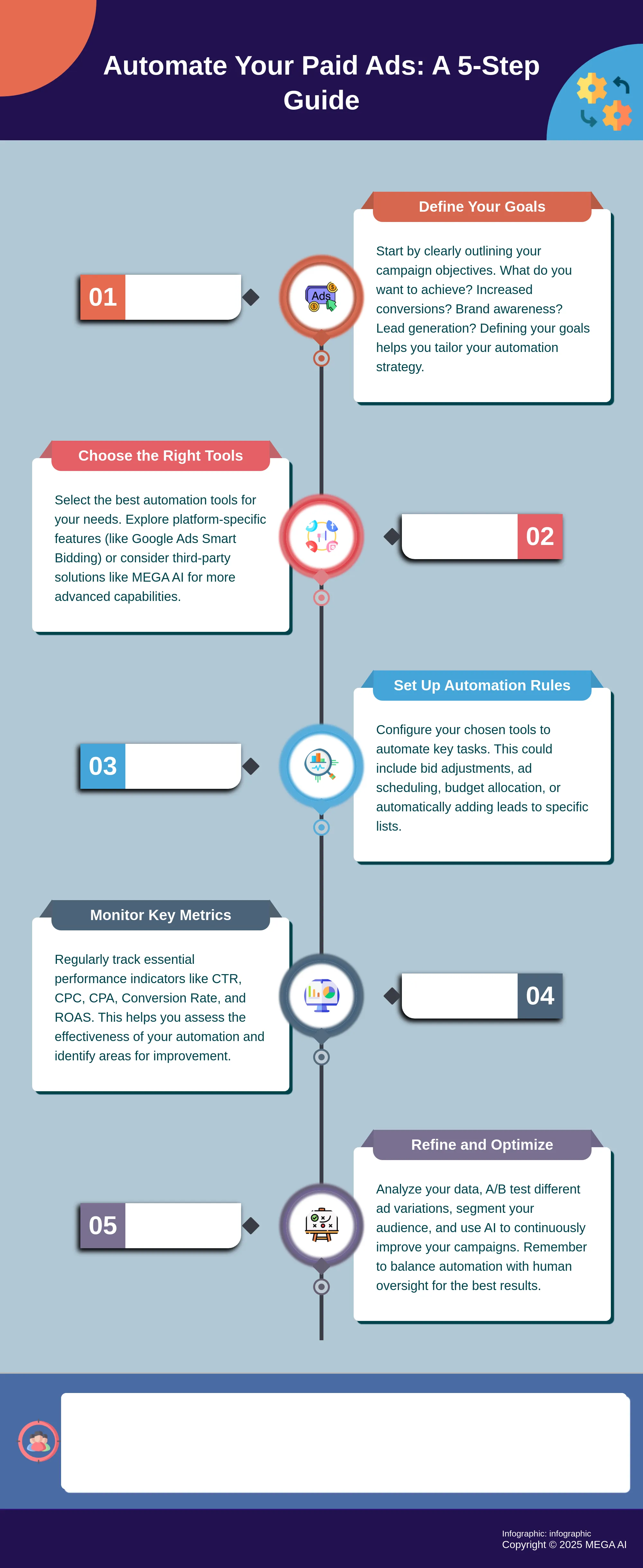
The beauty of ad automation is that it allows you to scale your efforts without proportionally scaling your workload. Before you begin, it's helpful to clearly define what you want to achieve. Are you aiming to automatically adjust bids based on performance, pause ads that aren't converting, or perhaps get instant notifications for new leads? Pinpointing your objectives will guide you in selecting the right tools and setting up rules that genuinely support your campaign goals. Many advertising platforms offer their own built-in automation features, and specialized tools can provide even more sophisticated options. Let's explore how you can put these systems to work for you.
Follow a Step-by-Step Guide for Major Platforms
Getting automation up and running often involves a few straightforward steps, depending on the platform you're using. For example, if you're working within HubSpot, you can typically find automation settings under your ad campaigns. From there, you can choose specific actions, like adding contacts who interact with your ads to a particular list or sending internal notifications to your sales team for quick follow-up. This makes managing leads from your ads much more efficient.
Similarly, Google Ads offers features like Auto ads. This system analyzes your website's pages to determine optimal ad placements based on your existing content and layout. Setting this up usually involves adding a single piece of ad code to your site, and Google takes it from there, simplifying how ads are displayed. Each platform will have its own nuances, so it’s always a good idea to check their specific help documentation or tutorials.
Identify Common Automation Actions
When you start thinking about automating your paid ads, several common actions can make a big difference. A popular one, as seen with tools like HubSpot, is automatically adding people who click on your ads to specific audience lists. This is fantastic for nurturing leads or for retargeting campaigns. Another useful automation is setting up email alerts for your team whenever a lead generation ad captures a new contact. This ensures that no lead falls through the cracks and that your team can respond promptly.
Beyond lead management, automation can significantly cut down the time you spend on routine campaign management. Think about tasks like pausing ads that aren't performing well or adjusting bids based on pre-set rules. By automating these kinds of routine tasks, you can free up your time to concentrate on higher-level strategy and creative optimization, which ultimately helps improve your campaign's overall performance and return on investment.
Integrate with MEGA AI
Taking your ad automation a step further, integrating a powerful AI tool like MEGA AI can truly transform your campaigns. Marketers are increasingly using AI to gain an edge, and for good reason. AI can analyze vast amounts of data to optimize targeting, refine bidding strategies, and provide deep performance insights, leading to a much better return on your ad spend. For small businesses especially, AI makes sophisticated ad optimization accessible without needing a huge team or budget.
With MEGA AI, you can automate many complex aspects of your paid advertising. Imagine being able to upload ad content in bulk across platforms like Meta, Google, and LinkedIn simultaneously. Then, let MEGA AI remix that content into hundreds of variations, even translating voiceovers and captions for different markets. Plus, our platform can automatically shift your budget to the best-performing ads and channels, ensuring your money is always working its hardest. This end-to-end automation simplifies the entire process, making advanced paid ad strategies achievable for everyone.
What Key Metrics Monitor Automated Ad Campaigns?
Automating your paid ad campaigns can free up significant time and often lead to better performance, but it's not a "set it and forget it" solution. To ensure your automated campaigns are truly working for you and meeting your business objectives, you need to consistently monitor the right metrics. Understanding these numbers will help you gauge success, identify areas for improvement, and make informed decisions about your strategy.
Track Key Performance Indicators
While automation tools can certainly reduce the time spent managing your campaigns, keeping a close watch on your Key Performance Indicators (KPIs) remains essential. These metrics are your guideposts, telling you if your automated efforts are hitting the mark. Focus on core indicators such as Click-Through Rate (CTR), which helps you understand ad relevance, and Cost Per Click (CPC) to monitor how efficiently your bids are performing.
It's also vital to track Cost Per Acquisition (CPA) or Cost Per Conversion, as this shows how much you're spending to gain a new customer or lead. Don't overlook Conversion Rate, the percentage of clicks that result in your desired actions, and Return on Ad Spend (ROAS), which directly measures the profitability of your campaigns. Regularly reviewing these KPIs will give you a clear picture of campaign health and the effectiveness of your automation.
Interpret Automation Results
Once your automated campaigns are up and running, the next important step is to understand what the data is telling you. Automation systems often make adjustments based on complex algorithms and real-time information. For example, some platforms analyze your website's content and layout to determine the best ad placements automatically. Your role shifts from constant manual tweaking to interpreting these automated actions and their outcomes.
Look for patterns in performance. Is the automation favoring certain ad creatives, audiences, or placements? Why might that be? A deep understanding of customer behavior is crucial here, as it provides valuable context to the numbers you're seeing. By interpreting these results effectively, you can refine your inputs, like ad copy or audience definitions, to help the automation perform even better.
Optimize in Real-Time with MEGA AI
This is where platforms like MEGA AI truly make a difference. Our Paid Ads tools are designed not just to automate tasks, but to intelligently optimize your campaigns in real-time. AI and automation are making a significant impact on digital marketing, allowing for quicker, more data-driven decisions. MEGA AI takes this further by enabling features like automatic budget reallocation, ensuring your spend is always directed towards the best-performing ads and audiences.
We help you leverage first-party data insights and AI-driven solutions to make continuous improvements. For example, MEGA AI can remix your ad content into hundreds of variations, translate voiceovers and captions, and then test these variations to find what resonates most with your audience. This level of dynamic optimization means your campaigns are constantly learning and adapting, helping you maximize your ad performance. You can book a demo to see how our platform can streamline this for you.
What Are Best Practices for Optimizing Automated Paid Ad Campaigns?
Automating your paid ad campaigns is a fantastic step towards efficiency, but it's not quite a "set it and forget it" solution. To truly get the most from your automated efforts and achieve better results, you need to consistently refine your approach. Think of automation as your tireless assistant; it handles much of the heavy lifting, but you still provide the strategic direction. By incorporating best practices into your routine, you can ensure your campaigns are always performing at their peak, reaching the right people, and delivering a strong return on your investment. These strategies help keep your automated campaigns sharp, effective, and aligned with your business goals, ensuring you're not just saving time, but also maximizing your ad spend.
Implement A/B Testing Strategies
One of the most reliable ways to understand what truly connects with your audience is through A/B testing. This involves creating two or more versions of an ad, changing one element at a time—like the headline, ad copy, image, or call to action—and then running them simultaneously to see which performs better. As industry insights confirm, "A/B testing is essential for understanding what works best in your campaigns. By testing different ad variations, you can identify which elements resonate most with your audience and optimize your ads accordingly."
Consistently testing different components helps you make data-driven decisions rather than relying on guesswork. For instance, you might discover that a particular tone in your ad copy significantly improves click-through rates, or that a specific image leads to more conversions. Platforms like MEGA AI can simplify this process by helping you quickly generate numerous ad variations, making it easier to set up and manage comprehensive A/B tests.
Use Audience Segmentation Techniques
Sending the same message to everyone rarely yields the best results. This is where audience segmentation comes into play. It involves dividing your broader target market into smaller, more defined groups based on shared characteristics such as demographics, interests, online behavior, or purchase history. Experts highlight that, "Effective audience segmentation allows marketers to tailor their messages and offers to specific groups, enhancing engagement and conversion rates," and add that, "Utilizing real-time data for segmentation can significantly improve the performance of programmatic campaigns."
When you segment your audience, you can create more personalized and relevant ad experiences. For example, a campaign for a new software product might have different messaging for tech-savvy early adopters versus small business owners looking for a simple solution. By tailoring your ads to each segment, you increase the likelihood of capturing their attention and driving action. Automation tools can help manage these segments and deliver the right ads to the right people at the right time.
Conduct Regular Performance Reviews
Even with sophisticated automation, regular check-ins on your campaign performance are vital. Automation tools can manage bids and placements, but they operate based on the parameters and goals you set. It's important to remember that "Regular performance reviews are crucial for identifying areas of improvement in your automated campaigns. By analyzing key metrics and adjusting your strategy accordingly, you can ensure that your campaigns remain effective and aligned with your goals."
Set aside time weekly or bi-weekly to examine your analytics. Look at key performance indicators (KPIs) like click-through rate (CTR), conversion rate, cost per acquisition (CPA), and return on ad spend (ROAS). Are you hitting your targets? Are there ads that are underperforming? Are certain audience segments responding better than others? Answering these questions helps you make informed adjustments, such as reallocating budget, pausing ineffective ads, or refining your targeting. Many PPC platforms offer robust reporting dashboards to facilitate these reviews.
Leverage AI for Continuous Improvement
Artificial intelligence takes automation a step further by not just executing tasks, but also learning and adapting over time. As noted by industry analysts, "AI and automation are transforming digital marketing by enabling more innovative strategies. Marketers can leverage AI to analyze vast amounts of data, predict trends, and continuously optimize their campaigns for better results." This means AI can identify patterns and opportunities that a human might miss, leading to more refined and effective campaigns.
AI-powered tools, like those offered by MEGA AI, can analyze performance data in real-time to make automatic adjustments to bids, budgets, and even ad creative. For example, our platform can automatically remix your ad content to create hundreds of variations and then intelligently allocate your budget to the top-performing versions. This continuous optimization loop ensures your campaigns are always working to achieve the best possible outcomes, adapting to changing market conditions and audience behaviors without constant manual intervention.
What Are Advanced Automation Strategies?
Once you've gotten the hang of basic automation for your paid ad campaigns, you might be thinking about what comes next. Advanced automation strategies really kick things up a notch. They use sophisticated techniques to make your ads smarter, more efficient, and ultimately, more effective. It’s like going from setting simple 'if this, then that' rules to letting AI make complex decisions based on real-time data and your big-picture campaign goals. These strategies aren't just about saving you time; they're about reaching new levels of performance that would be incredibly tough to hit manually.
These advanced methods often rely on machine learning and artificial intelligence to sift through huge amounts of data, predict what might happen, and make subtle changes to your campaigns. This could mean anything from dynamically changing your bid amounts based on how likely a conversion is, to automatically creating and testing thousands of ad variations to find the perfect message for specific groups of people. The main idea is to build a highly adaptive and responsive advertising system that’s always learning and getting better on its own. While it might sound a bit complicated, platforms like MEGA AI are designed to make these powerful strategies easy to use, helping you put them into action without needing to be a data science whiz. By using these advanced approaches, you can stay ahead of the competition and make sure your ad budget is working as hard as it can for your business.
Automate Bidding Strategies
Manually tweaking bids for every single keyword or ad placement can quickly turn into a never-ending task, especially as your campaigns get bigger. Automated bidding strategies let AI take over this complex job. AI can analyze many signals in real-time to figure out the best bid for each auction. As Zapier points out, "Automation can significantly reduce the time spent managing PPC campaigns. Using automation tools can lead to better results from your advertising." Whether your main goal is to get more clicks, more conversions, or keep a specific return on ad spend (ROAS), automated bidding can help you get there more efficiently. These systems learn from how your ads have performed in the past to predict how likely a click is to lead to what you want, and they adjust bids based on that.
Create and Test Dynamic Ads
Imagine creating ads that feel personal to every potential customer, without you having to manually craft each one. That’s the magic of dynamic ads, powered by automation. "Creating a marketing automation strategy involves defining goals, setting measurable objectives, and choosing the right automation tools, which can include dynamic ad creation," as Pipedrive explains. These ads automatically pull information from your product lists, website content, or other data sources to generate ad copy and visuals that are tailored to the viewer. Automation doesn’t just stop at making the ads; it also helps with A/B testing different parts of these dynamic ads—like headlines, images, and calls to action—to continuously find and use the combinations that perform best. This ensures your messages stay relevant and keep people engaged, even when you're reaching a lot of them.
Automate Targeting and Audience Management
Making sure your ads reach the right people is absolutely key, and automation can significantly sharpen your targeting and how you manage your audiences. Programmatic advertising, for example, "allows businesses to use an automated, data-driven approach to ad placement, which includes automating targeting and audience management." AI algorithms can look at user behavior, demographics, and how people interact with content to pinpoint high-value audience segments. This includes creating lookalike audiences based on your current best customers. Plus, automation helps by dynamically changing your targeting settings based on how well your campaigns are doing, making sure your ads are consistently shown to the people most likely to be interested. This data-focused method helps cut down on wasted ad spend and makes your overall campaigns more effective.
How Do You Overcome Challenges in Ad Campaign Automation?
Automating your paid ad campaigns, a core feature of platforms like MEGA AI, can be a real game-changer for your marketing efforts, offering efficiency, scale, and the potential for significantly better results. When you let smart systems handle the repetitive, data-intensive tasks, you free up your team to focus on strategy, creativity, and higher-level analysis. However, it's not always a simple plug-and-play solution that runs itself perfectly from day one. Like any powerful tool, ad automation comes with its own set of potential hurdles and learning curves. The journey to mastering automated ad campaigns involves understanding these common challenges and knowing how to navigate them effectively. The good news is that with a clear understanding and the right approach, these obstacles are entirely surmountable. Think of it as learning the nuances of a new skill; once you grasp the common sticking points, such as setting up initial parameters correctly or interpreting automated reports, and how to address them, you'll be much better equipped to make automation work wonders for your advertising. This section will explore some key areas where marketers sometimes encounter difficulties. We'll look at how you can sidestep these issues, ensuring your automated campaigns run smoothly, stay aligned with your goals, and ultimately deliver the outstanding results you're aiming for. Being proactive about these challenges isn't just about troubleshooting; it's about building a more resilient and effective advertising strategy.
Avoid Common Pitfalls
One of the first steps to successfully using ad campaign automation is knowing what not to do. It's easy to get excited about the time-saving aspects and overlook some fundamental practices. For instance, a common misstep is launching an automated campaign without clearly defined objectives. If you don't know what you're aiming for, how will your automated system know? Another frequent issue is neglecting ongoing performance monitoring. Automation helps execute tasks, but it doesn’t replace the need to check in and see how things are going. As experts at Third Clover point out, "Understanding and avoiding these mistakes is crucial for maximising the effectiveness of automated PPC strategies." So, always start with clear goals, regularly review your key metrics, and be prepared to make adjustments. This vigilance ensures your automation serves your strategy.
Balance Automation with Human Oversight
While automation tools, like those offered by MEGA AI, are fantastic for handling repetitive tasks and processing vast amounts of data, they achieve their best results when guided by human intelligence. Think of automation as a highly efficient assistant, not a complete replacement for a skilled campaign manager. Your strategic insights, understanding of your audience's nuances, and ability to interpret complex data patterns are irreplaceable. Adventure PPC highlights that "The role PPC managers play in the age of automation is crucial, as they can provide the necessary oversight to ensure that automated systems are functioning as intended." Regularly review your automated campaign settings, analyze the performance data with a critical eye, and don't hesitate to step in and make strategic adjustments. This blend of machine efficiency and human expertise is where the real power lies.
Address Technical and Integration Issues
The world of digital advertising involves many moving parts. You might be dealing with various platforms, data sources, and ad exchanges, and this complexity can sometimes lead to technical hiccups or integration challenges. For example, Octopus Intelligence notes that "Programmatic advertising often involves a complex web of middlemen...which can lead to technical issues." Similarly, ensuring all your different technologies and platforms communicate effectively can be tricky; as MindK explains, "Various technologies, platforms, and data sources are utilised in programmatic advertising, which can complicate the integration process." To minimize these issues, choose tools that offer robust integrations and prioritize platforms designed to simplify these connections. For instance, MEGA AI is built to integrate smoothly with popular CMSes and ad platforms, reducing the technical burden. Regular checks of your data flows and system connections can also help you catch and resolve problems early.
How Do You Scale Your Automated Ad Campaigns?
Once your automated ad campaigns are running smoothly and delivering results, the natural next step is to think about growth. Scaling your campaigns isn't just about pouring more money into them; it’s about strategically expanding your reach and impact while ensuring your performance metrics stay strong. This phase requires careful planning and the right tools to manage the increased complexity that comes with larger operations.
Develop Strategies to Maintain Performance at Scale
As you begin to scale your automated ad campaigns, keeping that performance dial tuned to "excellent" becomes a primary focus. A frequent hurdle advertisers face is ensuring their campaign effectively reaches the widest possible segment of their target audience without seeing a drop in results. With increased ad spend and broader reach, the potential for encountering ad fraud also grows. It's wise to implement solid ad fraud detection and prevention methods or to partner with technology providers adept at identifying invalid traffic.
Moreover, data continues to be the lifeblood of effective advertising, particularly when you're operating at a larger scale. Consistently leveraging real-time data allows you to refine and enhance your campaigns. This involves closely watching your key metrics, understanding how different audience segments are responding, and making informed adjustments to your targeting, ad creatives, and bidding strategies to sustain strong performance as you expand your efforts.
Use MEGA AI for Efficient Scaling
Artificial intelligence and automation are profoundly reshaping the digital marketing landscape, offering smarter ways to manage and scale campaigns. To efficiently grow your paid ad initiatives, using an AI-powered platform like MEGA AI can make a significant difference. Our tools are specifically designed to handle the complexities that arise with expansion, enabling you to scale your campaigns with greater confidence. For example, MEGA AI allows you to upload content in bulk across major advertising platforms such as Meta, Google, and LinkedIn all at once, saving you considerable time.
Beyond the initial setup, MEGA AI can automatically remix your existing ad content, generating hundreds of variations. This includes translating voiceovers and closed captions into multiple languages, which is invaluable for reaching diverse audiences and thoroughly testing creative elements at scale. Furthermore, our platform can intelligently allocate budget across different campaigns and platforms, ensuring your ad spend is always optimally placed to achieve the best possible outcomes as your advertising footprint grows.
What Are Future Trends in Paid Ad Campaign Automation?
The paid advertising world constantly evolves, and automation plays a central role in these changes. Staying informed about upcoming trends helps you keep your campaigns effective and ahead of the competition. Two key areas to focus on are the growth of new technologies and the shifting ways businesses approach automated advertising.
Explore Emerging Technologies in Ad Automation
Artificial intelligence (AI) and marketing automation are becoming essential for successful paid advertising. This isn't just a passing trend; many digital marketers already use AI to assist with their paid campaigns, and this number continues to climb. The reason for this shift is clear: AI remarkably enhances the performance of paid marketing efforts. Marketers are discovering increasingly innovative applications for AI and automation. These technologies don't just streamline your daily tasks; they significantly improve targeting precision and the ability to personalize advertising messages. This means your ads more effectively reach individuals genuinely interested in your products or services, ensuring your advertising budget delivers greater impact.
Prepare for the Evolving Landscape of Automated Advertising
Looking forward, more businesses, particularly small to medium-sized ones, will use automation to implement integrated omnichannel marketing campaigns. This strategy lets companies connect their data across various platforms, such as social media, search engines, and email. By unifying this information, businesses can more effectively drive sales from multiple customer touchpoints, creating a more cohesive experience. Additionally, as programmatic advertising develops, AI-powered solutions and insights from first-party data become crucial. These tools help advertisers manage complexities, like potential disruptions in ad delivery, leading to a more consistent and dependable advertising process. Adopting these advancements is key to staying competitive.
Related Articles
- 10 Best Ad Automation Tools to Boost ROI in 2025
- Google Ads Automation: A 2024 Guide
- AdWords Automation: The Ultimate Guide (2024)
- Best Google Ads Management Tools for 2024
- Paid Advertising Funnel: The Ultimate Guide to Profitability
Frequently Asked Questions
If I use the automation features already in Google Ads or Facebook Ads, why would I need another tool? Think of the built-in tools on platforms like Google or Meta as a great starting point. They can certainly help with tasks like bid adjustments. However, a dedicated platform like MEGA AI often brings more to the table. We can help you manage campaigns across multiple platforms from one spot, create a vast number of ad variations quickly, and even shift your budget automatically to where it's performing best. It’s about adding more power and streamlining your entire paid ad process, not just parts of it.
I'm worried automation means I'll lose control over my campaigns. Is that true? That's a common concern, but good automation actually gives you more strategic control. Instead of getting bogged down in tiny, repetitive tasks, automation handles those for you. This frees you up to focus on the bigger picture: your overall strategy, the creative direction of your ads, and analyzing performance. You set the goals and parameters, and the automation works to achieve them, but you're still the one steering the ship.
How can I tell if my automated ad campaigns are actually working better than when I managed them manually? The key is to keep a close eye on your core metrics. Before you automate, you should have a baseline of your performance – things like your click-through rate (CTR), cost per acquisition (CPA), and return on ad spend (ROAS). Once automation is running, you'll compare these same metrics. Good automation should lead to improvements, like a lower CPA or a higher ROAS, because it's making data-driven decisions faster than a human typically can.
Creating lots of different ads takes so much time. Can automation really help with that part? Absolutely. This is one of the areas where automation truly shines. Instead of manually creating every single ad variation, tools like MEGA AI can take your core content and remix it into hundreds of different versions. This includes things like changing up headlines, calls to action, and even translating voiceovers or captions for different audiences. It allows you to test more creatives more efficiently to find what really resonates.
As a small business, is ad automation something I can realistically implement and afford? Yes, it's more accessible than you might think. Many automation tools, including ours at MEGA AI, are designed with startups and small businesses in mind. The goal is to simplify complex processes and make powerful advertising strategies available without needing a huge team or budget. By handling time-consuming tasks and optimizing your ad spend, automation can actually help you make your marketing budget work harder.