
Your happiest customers can be your most compelling advertisers, often without even realizing it. In a world saturated with marketing messages, the voices of real people sharing genuine experiences cut through the noise like nothing else. This is the power of user-generated content (UGC) and authentic testimonials in your Facebook ad strategy. Instead of solely relying on carefully crafted campaigns, imagine leveraging the spontaneous, heartfelt endorsements from those who already love what you offer. We'll explore how to encourage, curate, and effectively integrate these authentic pieces into your ads, building unparalleled trust and driving conversions by letting your customers tell your story.
Key Takeaways
- Prioritize Genuine Content: Shift your Facebook ad strategy towards visuals and copy that feel real and relatable, as this approach builds stronger connections and trust with your audience compared to overly polished ads.
- Harness Customer Experiences: Actively encourage and feature user-generated content and testimonials in your ads; these authentic endorsements from real people serve as powerful social proof and can significantly influence purchasing decisions.
- Continuously Refine Your Authentic Approach: Regularly assess how your authentic ads perform against your business goals and stay adaptable by aligning your content with current social media engagement styles to maintain relevance and effectiveness.
What is Authentic Content in Facebook Ads?
When we talk about authentic content in Facebook Ads, we're really getting at material that feels genuine and relatable. Think of it as content that looks like it could have been created by a friend or a real customer, rather than a big, faceless brand. This kind of content resonates so well because it taps into real experiences and emotions. When people see an ad that feels honest, they're much more likely to trust the message and actually pay attention. It’s about cutting through the noise with something that feels real.
Instead of super polished, corporate-style ads, authentic content often showcases real people, their stories, or those unscripted, everyday moments. It’s less about achieving visual perfection and more about being truthful and transparent with your audience. For instance, user-generated content (UGC), like a customer happily sharing a photo of themselves using your product, can be incredibly powerful. Research actually shows that a vast majority of consumers prefer seeing content from existing customers, and many are more inclined to purchase from brands that share this kind of authentic UGC. It acts as compelling social proof, showing potential buyers that real individuals are already benefiting from what you offer. This approach helps to humanize your brand, making it feel more approachable and building a stronger, more meaningful connection with your target audience on Facebook. The ultimate aim is to create ads that don't scream 'advertisement,' but instead feel like valuable or interesting content shared by someone they trust.
How User-Generated Content Drives Results
User-generated content (UGC) is a fantastic way for your brand to connect with customers and see real growth. It’s more than just collecting customer reviews; smart marketing teams are discovering creative methods to leverage user content effectively. This approach helps build a stronger brand, enhance your online reputation, generate valuable sales leads, and ultimately, increase sales. When you tap into the creativity and experiences of your audience, you gain a powerful asset for your Facebook ad strategy.
Identify Effective UGC Types
To make the most of user-generated content, it's helpful to know which formats resonate best. While customer reviews are a staple, think broader. For instance, you can create carousel ads that artfully combine your brand's images or videos with authentic content from your users. This approach allows you to showcase a diverse range of user experiences or highlight different ways your product can be used. Such variety often leads to higher engagement and more interaction from your audience, making your ads more dynamic and relatable. Exploring different UGC formats can reveal what truly captures attention and drives action.
Understand Why UGC Connects with Audiences
User-generated content has a unique ability to build customer trust and foster a sense of community around your brand. As people become less swayed by traditional advertising, many companies are turning to authentic user posts to significantly improve their brand reputation. The data supports this shift: an impressive 90% of consumers prefer to see brand content from actual customers. Furthermore, 83% of these consumers are more inclined to purchase from brands that share genuine UGC. This connection stems from the authenticity that users bring, making your brand feel more approachable and credible.
How to Encourage UGC Creation
Getting your customers to create content might seem challenging, but a few simple strategies can make a big difference. One effective method is to provide templates that users can easily personalize. This lowers the barrier to entry and gives them a starting point. Another popular approach is to offer incentives. Consider giving discounts, freebies, or exclusive access to those who share their experiences with your product or service. These small tokens of appreciation can significantly encourage customers to produce content, turning them into active participants in your brand's story.
Maximize Impact with Personal Testimonials
When it comes to making your Facebook ads truly resonate, few things are as powerful as the voices of your actual customers. Personal testimonials act as potent social proof, building a bridge of trust between your brand and potential buyers. Instead of just telling people your product is great, you're showing them through the genuine experiences of others. This approach not only feels more authentic but can also significantly stretch your advertising budget further than traditional ad formats. By weaving these real stories into your campaigns, you tap into a level of credibility that’s hard to achieve with polished marketing messages alone. Let's explore how you can effectively leverage testimonials to make your Facebook ads more compelling and drive better results.
Why Testimonials Outperform Traditional Ads
Testimonials often pack a bigger punch than standard advertisements primarily because they build trust. Think about it: we're naturally more inclined to believe what a peer says about a product than what a company claims about itself. In fact, a staggering 90% of consumers trust recommendations from people they know over other advertising forms. This word-of-mouth power extends to online testimonials from fellow customers.
Beyond trust, testimonials are a cost-effective advertising method. Creating a high-production ad can be expensive, but a heartfelt video or written review from a happy customer can deliver incredible value with minimal financial outlay. They humanize your brand, showing real people achieving real results or solving real problems with your offerings. This relatability makes your brand more approachable and your products more desirable.
Craft Compelling Customer Stories
The most effective testimonials go beyond a simple "great product" comment; they tell a story. These narratives allow potential customers to see themselves in the reviewer's shoes, making the benefits of your product or service much more tangible. When you showcase real customer experiences, you establish a deeper level of credibility. It’s one thing to list features, but it’s far more impactful to demonstrate how those features translated into a positive outcome for someone.
Focus on stories that highlight a transformation or a problem solved. For instance, how did your product make a customer's life easier, save them time, or help them achieve a specific goal? Remember, nearly half of social shoppers rely on customer reviews and peer recommendations, so these authentic narratives are crucial for guiding purchasing decisions.
Integrate Testimonials Across Ad Formats
Don't limit your testimonials to a single page on your website. To truly maximize their impact, weave them into various Facebook ad formats. You can use short, impactful quotes in image ads, feature longer written stories in carousel ads, or, even better, use video testimonials. User-Generated Content (UGC), which includes customer reviews and testimonials, is incredibly powerful; 83% of consumers say they are more likely to purchase from brands that share authentic UGC.
Consider creating ads that specifically highlight customer success stories. You can even encourage customers to produce UGC by running contests or offering small incentives for sharing their experiences. This not only provides you with fresh ad content but also fosters a sense of community around your brand. The key is to make these testimonials feel like a natural and integrated part of your advertising, rather than an afterthought.
Create Authentic Visual Content
What your audience sees first in your Facebook ads truly matters. Shifting from overly polished visuals to more genuine, relatable imagery and videos can significantly improve ad performance. People connect with authenticity, and this connection is key to capturing attention and trust. Let's explore how to create visual content that genuinely resonates.
Use Candid Imagery and Videos
Think about the content you naturally pause to view in your own social media feeds. Often, it’s the unscripted, in-the-moment shots that capture your attention. For your Facebook ads, this means focusing on visuals that feel like they came from a real person, not a massive production. Instead of relying solely on highly produced commercials, consider how user-generated content can showcase genuine customer experiences. These authentic moments, where people share their honest thoughts about a product or service, tend to resonate more deeply and can enhance engagement. Try capturing behind-the-scenes glimpses of your business or simple, everyday scenarios where your product is being used. The goal is to make your audience feel like they're seeing something genuine, not just another slick advertisement.
Balance Quality with Relatability
While candidness is important, it doesn't mean your visuals should appear unprofessional. The key is to find a balance where your images and videos are clear and well-composed, yet still feel approachable and real. For instance, testimonials offer a fantastic way to achieve this. A video of a happy customer sharing their story can be incredibly powerful, even if it’s not filmed in a high-tech studio. The impact of real customer experiences helps establish trust and credibility. Focus on clear audio and good lighting, but avoid over-editing to the point where the authenticity is lost. The aim is for your audience to relate to the person or scene, making your message more impactful.
Incorporate User-Submitted Media Effectively
Leveraging content created by your actual customers, often called user-generated content (UGC), is a smart strategy. When people see others like them using and enjoying your product, it builds a strong sense of social proof. In fact, research indicates that a large percentage of consumers are more inclined to purchase from brands that feature authentic UGC. To do this effectively, encourage your customers to share photos or videos with your products. You can run contests, create branded hashtags, or simply ask them to tag your business. When you reshare this content (with permission, of course), it not only provides you with fresh visuals but also makes your existing customers feel valued and shows potential buyers that real people love what you offer.
Craft Genuine Ad Copy
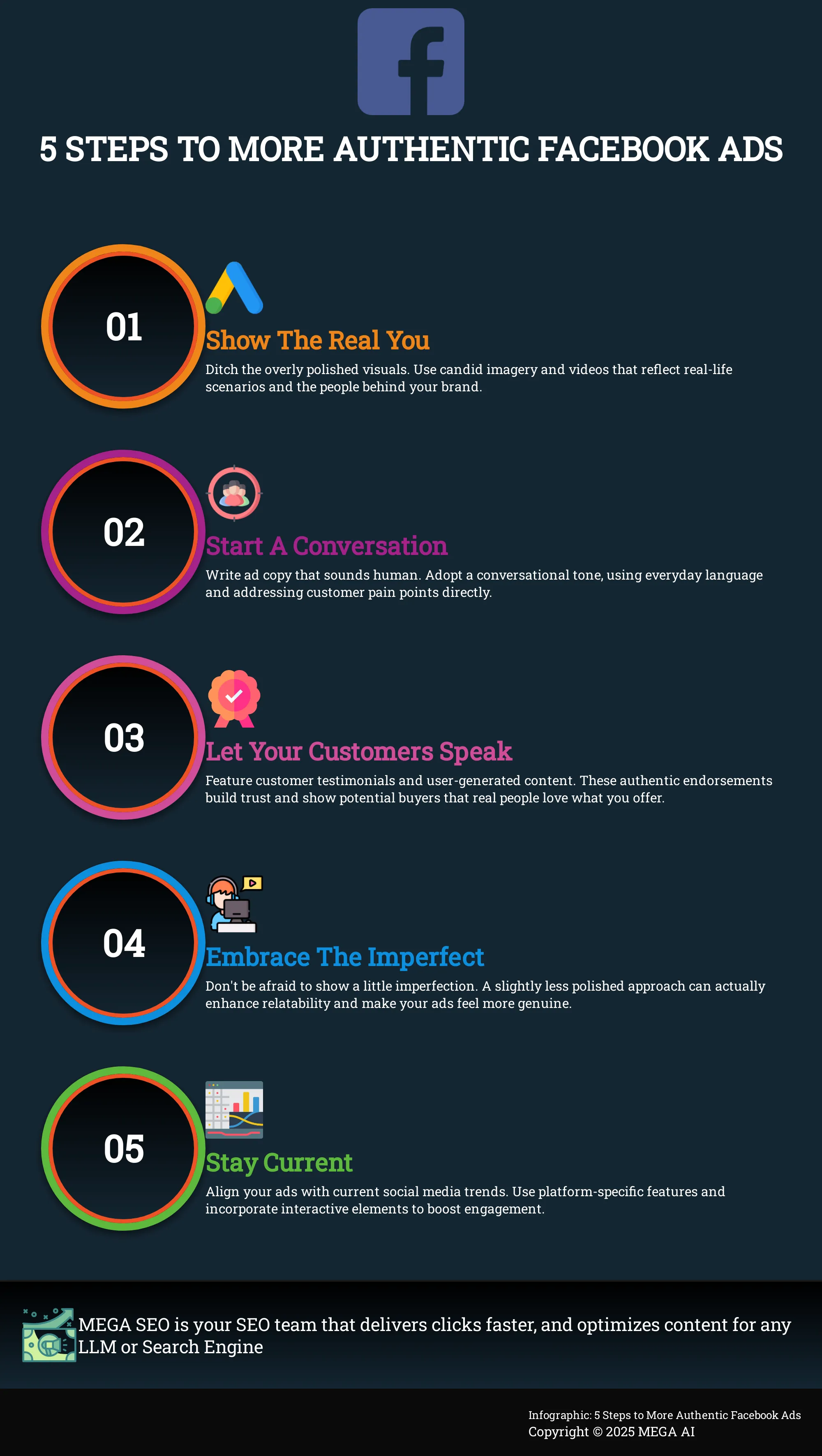
Authentic visuals are a great start, but the words you use in your Facebook ads are just as important for building trust and connection. Genuine ad copy moves away from traditional, often impersonal, advertising language. Instead, it focuses on creating a real dialogue with your audience, making your brand feel more accessible and trustworthy. When your copy sounds human and directly addresses the people you want to reach, it becomes far more effective. This approach isn't about tricking anyone; it's about clearly communicating your value in a way that resonates on a personal level. Think of it as speaking with your audience, not at them. For businesses using tools like MEGA AI's Paid Ads platform to manage campaigns, starting with genuine copy ensures that even automated variations maintain an authentic core message.
Crafting genuine ad copy involves a shift in mindset. It means prioritizing clarity over cleverness, empathy over exaggeration, and real benefits over a long list of features. By focusing on copy that is honest, relatable, and centered on genuine customer needs, you can significantly improve how your ads perform and how your brand is perceived. This means being transparent about what your product or service does, who it's for, and the real problems it solves. Using language that feels natural and approachable helps break down barriers and encourages engagement. Ultimately, genuine copy helps potential customers see your brand as a helpful partner rather than just another advertiser vying for their attention. This foundation of trust can lead to better click-through rates, higher conversion rates, and stronger customer loyalty over time.
Adopt a Conversational Tone
Making your ad copy feel like a natural conversation can make a world of difference. When your ads sound like they're written by a real person, not a marketing department, they become much more relatable. This means using everyday language, asking questions, and avoiding overly formal phrasing or industry jargon that might alienate your audience. Authentic ads, especially those that incorporate user-generated content where customers share experiences, resonate more because they feel genuine. The goal is to make potential customers feel understood and comfortable, fostering a connection that encourages them to learn more about what you offer. This approach helps your ad stand out in a crowded feed by being refreshingly human.
Highlight Real Product Benefits
People connect with how a product can improve their lives, not just a list of its features. Focus your ad copy on the tangible benefits your customers will experience. For instance, instead of saying "Our software has X feature," try "Achieve Y outcome faster with our intuitive X feature." This shift in perspective makes your offering more compelling. Research consistently shows that consumers prefer to see brand content from existing customers, and a significant majority are more likely to purchase from brands that share authentic user-generated content. This type of content naturally highlights real benefits because it comes directly from those who've experienced them, making your claims more believable and impactful.
Address Customer Pain Points Honestly
Acknowledging your customers' challenges head-on shows empathy and builds immediate trust. When your ad copy demonstrates that you understand the problems they're facing, it positions your product or service as a relevant solution. Testimonials are particularly effective here, as they leverage real customer experiences and feedback to address these pain points authentically. Instead of shying away from the difficulties your audience encounters, address them honestly and explain how you can help. This direct approach not only makes your message more compelling but also helps potential customers feel seen and understood, making them more receptive to your solution.
Align Ads with Social Media Trends
Keeping your Facebook ads fresh and effective means staying in tune with what’s happening on social media. When your ads reflect current trends, they feel more natural and less like a hard sell. Think about it – users are scrolling through feeds filled with content from friends, family, and creators they follow. Ads that blend seamlessly with this environment are more likely to capture attention and resonate with your audience. This doesn't mean you need to jump on every fleeting meme, but rather understand the overarching styles and themes that are currently popular.
Aligning your ads with social media trends can significantly improve their performance. It shows your audience that your brand is current, relatable, and understands the platform they're on. This approach can lead to higher engagement rates, better click-through rates, and ultimately, a stronger return on your ad spend. For businesses looking to optimize their campaigns, tools like MEGA AI's Paid Ads platform can help create and adapt content quickly to keep pace with these evolving trends. By understanding the digital landscape, you can make your advertising efforts more impactful.
Embrace Platform-Specific Features
Each social media platform has its own unique vibe and set of features that users love. What works on one platform might not hit the mark on another. For Facebook, this means understanding how users interact with different content formats. For instance, instead of repurposing a polished television commercial, consider ads that feel more native to the platform. As Neil Patel highlights, content where customers simply share their positive experiences with your product or service in a phone-recorded video often feels more authentic and trustworthy to viewers.
To truly embrace platform-specific features, think about how your audience consumes content on Facebook. Are they engaging more with Stories, Reels, or in-feed videos? Tailor your ad creative to these formats. Vertical videos, for example, are essential for full-screen experiences like Stories. Using features like carousels to showcase multiple products or aspects of a service can also be very effective. The key is to make your ad look and feel like it belongs in the user's feed, rather than being an obvious interruption.
Participate in Challenges and Themes
Jumping on relevant social media challenges or aligning with popular themes can be a fantastic way to make your ad's visibility and engagement more robust. When your brand participates in these trends, it shows that you're current and connected with what your audience cares about. This can make your ads feel more like part of the ongoing conversation rather than an outside promotion. User-generated content (UGC) often thrives in these environments, as it helps build customer trust and foster a sense of community around your brand.
You don't always have to wait for a trend to emerge; you can also initiate your own branded challenges or themes that encourage participation. The goal is to create content that users want to engage with and share. When your ads tap into these collective experiences, they become more memorable and shareable, extending your reach organically. This approach helps humanize your brand and makes your advertising efforts feel more authentic and less transactional, fostering a stronger connection with potential customers.
Use Interactive Elements for Engagement
Interactive elements are a great way to make your Facebook ads more engaging and encourage active participation from your audience. Think beyond static images and videos. Features like polls, quizzes, Q&A stickers in Stories, or even simple "tap to reveal" animations can transform a passive viewing experience into an active one. These elements invite users to interact directly with your ad, which can significantly increase the time they spend with your content and make your brand more memorable.
Offering small incentives, like a discount or entry into a giveaway, can further encourage users to engage with these interactive features. Beyond just improving engagement metrics, interactive ads can also provide valuable insights into your audience's preferences and opinions. For example, a poll can help you gauge interest in a new product feature, or a quiz can segment your audience based on their needs. This direct feedback loop helps you refine your offerings and future marketing messages.
Measure Authenticity's Impact on Ad Performance
Understanding how well your authentic content performs is key to refining your Facebook ad strategy. It’s not just about feeling good about your ads; it’s about seeing tangible results. By tracking the right metrics, comparing different ad styles, and looking at the bigger picture, you can clearly see the value authenticity brings to your campaigns.
Identify KPIs for Authentic Content
To truly understand how authentic content is working for you, it’s important to pinpoint the right Key Performance Indicators (KPIs). Think beyond just likes and shares. While engagement metrics like comments and click-through rates (CTR) are valuable, also consider how authentic content influences deeper business goals. For instance, user-generated content isn't just about customer reviews; it's a powerful tool to engage customers and potentially increase sales.
Track metrics such as conversion rates from ads featuring authentic content, the number of sales leads generated, and changes in your online reputation or brand sentiment. Are people talking more positively about your brand? Are they more likely to recommend you? These are strong indicators that your authentic approach is resonating with your audience.
A/B Test Authentic vs. Traditional Ads
One of the most effective ways to see the difference authenticity makes is to A/B test your ads. Pit your authentic content, like customer-shot videos or simple testimonial graphics, against more traditional, polished advertisements. For example, you could run one ad set with a user-generated video of a customer talking about your product, and another with a professionally produced commercial.
Keep all other elements like targeting and budget the same to ensure a fair comparison. Then, closely monitor which ads perform better in terms of your chosen KPIs—be it CTR, conversion rates, or cost per acquisition. This direct comparison will give you clear data on what truly captures your audience's attention and drives action on platforms like Facebook.
Analyze Long-Term Effects on Brand and Loyalty
While immediate ad performance is crucial, the impact of authenticity often extends much further, building brand affinity and customer loyalty over time. Authentic content, especially customer testimonials, helps establish trust and credibility with your audience. This isn't just about a single sale; it's about fostering a long-lasting relationship.
To measure these long-term effects, look at metrics like customer lifetime value (CLV), repeat purchase rates, and Net Promoter Score (NPS). Are customers who engage with your authentic ads more likely to stick around and become advocates for your brand? Analyzing these trends will show you how authenticity contributes to sustainable growth and a stronger brand connection, moving beyond short-term campaign wins.
Overcome Challenges in Authentic Advertising
While authentic content is powerful, it’s not without its hurdles. Handling user submissions, legal permissions, and brand alignment requires a thoughtful approach. Here’s how you can address some common challenges to make your authentic Facebook ad strategy a success.
Maintain Brand Consistency
When you tap into the power of authentic content, especially user-generated content (UGC), keeping your brand's voice and image consistent is key. You want genuine stories that still feel like your brand. Start by creating clear, simple guidelines for any UGC campaigns you run. This helps steer contributions in the right direction without stifling creativity. Think about what makes your brand unique – your values, your visual style, your tone of voice – and gently guide users to reflect that. Curating content thoughtfully is also vital; select pieces that genuinely resonate with your brand’s core message and aesthetic.
It’s about guiding the narrative, not controlling it. You can also blend UGC with your professionally created content for a balanced approach. For instance, feature a customer’s photo alongside a caption written in your brand’s voice, or incorporate UGC into a larger campaign theme. This approach helps build a bigger brand and strengthens your online reputation by showing real people engaging with and loving what you do, all while maintaining a cohesive brand experience for your audience.
Ensure Legal Compliance with User Content
When customers share their experiences, it's fantastic, but using their content in your ads requires careful legal attention. Before you feature a customer's photo or video, always get their explicit permission. For most situations, a direct message asking for consent and explaining how you'll use the content works well. For larger campaigns, a more formal agreement might be better. Clearly outlining your terms and conditions for any user-generated content submissions upfront, perhaps even providing simple guides for how to submit, can prevent future issues.
Transparency about content use builds trust and encourages more sharing. Also, be mindful of privacy rights; ensure everyone featured has consented, especially if children are involved. If you run contests, make the rules on content ownership and usage rights very clear. This protects your business, respects creators, and helps you confidently leverage UGC in your Facebook ads.
Balance Authenticity with Marketing Objectives
A key aspect of authentic advertising is finding that sweet spot where genuine content also meets your marketing goals. Authentic pieces, like customer testimonials, often outperform traditional ads because they are real. These genuine experiences naturally establish trust with your audience. Your job isn't to write their stories, but you can gently guide them. For instance, if a customer leaves a great review, you could ask them to share more about a specific benefit that ties into your campaign.
Consider how different types of authentic content fit various marketing objectives. A sincere video testimonial could be ideal for ads targeting people considering a purchase, while a playful user photo might work well for building initial awareness. Let the authenticity lead, but ensure the core message subtly supports your marketing points. Regularly analyze your ad performance to understand which authentic content types connect best and prompt action. This helps refine your strategy, making your ads both genuine and effective.
Develop Strategies to Foster Ad Authenticity
Creating authentic ads isn't just about a single campaign; it's about building a consistent approach that resonates with your audience over time. When you actively develop strategies to foster ad authenticity, you're investing in a stronger, more trustworthy brand image. This means thinking about how transparency, real stories, and a touch of imperfection can make your Facebook ads more believable and effective. Let's explore some practical ways to weave these elements into your advertising.
Build Trust Through Transparency
Transparency is foundational for building trust with your audience. When people feel they're getting an honest picture, they're more inclined to believe your message and connect with your brand. A powerful way to achieve this is by incorporating customer testimonials. As research shows, "Testimonials are more cost-effective than other advertising methods. They're proven to promote and humanize a brand and its product or services with social proof coming from real customers."
Being open about your product's journey and how it solves genuine problems also strengthens this connection. Don't hesitate to be straightforward. When you're clear about what your product offers, you set realistic expectations and demonstrate respect for your audience. This approach helps humanize your brand, making it more relatable in a competitive digital space.
Showcase Real People and Experiences
Nothing conveys authenticity quite like real people sharing their genuine experiences with your product or service. This is where user-generated content (UGC) truly makes an impact. Marketing expert Neil Patel highlights that effective Facebook ads often feature "user-generated content where your customers are holding up their phone and just talking about how they love your product or service." This type of raw, unpolished content frequently cuts through advertising noise more effectively than highly produced campaigns.
The data supports this: a significant "83 percent are more likely to purchase from brands that share authentic UGC." Potential customers often see themselves in these real users, making the product feel more accessible and trustworthy. Encouraging your customers to share their stories, photos, and videos can provide a valuable stream of compelling, authentic content for your ads.
Embrace Imperfection and Relatability
The preference for flawless, overly polished advertisements is shifting. There's a "growing scepticism around traditional advertising. Glossy ad campaigns that were once highly effective now often feel too scripted or polished," as noted by MarketMillion. Audiences are increasingly drawn to content that feels genuine and unstaged. This doesn't mean sacrificing quality, but rather embracing a more human, less perfect presentation.
For instance, video testimonials are often more effective than text reviews, likely because the visual and auditory elements make the message feel more personal. A slight hesitation, an unscripted moment, or a less-than-perfect background can actually enhance an ad's relatability. When your ads reflect real life, they become more believable and connect with viewers on a deeper level, showing you understand and value them.
What's Next for Authentic Facebook Ads?
The Facebook advertising landscape is always evolving. Staying ahead means understanding where authentic content is headed. It’s more than a fleeting trend; it’s a fundamental shift in how brands connect with audiences. As we look forward, a few key areas will shape how we approach authentic ads.
Discover Emerging Trends in Authentic Ads
So, what’s really working in Facebook ads and what can we expect more of? The clear winner is authentic content. Think less about highly polished productions and more about genuine, relatable moments. User-generated content (UGC) is at the forefront, where your actual customers share positive experiences, often by talking into their phone camera about why they love your product. This type of content feels real and trustworthy.
A significant number of consumers, around 83 percent, say they are more likely to purchase from brands that feature authentic UGC. This tells us people crave connection and validation from peers. As you plan your ad strategy, consider how to encourage and leverage these customer stories to build a stronger, believable brand presence.
Adapt to Changing Consumer Preferences
Consumer preferences continually shift, and a major trend is the growing reliance on peer recommendations. Traditional advertising often meets skepticism, but word-of-mouth, even in digital form, carries significant weight. Statistics show 90% of consumers trust recommendations from friends and family above all other advertising. This highlights a desire for unbiased, genuine opinions.
Testimonials, for example, offer a powerful way to tap into this. They provide social proof by showcasing real customer experiences. This approach helps establish trust and credibility far more effectively than a standard promotional message. Adapting to these preferences helps you create ads that feel less like interruptions and more like helpful suggestions.
Integrate AI While Keeping the Human Touch
As authentic content like UGC and testimonials becomes more crucial, scaling these efforts is often challenging. This is where technology, specifically AI, can play a supportive role. Top brands already use Generative AI tools to help collect and scale testimonial ads that feel relatable and perform well. AI can assist in identifying compelling customer stories or creating ad creative variations from existing authentic content, ensuring they reach the right audience segments.
The key is to use AI to enhance the human element. As traditional advertising loses some impact, companies increasingly turn to user-generated posts to strengthen their brand reputation. Platforms like MEGA AI can help streamline the creation and distribution of these diverse ad variations, ensuring your authentic message is amplified efficiently while maintaining that crucial human touch.
Related Articles
- How to Implement Authenticity in Your Advertising Efforts
- Create Authentic Advertising: 7 Strategies for Success
- UGC SEO: How to Boost Rankings With User Content
- Complete Guide to Generating Reviews for Your Business
- Audience Engagement: The Key to Advertising Value
Frequently Asked Questions
What if my business is new and I don't have many customer testimonials or user-generated photos yet? That's a common starting point. You can begin by encouraging early customers to share their experiences, perhaps by offering a small thank you. Also, think about creating content that shows the real people behind your brand or the process of how your product is made. Even simple, behind-the-scenes glimpses can feel very authentic and help build that initial connection.
How do I make sure my ads still look professional if I'm using more "real" or unpolished content? Authenticity doesn't mean your ads should look sloppy. Focus on clear visuals and audio. A customer's phone video can be very effective if the lighting is decent and what they're saying is easy to understand. The goal is relatability, not necessarily a high-budget production. You can also frame user content with your brand's design elements to maintain a consistent feel.
Is this authentic approach to Facebook Ads suitable for every type of business or industry? Generally, yes. Whether you're selling a product or a service, B2C or B2B, people respond well to genuine communication. The way authenticity looks might vary – a software company might showcase a client success story, while a local bakery might share photos of customers enjoying their treats. The core idea is to be truthful and relatable to your specific audience.
How can I encourage my customers to create content for my brand without being too pushy? Make it easy and rewarding. You could run a friendly contest, create a unique hashtag they can use, or simply ask happy customers if they’d be willing to share a photo or a quick thought. Offering a small discount on a future purchase or featuring them on your page can also be great motivators. The key is to make them feel appreciated, not obligated.
What's the simplest first step I can take to make my Facebook ads feel more authentic? Start with your ad copy. Try writing as if you're talking to a friend. Use straightforward language, address a real customer need or problem directly, and avoid overly salesy buzzwords. This simple shift in tone can make a significant difference in how your ads are received, even before you change any visuals.