
Trying to outrank large corporations on Google can feel like a losing battle. They have massive marketing budgets, but you have an advantage they don't: a deep understanding of your local customers and the questions they actually ask. This is your key to success in the new era of AI-powered search. Answer Engine Optimization (AEO) is a strategy that leverages this unique expertise. Instead of fighting over broad keywords, you focus on becoming the most helpful, direct answer for your community. This guide breaks down how to use AEO to connect with customers exactly when they need a solution.
Key Takeaways
- Become the source, not just a link: AEO's primary goal is to have your business cited directly in AI-generated answers, positioning you as an authority before a user even clicks.
- Structure your content for AI and users: Use clear, question-based headings and implement structured data (schema) to make it easy for answer engines to process your information and present it as a direct answer.
- Build topical authority to earn trust: Create comprehensive content clusters around your core topics to consistently demonstrate your expertise, which signals to AI that you are a reliable source worth referencing.
What is Answer Engine Optimization (AEO)?
Answer Engine Optimization (AEO) is the process of making your content easy for AI-powered systems—like Google AI Overviews and ChatGPT—to find, understand, and cite. Instead of just showing a list of links, these "answer engines" pull information from multiple sources to give a user a direct, conversational answer. With AEO, your goal is to make your business the trusted source for those answers.
This marks a fundamental change in how people find information. While traditional SEO focuses on ranking your website on a results page to earn a click, AEO is about getting your brand mentioned directly within an AI-generated response. It requires a strategy that prioritizes clarity, authority, and structured information so that AI models can easily process and trust your content. For small and local businesses, this is a new opportunity to be seen as a definitive expert. The key is to provide clear, authoritative content that an AI can rely on to answer user questions accurately, positioning your brand as the go-to source in your niche.
Common Answer Engines
You’re likely already familiar with the major players in this space. The most recognized answer engines include systems like ChatGPT, Google's AI Overviews, Perplexity, and Microsoft Copilot. These platforms operate differently from traditional search engines by pulling information from multiple sources to construct a single, direct answer for the user. This shift is fundamentally changing how people find information. Instead of sifting through a list of links, users receive a conversational response immediately. For a small business, this means that getting a click is no longer the only goal. The new objective is to have your information cited directly within these AI-generated answers, positioning your business as a trusted authority from the start.
AEO vs. SEO: What's the Difference?
While AEO and traditional SEO both aim to get your business found online, their methods differ. Traditional SEO is a race for visibility on a search engine results page. You focus on keywords, backlinks, and technical health to climb the rankings and earn clicks. AEO, however, aims to position your content as the definitive answer to a specific question. The focus shifts from ranking for a keyword to becoming a cited source in a zero-click, AI-generated summary.
This means AEO goes a step further by emphasizing things like structured data and clear, factual language. While SEO gets you a spot in the directory, AEO makes you the expert that the directory recommends directly. It’s less about winning a click and more about winning the AI’s trust.
How AEO and SEO Work Together
Think of AEO and SEO not as separate strategies, but as partners. A strong SEO foundation is the launchpad for effective AEO, as answer engines rely on signals of trust like technical health and site authority to find credible sources. At the same time, the work you do for AEO directly benefits your traditional SEO. When you structure content with clear, question-based headings and direct language, you also create a better experience for human readers. This improves engagement signals that Google’s ranking algorithms value, making your content more effective across the board.
By integrating AEO and SEO, you create a single, efficient strategy for online visibility. You’re not just trying to rank for keywords; you’re building a library of helpful, authoritative content that serves both users and AI. For small businesses, this approach is powerful because every piece of content works double-duty. It attracts traffic from traditional search while also positioning your brand as a trusted source for answer engines. Tools can streamline this by automatically updating existing articles to improve their structure, ensuring your content is always optimized for both SEO and AEO performance.
How AI is Changing the Way We Search
The way people search for information now extends beyond a simple search bar. Today, users get answers from a whole ecosystem of AI-driven platforms, including ChatGPT, Perplexity, and Google’s AI Overviews. These tools are designed for conversation, not just keyword matching. They understand complex questions and provide detailed, synthesized answers in seconds, changing what it means to have an online presence.
Your potential customers are already using these tools to find local services, compare products, and get advice. If your content isn't optimized for these platforms, you're invisible where these new conversations are happening. AEO ensures your business shows up across this growing landscape, getting your brand mentioned in the AI-generated answers that are quickly becoming the new first impression for customers.
The Shift to AI-Powered Search: Key Statistics
The data shows a clear shift in how people find information online. Gartner predicts that traditional search engine use will decline by 25% by 2026, as users increasingly get direct answers from AI. This leads to more zero-click searches, where a user’s question is answered without them ever visiting a website. This change is fueled by the rapid adoption of AI, with over 400 million people using OpenAI products weekly. This new behavior creates a different measure of success. For example, one company saw a 35% revenue increase despite a 20% drop in traffic, simply because they were consistently cited as a source by AI. Being the trusted answer builds authority that translates directly to sales, making AEO essential for staying visible to your customers.
Why AEO Matters for Your Business
The way people find information online is changing. Instead of sifting through a list of blue links, they are getting direct answers from AI-powered tools like Google’s AI Overviews and ChatGPT. For your business, this means the old rules of SEO are not enough. Answer Engine Optimization (AEO) is about adapting to this new reality. It’s the practice of optimizing your content so these AI systems can find, understand, and cite your business as a trusted source. This shift is crucial for staying visible and relevant to potential customers who now expect immediate, conversational answers to their questions.
Why Direct Answers Are Replacing Clicks
For years, the primary goal of SEO was to earn a click. Today, success is increasingly measured by getting a mention. AEO prioritizes being cited in AI-generated responses, where users may never need to click through to a website to get what they need. This is because answer engines are designed to deliver complete information directly on the results page. AEO focuses on direct answers, structured data, and authority signals that help your brand appear in zero-click results and AI summaries. Your goal is no longer just to rank, but to become the source of the answer itself.
How AEO Impacts Your Visibility and Growth
Appearing in an AI-generated answer is a powerful endorsement. It positions your business as an authority and builds significant brand trust with potential customers. When an answer engine cites your content, it tells users that you are a reliable source of information in your industry. This kind of visibility is invaluable. While it might not lead to an immediate website visit, it builds brand recognition that influences future purchasing decisions. An effective AEO strategy ensures your business shows up in these critical moments, helping you connect with customers and drive long-term growth in an AI-driven search landscape.
How Do Answer Engines Work?
To optimize for answer engines, you first need to understand how they operate. Unlike traditional search engines that primarily rank a list of webpages, answer engines aim to synthesize information and provide a single, direct answer. They act more like a research assistant than a librarian, pulling data from multiple sources to construct a helpful response. This process relies on sophisticated AI, a deep evaluation of content quality, and a strong emphasis on trustworthiness.
What Powers Conversational Search?
At the core of every answer engine is a Large Language Model (LLM), the same technology behind tools like ChatGPT. These AI systems are trained on vast amounts of text from the internet, allowing them to understand the nuances of human language. When you ask a question, the LLM interprets your intent, not just your keywords. It then scans its knowledge base to find relevant information from multiple sources. The final step is to synthesize that information into a coherent, conversational answer, often citing the sources it used to build its response.
What Do Answer Engines Look for in Content?
Answer engines look for the most efficient path to a correct answer. They prioritize content that is clear, well-organized, and directly addresses a user's query. One of the most effective ways they identify this content is through structured data, also known as schema markup. This is code you add to your website that explicitly labels your content for search engines. For example, you can mark a section as a "Frequently Asked Question" or a product page with its price and availability. This labeling makes it incredibly easy for an AI to pull your information and present it as a direct answer.
Key Factors AI Considers for Recommendations
When an AI model decides which business to recommend, it looks beyond simple keywords. It assesses your brand's overall digital reputation by considering several key factors that signal trustworthiness. These include how often your brand is mentioned across the web, the quality and quantity of your customer reviews, and your established authority within a specific niche. The AI also evaluates how relevant your content is to a user's question. Essentially, the AI is trying to determine if you are a clear and reliable source of information, using these signals to gauge whether your business is a credible expert worth citing in its response.
The Role of "Grounding" in AI Accuracy
To ensure their answers are accurate, AI systems use a process called "grounding." Think of it as a digital fact-check where the AI verifies information by seeing if other trusted sources mention your brand or insights. This process helps prevent AI from "hallucinating" or inventing information. When other reputable websites, local news outlets, or industry leaders mention your business, it signals to the AI that your brand is credible and authoritative. The more your business is grounded in reliable, third-party sources, the more confidence the AI has in your content, making it more likely to be featured in an answer.
Why Authority and Trust Signals are Crucial
Because answer engines present information as fact, they have a high standard for source credibility. They need to trust that the information they provide is accurate and reliable. To determine this, they look for signals of authority and trustworthiness, often referred to as E-E-A-T (Experience, Expertise, Authoritativeness, and Trust). These signals include a history of creating in-depth content on a specific topic, earning backlinks from other reputable websites, and positive brand mentions. The more you establish your business as a go-to expert in your field, the more likely an AI will be to cite your content in its answers.
Valuable Backlinks for AEO
Backlinks remain a core signal of authority for answer engines. Think of a quality backlink as a professional referral. When another reputable website links to your content, it tells AI that your information is credible and trustworthy, directly supporting your E-E-A-T profile. Instead of focusing on the number of links, prioritize their quality. A single link from a respected industry blog, a local news feature, or your chamber of commerce is far more impactful than dozens of links from low-quality directories. These authoritative links act as votes of confidence, showing answer engines that you are a recognized expert whose content is worth citing.
The Importance of Reviews and NAP for Local Businesses
For local businesses, your digital reputation is a critical AEO factor. Answer engines analyze customer reviews to gauge the quality of your services and make nuanced recommendations. A consistent stream of positive reviews on platforms like Google Business Profile signals that you are a trusted local provider. Just as important is maintaining consistent NAP (Name, Address, Phone number) information across all online listings. When your business details are identical everywhere, it confirms your legitimacy and physical location for AI. Inconsistencies create confusion and reduce the likelihood that an answer engine will recommend your business for local queries, making NAP management essential.
How to Create Content for Answer Engines
Optimizing for answer engines requires a shift in how you approach content. Instead of focusing solely on keywords that people type into a search bar, you need to create content that directly answers the questions they ask. Answer engines prioritize clarity, structure, and authority to deliver trustworthy responses. This means your content must be accurate, well-organized, and demonstrate your expertise on a topic. The goal is to make it as easy as possible for an AI to understand your information and present it as a reliable answer.
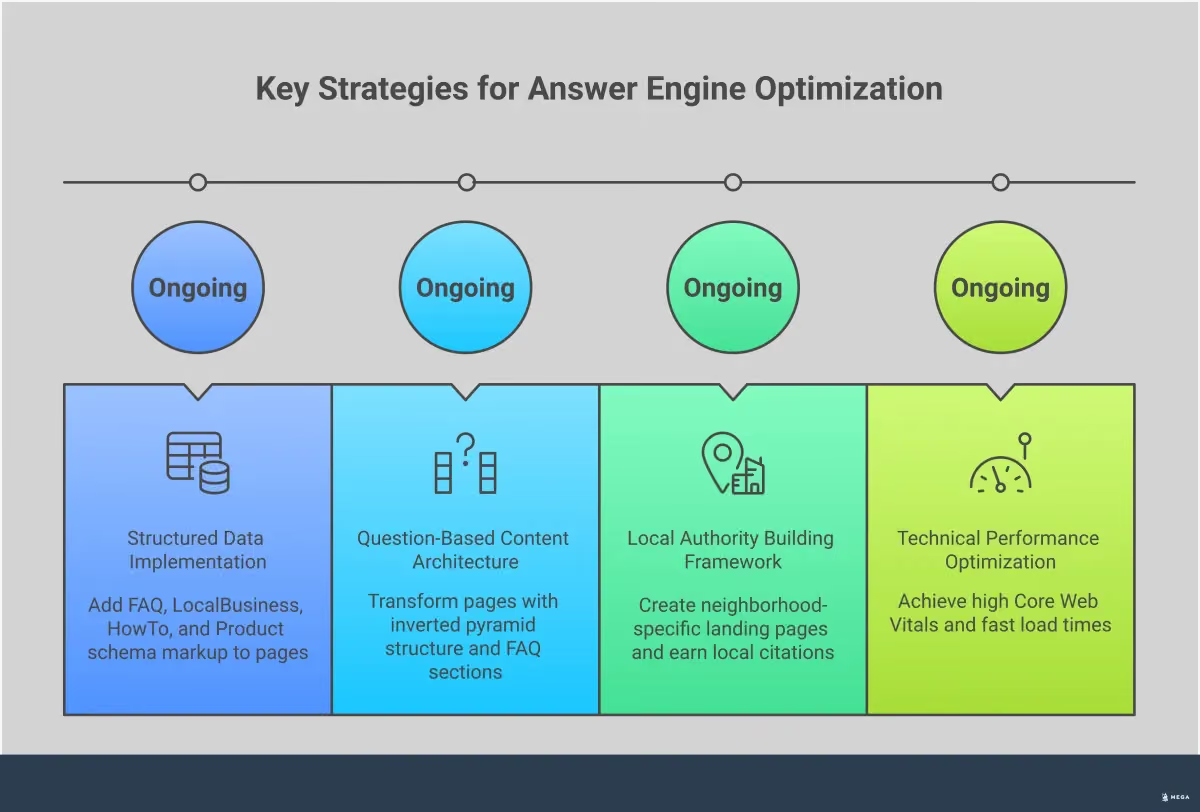
This involves a few key strategies that go beyond traditional SEO. You’ll need to use technical signals like structured data to give search engines context, frame your content around common customer questions, and build a library of interconnected articles that establishes your brand as an authority. By focusing on these areas, you position your content to be cited in AI-generated responses, from Google’s AI Overviews to ChatGPT. For small businesses, an AI-powered SEO agent can automate this process, ensuring your content is structured for the new era of search. This is not about tricking an algorithm; it's about providing genuine value in a format that modern search technology can easily process and trust.
Provide Original, Data-Driven Answers
To become a source for an answer engine, your content needs to be more than just a summary of what’s already out there. AI models are designed to find unique, helpful information that provides real value. This is where small businesses can truly shine. Instead of creating generic blog posts, focus on sharing your own case studies, internal research, or expert opinions based on your direct experience. For example, a local roofing company could publish a report on which materials hold up best against local weather patterns. This kind of original content establishes you as a primary source, making your website a valuable destination for answer engines seeking credible information to share with users.
Use a "Trust Block" to Signal Credibility
Answer engines need to trust your content before they recommend it. A simple way to build this trust is by adding a "trust block" near the top of your articles. This is a small section that clearly displays signals of credibility. It should include the author's name and a brief bio highlighting their expertise, the date the article was last updated, and links to any primary sources you cited. This transparency shows both users and AI that your content is written by a real expert, is current, and is based on factual information. It’s a straightforward tactic that directly addresses the E-E-A-T (Experience, Expertise, Authoritativeness, and Trust) principles that are so important for building authority.
Find Questions on Forums like Reddit and Quora
The most effective content directly answers the real questions your customers are asking. While keyword research tools are helpful, they don't always capture the nuance of how people actually talk about their problems. To find these questions, spend time on online forums like Reddit and Quora. Look for subreddits or topics related to your industry and listen to the conversations. Pay attention to the exact phrasing people use, the follow-up questions they ask, and the pain points they describe. This process gives you a direct line into your customers' minds, allowing you to create content that addresses their specific needs in their own language, which is exactly what answer engines are designed to find.
Leverage AI for Content Creation and Optimization
Creating high-quality, in-depth content consistently can be a significant challenge, especially for small businesses with limited resources. AI tools can help streamline this process by assisting with foundational tasks. You can use AI to generate outlines for new articles, summarize complex research, or brainstorm different angles for a topic. This allows you to scale your content production without starting from a blank page every time. By handling the initial structural work, AI frees you up to focus on adding the unique insights and expert commentary that will make your content stand out to answer engines.
Using AI tools like MEGA AI can help generate outlines or summaries for your content. However, it's important that a human expert always reviews, edits, and adds unique insights to ensure accuracy and quality.
While AI is a powerful assistant, it cannot replace genuine human expertise. Platforms like MEGA AI can automate keyword research and generate initial content drafts, but the final product must be reviewed and refined by a subject matter expert. Your personal experience, unique perspective, and specific examples are what build trust and authority. A human touch ensures the content is not only accurate and helpful but also reflects your brand's authentic voice. This hybrid approach—using AI for efficiency and human expertise for quality—is the most effective way to create content that both answer engines and your customers will trust.
Use Structured Data to Stand Out
Structured data, often called schema markup, is a standardized format for providing information about a page and classifying its content. Think of it as a label you add to your website’s code that tells answer engines exactly what your content is about. By adding schema markup for things like FAQs, how-to guides, products, or local business information, you help AI interpret your content correctly. This significantly increases the chance that an answer engine will pull your information and feature it directly in a response. For a local business, this could mean clearly defining your hours, service area, and customer reviews so an AI can present that information confidently.
Answer Questions Directly in Your Content
The most direct way to get featured in an answer engine is to answer questions clearly. Structure your content with question-based headings that mirror the queries your customers are likely to ask. AEO is all about getting your webpage mentioned in AI-generated answers, so your content needs to be a perfect match for a user’s query. Start by identifying the most common questions about your products, services, or industry. Then, build content that provides concise, accurate, and straightforward answers. Adding an FAQ section to your key pages is a simple and effective way to start optimizing your content and making it easier for AI to find and cite your expertise.
Establish Authority with Content Clusters
To be seen as a credible source, you need to demonstrate deep knowledge in your field. A content cluster strategy is an effective way to do this. This involves creating a main "pillar" page that covers a broad topic and linking it to several "cluster" pages that explore related subtopics in more detail. This interconnected structure signals to answer engines that you have comprehensive authority on a subject. For example, a plumber might have a pillar page on "Emergency Plumbing Services" linked to cluster pages on "Leaky Pipe Repair" and "Clogged Drain Solutions." This approach builds topical authority, making it more likely that an AI will trust and reference your site for relevant questions.
How Small Businesses Can Use AEO
Answer Engine Optimization might sound like another complex marketing term, but it’s a powerful way for small businesses to stand out. While larger companies often dominate broad search terms, AEO levels the playing field by focusing on specific, intent-driven questions—the kind your actual customers are asking. Instead of just trying to rank for keywords, you’re positioning your business as the most helpful and direct answer.
This approach allows you to connect with potential customers at the exact moment they need a solution. By focusing on what your audience truly wants to know, you can build trust and attract high-quality traffic without a massive budget. The key is to be strategic about the information you provide and how you structure it. With an AI-powered SEO agent, you can automate much of this process, from identifying relevant questions to updating your content, making AEO an accessible strategy for any business owner.
Target Local and Niche Questions
For local and small businesses, your specific location and niche expertise are your greatest strengths in AEO. Answer engines are designed to provide highly relevant, contextual results. A user searching for "emergency roof repair in Austin" isn't looking for a national chain; they need a local expert, fast.
Focus on creating content that answers the questions unique to your community and customer base. Think about the common problems you solve and frame them as questions. Create service pages for each neighborhood you cover or write blog posts answering questions like, "What's the best type of fencing for Texas weather?" This hyper-local and niche focus makes your business the most relevant and authoritative source for the AI to cite.
Optimize Your Service Pages
Your service pages need to function like a quick Q&A session for both potential customers and AI. Answer engines look for the most direct path to information, so make sure your pages clearly state your pricing, service areas, and business hours. Structure your content to answer common questions upfront. For example, instead of a long paragraph about your process, use a heading like, "How Our [Service] Works" followed by a simple, step-by-step list. This clarity makes it easy for an AI to pull specific details and present them as a direct answer. For busy owners, keeping these pages perfectly tuned can be a challenge. An AI SEO agent can automate this by identifying top customer questions and restructuring your content to answer them, ensuring your pages are always optimized.
Broaden Your Digital Presence
While your website is your digital home base, answer engines look for information across the entire web to verify your credibility. A strong Google Business Profile is essential, but it's not enough. You need a consistent presence on other relevant platforms, such as industry-specific directories, local review sites like Yelp, and community forums. This wider digital footprint provides AI with more data points to confirm your business's legitimacy and authority. Make sure your business name, address, and phone number are consistent everywhere. This consistency is a powerful trust signal that tells answer engines you are an established and reliable local business worth recommending to users.
Provide Direct Answers for Your Customers
Answer engines prioritize clarity and efficiency. They are built to find a direct answer to a user's question and present it as quickly as possible. To align with this, your content needs to be structured for easy consumption by both humans and AI. AEO is all about creating content that provides a direct answer to a specific question.
Start by building out a robust FAQ page that addresses common customer inquiries. When writing blog posts or service pages, use the questions your customers ask as your headings. Place a clear, concise answer directly below the heading before you elaborate further. This "inverted pyramid" style of writing makes your content perfectly formatted for an AI to pull into a featured snippet or an AI Overview.
Establish Your Industry Expertise
To be featured in an answer engine, you need to be seen as a credible and trustworthy source. AI models are trained to look for signals of authority and expertise to avoid providing incorrect information. For a small business, this means consistently demonstrating your knowledge within your specific field.
One of the most effective ways to do this is by using structured data, also known as schema markup. This code helps search engines understand the context of your content, like whether it's a how-to guide, a product page, or an event. Beyond technical signals, create in-depth content clusters around your core services. This shows that you have a deep understanding of your industry and are a reliable resource worth citing.
Common AEO Mistakes to Avoid
Optimizing for answer engines means thinking a little differently about your content. While the fundamentals of good SEO still apply, some common habits can hold you back from getting noticed by AI. Steering clear of these mistakes will help you create content that AI-powered search tools are more likely to feature. Many of the most common errors come from focusing too much on pleasing an algorithm and not enough on helping the person asking the question. Let's look at a few key mistakes to watch out for.
Ignoring What Your Users Really Want
One of the biggest mistakes is creating content without a deep understanding of user intent. It’s not just about the keywords someone types; it’s about the question they’re really trying to answer. If your content doesn't directly address the "why" behind a search, it's unlikely to be chosen as the best answer. For example, someone searching for "best running shoes" wants to know which shoes are best for their specific needs—trail running, marathons, or casual jogs. Failing to align your content with what the user truly wants can lead to low engagement and missed opportunities.
Relying on a Poor Content Structure
Answer engines need to understand your content quickly. A weak or confusing structure makes that difficult. Practices like keyword stuffing or publishing long blocks of text without clear headings are outdated and ineffective for AEO. A logical content structure, using clear headings, bullet points, and short paragraphs, helps AI parse your information efficiently. This organization also creates a better reading experience for your audience. Think of it as creating a clear roadmap for both search engines and users to follow, guiding them directly to the information they need.
Neglecting Mobile-Friendliness and Speed
Many AI-powered searches happen on mobile devices, often through voice commands. If your website isn't optimized for mobile or loads slowly, you're creating a poor user experience that answer engines will notice. A slow-loading page can cause users to leave before they see your content, signaling that your site isn't a good result. It's essential to ensure your website is responsive and that your pages load quickly on all devices. Neglecting these technical aspects can make your content practically invisible in mobile-first search environments.
Key Challenges in AEO
While AEO presents a powerful opportunity, it’s important to recognize that this is a new frontier with its own set of challenges. It’s not just about learning a new set of rules; it’s about adapting to a game where the rules can change without notice. For small businesses, understanding these hurdles is the first step toward building a resilient and effective strategy. The main difficulties revolve around the speed at which AI technology is advancing and the inherent lack of transparency in how these systems make decisions. Facing these challenges head-on will help you stay ahead in this evolving landscape.
The Rapid Pace of AI Development
The world of AI moves incredibly fast. Unlike traditional SEO, where major algorithm updates happened a few times a year, the technology behind answer engines can shift in a matter of months. This constant evolution means that AEO strategies require continuous attention and adaptation. What works to get your content cited today might be outdated tomorrow as AI models become more sophisticated. For a busy business owner, trying to keep up with every new development can feel like a full-time job in itself. This is where having an agile approach becomes critical for long-term success.
This rapid pace is why many businesses are turning to automated tools to stay competitive. An AI-powered SEO agent can monitor for changes in how answer engines process information and automatically update your content to align with the latest best practices. This allows you to focus on running your business, confident that your AEO strategy is adapting in real-time to the ever-changing landscape of AI search. It’s about working smarter, not harder, in an environment that demands constant vigilance.
The "Black Box" Problem
One of the most significant challenges in AEO is the "black box" nature of AI algorithms. This term refers to the fact that AI systems often don't reveal the specific reasons why they select one source over another. The complex processes they use to generate answers are not transparent, and their internal rules can change without any public announcement. This lack of clarity can be frustrating, as it makes it difficult to pinpoint exactly what you need to do to get your content featured. You can follow all the known best practices and still find it hard to predict the outcome.
Because of this unpredictability, the most reliable strategy is to focus on what you can control: building undeniable authority and trust. Since you can't always know the exact formula an AI is using, your best bet is to become such a credible source that the AI has no choice but to cite you. This means consistently producing high-quality, factual, and in-depth content that demonstrates your expertise. By focusing on the core principles of E-E-A-T (Experience, Expertise, Authoritativeness, and Trust), you build a strong foundation that is resilient to the unpredictable nature of AI algorithms.
How to Optimize Your Existing Content for AEO
You don’t need to start from scratch to succeed with Answer Engine Optimization. Your existing blog posts, service pages, and articles are valuable assets that can be updated for AI-powered search. The goal is to refine your content so it’s easy for systems like Google AI Overviews and ChatGPT to find, understand, and cite as a trusted source. This involves making your information more direct, structured, and authoritative.
Instead of just targeting keywords, you’re optimizing for clarity and usefulness. Think of it as preparing your content to be the definitive answer to a specific question. This process often involves adding new sections, reformatting text for readability, and implementing technical signals that help AI interpret your pages correctly. For small businesses, manually auditing and updating every piece of content can be overwhelming. This is where automation comes in. At MEGA, our SEO agent is designed to handle this automatically. Its Maintenance Agent identifies opportunities to update existing articles with new information that helps them rank higher and appear in AI-generated answers. By continuously maintaining your content, you ensure it stays relevant for both traditional search and the new landscape of answer engines.
How to Get Your Content Cited by AI
For an AI to cite your content, it must first see it as a credible and authoritative source. Answer engine optimization is the process of making your content easy for these systems to use in their responses. This means shifting your focus from keyword density to factual accuracy and clear, declarative statements. Present information in a way that can be easily pulled into a summary or a direct answer.
To do this, review your articles and identify the core facts and insights. Make sure these points are stated simply and directly, without unnecessary jargon. If you’re presenting data, attribute it to the original source to build trust. The key is to make your content a reliable resource that an AI can reference with confidence. By focusing on quality and clarity, you position your content as a go-to source in your niche, increasing the likelihood of it being featured in zero-click results and AI summaries.
Automate Content Updates for Freshness
Answer engines are designed to provide the most accurate and current information available. Content that is even a few months old can be seen as less reliable, especially in fast-moving industries. This concept, often called "content decay," is a major hurdle for AEO. As information becomes outdated, an AI is less likely to trust and cite your website as an authoritative source. For a small business owner, manually auditing an entire library of blog posts and service pages to keep them fresh is an overwhelming task. Automating this process is the most effective way to ensure your content consistently meets the high standards of answer engines without draining your resources.
AI prefers up-to-date information. Platforms with content maintenance features, like MEGA AI's Maintenance Agent, can help by automatically identifying new information to add to existing articles, keeping them relevant for answer engines.
This is where an automated tool becomes a critical asset. Instead of you having to track industry changes and manually edit posts, a system can do the work for you. For example, MEGA AI's Maintenance Agent is designed to handle this process automatically. It scans your existing articles and identifies opportunities to add new, relevant information that helps them rank higher. This could mean adding a new section to address a recent development or updating statistics to be more current. By using an AI-powered SEO agent to continuously maintain your content, you ensure it stays relevant for both traditional search and the new landscape of answer engines.
Add an FAQ Section with Direct Answers
One of the most effective ways to optimize for AEO is to directly answer the questions your audience is asking. Adding a Frequently Asked Questions (FAQ) section to your key pages makes your content a direct match for conversational queries. This strategy focuses on making your content the answer that engines deliver to users, whether through featured snippets or AI-powered chat results.
Start by gathering common questions from your customer service emails, sales calls, or by looking at the "People Also Ask" section on Google search results. For each question, write a concise and straightforward answer. Structure this content with the question in a subheading or bold text, followed by a direct answer in the paragraph below. This format makes it incredibly easy for answer engines to pull your content and present it as a solution.
Make Your Content Clear and Easy to Read
A well-structured page is easier for both users and AI to understand. Answer engines rely on clear formatting and technical signals to interpret your content and determine its relevance. By improving your content’s structure, you help AI systems quickly identify the most important information on the page and understand how different concepts relate to one another. This includes using proper headings, short paragraphs, and lists to make your content scannable.
Implementing structured data, also known as schema markup, is another crucial step. This code provides search engines with explicit information about your page, such as whether it contains an FAQ, a how-to guide, or product details. Using schema for FAQs, products, and local business information increases the chance that search engines will feature your content directly in search results. Our platform handles these technical optimizations, ensuring your content is structured correctly without you needing to touch any code.
Technical SEO for AEO Success
Answer Engine Optimization goes beyond the words on the page. For an AI to find, understand, and trust your content, your website needs a solid technical foundation. If an answer engine can’t easily access or interpret your site, it will simply pull information from a source that’s easier to work with. Think of it as building a house with a clear floor plan and sturdy framework—it makes everything else function better.
Technical SEO ensures your site is fast, logically structured, and speaks the language of search and answer engines. Many of these tasks, like fixing broken links or managing sitemaps, can be time-consuming for a small business owner. This is why our SEO Agent handles these technical audits and fixes automatically, ensuring your site is always optimized for both traditional search and the new wave of answer engines.
Prioritize Page Speed and Mobile Experience
A slow-loading website is a major red flag for both users and AI. Answer engines prioritize content that delivers a smooth and fast user experience, and that includes how quickly your page loads, especially on a mobile device. If your site is clunky or takes too long to appear, it signals a poor experience, and an AI is less likely to recommend your content. AEO is fundamentally about making your content easy for AI systems to process, and a fast, mobile-friendly site is the first step. You can get a quick snapshot of your site’s performance using tools like PageSpeed Insights.
Get Your Structured Data Right
Structured data, also known as schema markup, is a way of labeling your content so search and answer engines can understand its context. It’s like adding tags that say, "This is a product review," "This is an FAQ section," or "This is a how-to guide." By adding this markup to your site, you make it incredibly easy for an AI to interpret your content and present it as a direct answer. For example, if a user asks a question that you’ve answered in a properly marked-up FAQ section, the answer engine can confidently pull your text as the solution, increasing your chances of being cited directly in the results.
Make Sure Search Engines Can Find Your Content
If an answer engine can’t find or read your content, it doesn’t exist. Your website needs to be easily crawlable, which means having a clean site structure, no major errors, and a clear map for AI to follow. This starts with having an XML sitemap, which is a file that lists all the important pages on your site. It’s also crucial to fix broken links and ensure your internal linking structure is logical, as this helps AI understand the relationships between your pages and the overall authority of your site. These foundational elements ensure that when an AI is looking for answers, your content is ready and waiting.
How to Fit AEO into Your SEO Strategy
Integrating Answer Engine Optimization doesn't mean abandoning your current SEO efforts. Instead, it’s about expanding your strategy to account for how people and AI find information. AEO works alongside traditional SEO to make your business more visible in this new search landscape. The core principles of creating valuable, authoritative content remain the same, but the focus shifts from simply ranking on a page to becoming the definitive source for an answer.
This means thinking about both the search engine and the end user who is looking for a quick, direct response. By balancing these priorities, you can build a more resilient and effective online presence. MEGA AI's SEO agent is designed to handle both, managing traditional ranking factors while also optimizing your content for placement in AI-driven answers.
How to Balance Traditional SEO with AEO
Think of AEO as the next layer of your SEO work. While traditional SEO focuses on getting your website to rank high on a results page, AEO aims to have your content featured directly within an AI-generated response. Users get their answers without ever needing to click a link, making that citation incredibly valuable.
You still need a strong SEO foundation. Things like mobile-friendliness, site speed, and relevant keywords are essential for search engines to find and trust your site. AEO builds on that foundation by structuring your content to directly answer specific questions. It’s a shift from optimizing for keywords to optimizing for intent, ensuring your information is the most direct and helpful response available.
Adjusting Your Content Workflow for AEO
To succeed with AEO, you need to adjust how you create content. Start by mapping out the common questions your customers ask. Your goal is to create clear, concise answers for each one. Structure your articles with headings and short paragraphs that make information easy for both humans and AI to digest.
A key technical step is to add schema markup to your site. This is code that helps search engines understand the context of your content, like identifying a section as an FAQ or a how-to guide. This simple addition significantly increases the chance that your content will be pulled into an answer engine. It’s about making your information as clear and accessible as possible.
Future-Proof Your Search Strategy
AEO is about preparing your business for the future of search. As more people turn to AI assistants and conversational search for answers, being the source of those answers will become a critical marketing advantage. The best way to prepare is by consistently building a library of high-quality, helpful content.
The greater the breadth and depth of your content, the more likely an AI will see your business as a credible authority in its field. Focus on creating comprehensive guides, answering niche questions, and establishing your expertise. This long-term approach not only supports AEO but also strengthens your overall SEO, ensuring your business remains visible no matter how search technology evolves.
How to Get Started with AEO
Getting started with Answer Engine Optimization doesn't require you to discard your entire marketing plan. It’s about making targeted adjustments to how you create and structure information so AI-powered search tools can easily find and feature your business. The goal is to become a trusted source that answer engines cite directly.
This process involves a shift in focus from simply ranking on a results page to being the answer itself. By making your content more accessible to AI, you position your business as an authority that provides clear, direct value to users.
Your First Steps and Essential Tools
Answer engine optimization is the process of making your content easy for AI systems like Google AI Overviews and ChatGPT to find, understand, and cite. To begin, focus on a few core actions. Start by mapping out the common questions your customers ask. Think about what they would type or say into a search bar.
Next, structure your content to provide quick, clear answers to those questions. Finally, add the right schema markup to your site. Schema is a type of code that helps search engines understand the context of your content—for example, identifying your business hours, location, or product details. This makes it easier for an AI to pull accurate information directly from your site.
Create Your AEO-Focused Content Plan
An effective AEO strategy is built on a content plan that prioritizes clarity and authority. Structure your articles and web pages with question-based headings that mimic how people search. For example, instead of a heading like “Our Services,” use “What Services Does [Your Business] Offer?” This format makes it simple for an AI to match a user’s query with your content and cite your answer.
Your plan should also focus on building your brand’s authority across multiple platforms. Consistent, helpful content reinforces your expertise. A well-defined content strategy ensures every piece you create contributes to your goal of becoming a go-to resource for answer engines.
A 90-Day AEO Implementation Plan
Adopting an AEO strategy is a manageable process when you break it down into phases. This 90-day plan provides a structured approach to help you build a strong foundation, create optimized content, and refine your strategy over time. Each phase focuses on specific, actionable goals to ensure you make steady progress toward becoming a trusted source for answer engines.
Days 1-30: Foundation and Quick Wins
The first month is about setting the stage for success. Start by conducting a technical audit of your website to ensure it’s fast, mobile-friendly, and easy for search engines to crawl. You can use tools like Google's PageSpeed Insights to check your performance. Next, identify the top 10-15 questions your customers ask most frequently and update your most important pages, like your homepage and primary service pages, with dedicated FAQ sections that provide direct answers. Finally, implement basic LocalBusiness schema to clearly define your business name, address, phone number, and hours. This initial phase ensures your site is technically sound and provides immediate value to both users and AI.
Days 31-60: Content Creation and Authority Building
With a solid foundation, your focus now shifts to creating new content and demonstrating your expertise. Choose one of your core services and begin building a content cluster around it. Write a comprehensive pillar page that covers the topic broadly, then create two to three cluster pages that answer specific questions related to that topic. During this phase, also look at your existing blog posts. Manually updating every article can be time-consuming, which is where automation can help. Tools like MEGA AI’s Maintenance Agent can identify new information to add to existing content, helping it rank higher and stay relevant for answer engines without adding to your workload.
Days 61-90: Expansion and Refinement
The final month is focused on scaling your efforts and analyzing what works. Continue building out your content clusters by starting a new one for another core service. Review your website analytics to see which of your AEO-optimized pages are performing best. Look for increases in organic traffic or appearances in search features like "People Also Ask." Use these insights to refine your content plan, focusing on the topics and question formats that resonate most with your audience. By this point, you will have established a repeatable workflow for creating and optimizing content that positions your business as an authority for both users and AI.
How to Measure Success When Clicks Aren't the Goal
With traditional SEO, success is often measured by clicks and website traffic. AEO requires a different perspective. The primary goal is to be cited and mentioned directly in AI-generated responses, where users might get their answer without ever visiting your website. This means visibility and brand mentions become your key performance indicators.
Start tracking how often your brand appears in responses from tools like ChatGPT, Perplexity, and Google AI Overviews. While you can do this manually, an automated approach is more efficient. MEGA AI’s SEO agent is designed to improve your LLM placement, handling the technical optimizations and content updates needed to increase your visibility in these new answer engines.
Specific Metrics for Measuring AEO Success
Since clicks are no longer the primary measure of success, you need to look at a different set of numbers to gauge your AEO performance. This involves tracking your influence directly within AI-generated answers. You can evaluate this using a few key scores. Your Visibility Score measures how often your brand gets mentioned, while your Citation Score tracks how frequently your website is named as a direct source. It's also helpful to monitor your Sentiment Score, which assesses whether the AI's tone is positive or negative when referencing your business. These AEO-specific metrics provide a clear picture of your brand's authority and how much trust you've earned with answer engines.