
Getting your sales and marketing teams to work together can feel like a full-time job. They have different goals, use different tools, and speak different languages. But what if a neutral third party could bridge that gap? This is where true sales and marketing alignment begins. AI agents can act as the central nervous system for your growth strategy. They automate lead qualification, create a single dashboard for data, and ensure every prospect gets a timely follow-up. This frees your teams from operational friction, allowing them to focus on strategy and collaboration.
Key Takeaways
- Establish a unified definition of success: Align your teams by creating a single set of criteria for a qualified lead and tracking shared, revenue-focused metrics. This eliminates friction and ensures everyone is working toward the same bottom-line goal.
- Connect your tools to create a single source of truth: Integrate your marketing platforms and CRM to give both teams a complete view of the customer journey. This shared visibility replaces assumptions with data, allowing for more effective strategy and collaboration.
- Pair process automation with consistent communication: Streamline your lead handoff process with technology to ensure no opportunities are lost. Complement this with regular meetings where teams can share feedback and refine their shared strategy.
Are Departmental Silos Stalling Your Growth?
When teams work in isolation, they create departmental silos. Think of them as invisible walls between your sales and marketing teams, where information, goals, and strategies don't pass through. This is a common growing pain for many businesses. As you scale, marketing gets busy generating leads and sales gets busy closing them, and before you know it, they’re operating in separate worlds. While both teams are working hard, their efforts aren't connected, which can quietly sabotage your growth.
This separation often leads to chaos. Instead of collaborating, teams can find themselves in competition with one another. Marketing might celebrate hitting a lead quota, while sales is frustrated that none of those leads are converting. This happens when there isn't clear, top-down communication about the company's "north star"—the one primary goal everyone is working toward. Without that unified direction, each department creates its own definition of success, leading to friction and inefficiency. The organizational costs of this misalignment are significant, impacting everything from employee morale to customer satisfaction.
The biggest issue is the lack of data cross-pollination. Sales has valuable insight into which talking points resonate with customers and why certain leads never close. Marketing has data on which campaigns are driving engagement. When these insights aren't shared, you end up with wasted effort. As one expert put it, if your sales team’s conversion rate is 1%, giving them a thousand more low-quality calls isn't an efficient path to growth. It’s just more noise. True progress comes from improving the quality of each interaction, which is only possible when both teams leverage each other's data.
Ultimately, these silos directly impact your bottom line. You spend money on marketing campaigns that generate leads the sales team can't close. Your sales team spends time on prospects who were never the right fit to begin with. This disjointed approach creates a confusing experience for your customers and leaves revenue on the table. Breaking down these walls requires a unified strategy where both teams are accountable to the same overarching business goals. An AI-powered growth agent can centralize data and automate workflows, but the foundational step is getting both teams to agree on a shared definition of success.
What Are Sales and Marketing Silos (and How Do They Form)?
Sales and marketing silos happen when your teams operate in isolation. Think of them as two departments working in the same building but speaking different languages and using different maps to reach the same destination. Marketing generates leads through channels like SEO and paid ads, while sales works to convert those leads into customers. When they don’t share information, goals, or a common understanding of the customer, you get a silo.
This isn't anyone's fault; it’s often a natural side effect of growth. In a startup, one person might handle both sales and marketing. As the business expands, you hire specialists, create departments, and assign separate budgets. Without a deliberate strategy to keep them connected, these teams drift apart. They develop their own priorities, adopt different software, and track separate metrics. Before you know it, you have a communication breakdown that directly impacts your ability to grow revenue efficiently. The first step to fixing the problem is recognizing how these walls get built in the first place.
What Causes Team Misalignment?
Misalignment often starts with a simple lack of communication. As one expert puts it, when teams aren't talking, they can end up "in competition with one another." This internal friction is usually rooted in conflicting goals. For example, marketing might be measured on the number of marketing qualified leads (MQLs) they generate, while sales is judged solely on closed deals. This can lead marketing to send over a high volume of low-quality leads just to hit a number, leaving the sales team frustrated and wasting time on prospects who will never buy. This disconnect is often made worse by using separate tools and platforms that don't share data, creating a blind spot in the customer journey.
Signs Your Teams Are Misaligned
So, how can you spot misalignment in your own business? A major red flag is when your teams are pointing fingers instead of working together. Marketing might be celebrating a record number of new leads, while your sales team is frustrated because none of them are turning into customers. Another sign is an inconsistent customer experience. If a prospect clicks an ad promising a specific benefit but hears a completely different message on a sales call, your teams aren't on the same page. Ultimately, this friction shows up in your budget. You’re likely spending money on marketing efforts that don’t produce sales-ready leads, and your sales team is wasting valuable time on conversations that go nowhere. The financial impact of this disconnect is significant and a clear signal that your growth engine needs a tune-up.
The True Cost of Working in Isolation
When teams work separately, they make decisions based on incomplete information. As Luis Baez explained on the Search with LLM Visibility™ podcast, "Sales is focused on conversions, marketing is focused on conversions but at very different touch points." Without a shared view, you can't see the whole picture. Marketing might celebrate a successful campaign that drove a thousand new leads, but if the sales team’s conversion rate is only 1%, was that campaign truly effective? This is where assumptions take over. Each team assumes the other parts of the funnel are working perfectly, which prevents them from identifying and fixing the real problems. This leads to wasted ad spend, inefficient processes, and a disjointed experience for your potential customers.
How Team Misalignment Affects Your Bottom Line
When your sales and marketing teams operate on different pages, the friction isn't just an internal headache—it directly impacts your revenue. For small businesses, where every resource is critical, this disconnect can be especially damaging. Instead of working as a unified growth engine, siloed departments end up duplicating efforts, missing opportunities, and creating a disjointed experience for the very customers you’re trying to attract. This internal friction slows down your entire revenue process, turning two potentially powerful teams into sources of drag rather than momentum.
The consequences show up in tangible ways, from a leaky sales funnel to a marketing budget that doesn't deliver a clear return. When marketing doesn't know what happens to the leads it generates, it can't refine its strategy. When sales doesn't trust the quality of leads coming from marketing, they may ignore them altogether. This breakdown creates a cycle of blame and inefficiency that ultimately stalls growth. The real cost isn't just in wasted ad spend or lost deals; it's in the missed potential of what your business could achieve if both teams were pulling in the same direction, guided by the same data and focused on the same customer.
The Financial Impact of Misalignment
The numbers tell a clear story. When sales and marketing aren't in sync, the financial consequences are significant, especially for small businesses where every dollar counts. This misalignment isn't just a matter of internal friction; it's a direct drain on your resources and a hard ceiling on your growth potential. Think about every lead that gets dropped in the handoff, every marketing dollar spent on an audience that doesn't convert, and every hour your sales team spends on unproductive prospecting. These aren't just operational hiccups; they are tangible costs that add up quickly. Understanding the financial impact is the first step toward building a more profitable, efficient, and collaborative growth strategy.
Revenue, Growth, and Win Rates
The financial gap between aligned and misaligned companies is staggering. Research shows that a lack of synergy between sales and marketing can cost B2B companies 10% or more of their revenue each year. On the flip side, organizations with tightly integrated teams see up to 208% more revenue from their marketing efforts. This happens because alignment creates a feedback loop. When marketing provides sales with high-quality content that addresses customer pain points, sales teams are 45% more likely to hit their targets. Instead of working against each other, they create a system where marketing insights fuel sales conversations and sales feedback sharpens marketing campaigns, directly improving your win rates.
Customer Retention and Efficiency
Beyond initial sales, alignment has a lasting impact on your business's health. Companies with strong collaboration report up to 36% higher customer retention rates. When the customer experience is consistent from the first ad they see to their conversations with a sales rep, it builds trust and loyalty. This consistency also drives efficiency. Aligned organizations don't just retain customers better; they also experience up to 32% higher revenue growth. A big reason for this is that they waste less time. With a shared definition of a qualified lead, sales teams can spend up to 50% less time on unproductive prospecting, allowing them to focus their energy on opportunities that are most likely to close.
Losing Leads and Missing Opportunities
When marketing and sales don't communicate, leads fall through the cracks. Marketing might run a brilliant campaign that generates a list of interested prospects, but if the handoff to sales is slow or lacks context, those warm leads quickly go cold. A potential customer who shows interest needs a timely and relevant follow-up, as a delay of even a few hours can dramatically decrease conversion rates. This gap is where opportunities are lost. A sales team that doesn't understand the marketing context behind a lead can't tailor their approach, making their outreach feel generic and ineffective. This is a common breakdown point where potential revenue simply vanishes from your sales funnel.
How Inconsistent Messaging Confuses Customers
Customers crave clarity and consistency. When your marketing materials promise one thing and your sales conversations deliver another, it creates confusion and erodes trust. Imagine a potential buyer clicks on an ad highlighting a specific product feature, but the salesperson they speak with focuses on a completely different value proposition. This disconnect makes your brand seem disorganized and unreliable. For a small business, building a strong, trustworthy brand identity is essential. Every touchpoint, from a social media post to a sales call, should tell the same cohesive story. When messages are mixed, you force customers to work harder to understand what you offer, and many will simply move on to a competitor who presents a clearer picture.
Wasting Marketing Spend and Effort
Nothing drains a budget faster than marketing efforts that don't support sales goals. When marketing generates leads that the sales team considers low-quality, it creates a cycle of frustration and wasted resources. The marketing team spends money on paid ads and content creation, only to find that their efforts aren't translating into actual sales. This often happens when both teams have different definitions of a "qualified lead." Without a shared understanding, marketing can't effectively target the right audience or refine its campaigns based on what actually closes deals. The result is a marketing budget that gets spent without generating a meaningful return on investment, and a sales team that feels unsupported.
What Does Sales and Marketing Alignment Actually Look Like?
When sales and marketing are truly aligned, they operate less like separate departments and more like a single revenue team. This isn't just about holding joint meetings or sharing a Slack channel. It's a fundamental shift where both teams share ownership of the entire customer lifecycle, from the first touchpoint to the final sale and beyond. True alignment means your marketing team understands the sales process intimately, and your sales team leverages marketing insights to close deals more effectively.
Imagine a world where every lead marketing generates is exactly what sales is looking for because they defined a "good lead" together. Picture a customer journey so seamless that the handoff from a marketing email to a sales call feels like a natural conversation, not a jarring transition. This is what alignment creates: a cohesive, efficient, and customer-centric growth engine. It’s powered by shared data, common goals, and a unified strategy. Platforms that offer a single source of truth for both SEO and paid ads can provide the foundation for this, giving both teams visibility into what’s working and why. This transparency eliminates the blame game and fosters a culture of shared responsibility for hitting revenue targets.
Introducing "Smarketing": A Unified Approach
To fix the disconnect between sales and marketing, many businesses are adopting a strategy called "Smarketing." It’s exactly what it sounds like: a unified approach where sales and marketing operate as a single, cohesive team. Instead of working in separate silos with different goals, they collaborate by sharing communication, plans, and a common definition of success. The goal is to create a seamless customer journey from the first ad a person sees to the final sales conversation. When these two teams are aligned, the results are powerful. Aligned organizations can see up to 32% higher revenue growth because they generate better leads, close more deals, and create a smoother customer experience.
Establish Shared Goals and Metrics
The foundation of alignment is a shared definition of success. When marketing is measured on lead volume and sales is measured on closed deals, friction is inevitable. As Luis Baez notes, "A sales qualified lead and a marketing qualified lead are the same thing." Both teams must agree on what constitutes a qualified lead and work from a single set of metrics tied directly to revenue. This means moving beyond vanity metrics and focusing on key performance indicators (KPIs) like customer acquisition cost (CAC), lifetime value (LTV), and conversion rates at each stage of the funnel. When both teams are accountable for the same bottom-line results, they naturally start working together to achieve them.
Map the Customer Journey as a Team
Your customer doesn't see a marketing team and a sales team; they see one company. To deliver a consistent experience, both departments must collaborate to map the customer journey. Marketing typically has deep insights into top-of-funnel activities and audience behavior, while sales understands the questions, objections, and motivations that arise closer to a purchase decision. By combining this knowledge, you can identify gaps, streamline handoffs, and create content that addresses customer needs at every single stage. This collaborative process ensures that marketing efforts are effectively warming up leads for sales conversations, making the entire process smoother for everyone involved.
Create a Single, Cohesive Voice
When sales and marketing work together, they create "a strong synergy and a superpower." A critical part of this synergy is presenting a unified brand message. Inconsistent messaging—where marketing materials promise one thing and a salesperson says another—confuses prospects and erodes trust. Alignment ensures that the sales team is aware of current marketing campaigns and that marketing content reflects the real-world conversations sales is having with customers. This creates a cohesive narrative across all touchpoints, from a paid ad to a product demo, reinforcing your brand's value proposition and building customer confidence. This unified voice makes your company appear more professional, organized, and trustworthy.
Common Hurdles to Achieving Team Alignment
Even with the best intentions, merging sales and marketing efforts comes with a few common hurdles. When teams are used to operating independently, they develop their own languages, priorities, and ways of measuring success. This can lead to friction, inefficiency, and a disjointed customer experience.
Recognizing these challenges is the first step toward solving them. Most issues fall into three main categories: how teams talk to each other, how they use data, and the tools and processes they rely on. Addressing these areas head-on helps you build a more resilient and collaborative growth engine for your business. Instead of competing internally, your teams can focus their energy on the shared goal of increasing revenue.
How to Bridge Communication Gaps
When sales and marketing teams don't communicate, they often end up working against each other. Marketing might run a campaign that sales isn't prepared to handle, or sales might dismiss leads without giving marketing feedback on quality. This lack of a shared vision happens when leadership doesn't establish a clear "north star" for everyone to follow. The solution starts with creating open communication channels and shared goals. When both teams are measured by the same revenue targets, their conversations shift from "my leads" versus "your closes" to "our pipeline" and "our growth."
What to Do About Disconnected Data
A major source of friction is disconnected data. Marketing tracks website visitors and campaign clicks, while sales focuses on CRM entries and deal stages. Without a unified view, neither team sees the full customer journey. You can't understand which marketing efforts produce the most valuable customers if the data lives in separate systems. To fix this, you need to look at performance across the entire funnel. This requires getting both teams to work from a single source of truth, where marketing activities can be directly tied to sales outcomes. This shared data helps marketing better articulate its value and provides sales with crucial context on every lead.
Aligning Your Tech and Processes
Having the right technology is important, but it’s only effective when paired with solid processes. You can have the best CRM and marketing automation tools, but if the lead handoff process is broken, opportunities will fall through the cracks. Once your systems are in place, you can focus on fine-tuning the micro-conversions, like the transition from a marketing-qualified lead to a sales-accepted lead. This means defining exactly what happens at each stage and using automation to make the process seamless. For example, an AI agent can handle initial SEO lead qualification, but a clear process must exist for when and how that lead is passed to a human salesperson.
How to Use Data to Drive Sales and Marketing Alignment
Data is the common language that can get your sales and marketing teams on the same page. When everyone looks at the same numbers, subjective debates about lead quality are replaced by objective conversations about what’s working. Using data effectively comes down to three key steps: creating a single source of truth, agreeing on what success looks like, and building a feedback loop to constantly improve. This approach turns siloed information into a shared asset that drives real growth.
Create a Unified Reporting Dashboard
One of the biggest hurdles to alignment is that each team’s data lives in a different place. Marketing tracks website traffic and campaign performance in various platforms, while sales lives inside a CRM. Without a central hub, you get conflicting reports and an incomplete picture of the customer journey. The solution is to create a unified dashboard that pulls key metrics from all sources into one view. This gives both teams complete visibility into the full funnel, from the first ad click to the final sale, making data a shared and accessible asset.
Define What Success Looks Like
Misalignment often starts with mismatched definitions. If marketing’s goal is to generate a certain number of marketing qualified leads (MQLs) but sales finds those leads aren’t ready for a conversation, friction is inevitable. To fix this, both teams need to agree on a universal definition of a "good lead." Sit down together and define the specific criteria that make a lead sales-ready. This means agreeing on the key performance indicators (KPIs) that matter most for revenue growth, like conversion rates and customer acquisition cost. When everyone measures success the same way, they start working toward the same goals.
Key Metrics to Track
Once you've agreed on what success looks like, the next step is to track the metrics that actually matter to your bottom line. This means looking past surface-level numbers like lead volume and focusing on shared Key Performance Indicators (KPIs). The most impactful ones are often Customer Acquisition Cost (CAC), which tells you how much you spend to get a new customer, and Customer Lifetime Value (LTV), which shows how much revenue that customer brings in over time. Tracking conversion rates at each stage of the funnel is also critical. When both sales and marketing are accountable for these revenue-focused numbers, conversations shift from blaming each other for bad leads to collaborating on how to attract more profitable customers.
Use Data to Improve Lead Quality
Once you have shared data and definitions, you can create a powerful feedback loop. Sales is on the front lines, hearing directly from prospects about their pain points and objections. This information is invaluable for the marketing team. Establish a simple process for sales to share insights on which leads are converting and why. For example, they might find that leads who downloaded a specific case study are more likely to close. Armed with this feedback, marketing can refine its SEO and content strategy to attract more high-intent prospects. This continuous loop ensures marketing efforts stay aligned with what actually drives sales.
Implement Closed-Loop Reporting
Closed-loop reporting is the system that connects your sales results back to the original marketing efforts that sourced them. It's how you finally get the full story, tracking a customer from their first click on an ad all the way to the final sale. This process shows you exactly which campaigns are not just generating leads, but are generating actual revenue. For example, you can see that a specific blog post didn't just bring in 50 leads, but that three of those leads became high-value customers. This feedback mechanism allows your marketing team to stop guessing and start making data-driven decisions, optimizing their efforts to attract more of the right kind of customers.
Tools and Strategies for Better Team Collaboration
Once you have a shared understanding of your goals and data, you can implement the right systems to make collaboration a daily habit. True alignment isn’t just about mindset; it’s about building processes that make it easy for sales and marketing to work together. This involves choosing the right technology, establishing a rhythm for communication, and automating key touchpoints to ensure nothing falls through the cracks.
The goal is to create a seamless flow of information from the first marketing touch to the final sale. When your tools and routines support this flow, your teams can stop worrying about operational friction and focus on what they do best: attracting and closing customers. This is where you move from talking about alignment to actually practicing it.
Choose Integrated Platforms for Data Sharing
One of the biggest hurdles to alignment is having data trapped in separate systems. Your marketing team might live in one platform while your sales team operates entirely within a CRM. Without a bridge between them, valuable insights get lost. The first step is to use tools that talk to each other. An integrated platform creates a single source of truth, allowing both teams to see the full customer journey.
When your systems are connected, marketing can see which campaigns generate high-quality leads, and sales can provide direct feedback on lead quality. This shared visibility is crucial. MEGA AI provides a unified dashboard that integrates with over 50 platforms, including the most common CMS and analytics tools. This ensures everyone is working from the same data, eliminating guesswork and blame.
Hold Regular Cross-Team Meetings
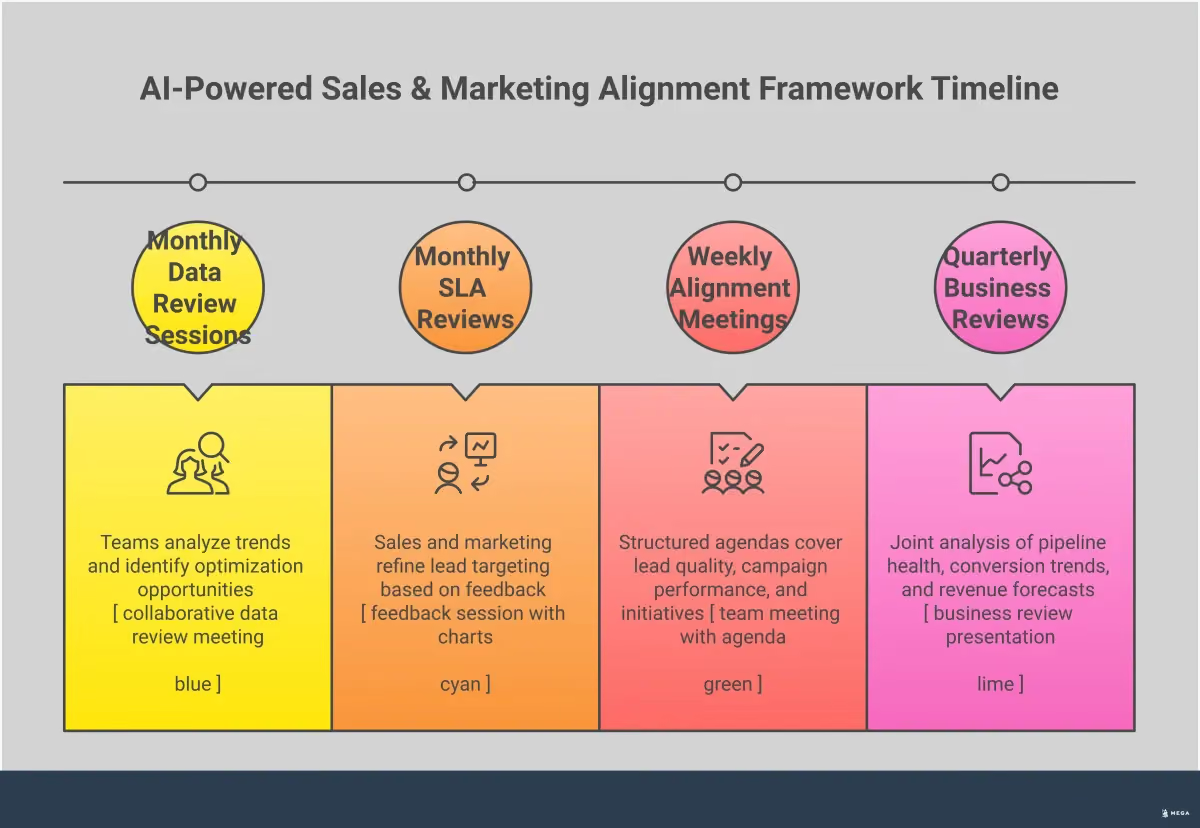
Technology is a powerful enabler, but it can’t replace human communication. To truly break down silos, your sales and marketing teams need to talk to each other regularly. These meetings don’t need to be long, but they do need to be consistent. A weekly or bi-weekly check-in can make a huge difference.
Use this time to review shared metrics, discuss the quality of leads from recent campaigns, and plan for what’s next. Marketing can share insights on what messaging is resonating, while sales can offer real-world feedback from customer conversations. This consistent dialogue builds trust and ensures that both teams are moving in the same direction, turning strategic alignment into a practical reality.
Automate the Lead Handoff Process
The moment a lead moves from marketing to sales is one of the most critical points in the customer journey. A clunky or slow handoff process can cause you to lose valuable opportunities. Automating this transition ensures that qualified leads are routed to the right salesperson instantly, with all the necessary context.
For example, when an AI agent qualifies a prospect through an SEO-driven content piece or a paid ad, that information should flow directly into your CRM. This gives the sales team the background they need to have a relevant and timely conversation. Automating follow-ups also ensures consistency, so no lead is left behind. This creates a smooth, efficient process that improves conversion rates and lets both teams operate more effectively.
How AI Can Bridge the Gap Between Sales and Marketing
Technology can be a powerful ally in breaking down departmental silos, especially when it comes to AI. Instead of just adding another tool to the stack, AI agents can function as a central, unbiased operator that connects marketing activities directly to sales outcomes. Think of it as a digital team member that handles the repetitive, data-heavy tasks that often cause friction between your teams. This is where a platform built on AI can make a real difference for small businesses.
At MEGA, we’ve designed AI agents to act as strategic partners. Our SEO expert agent, the SEO Agent, and our Paid Ads expert agent, the Ads Agent, don't just report on data; they autonomously plan and execute campaigns. They work 24/7 to generate leads, optimize content, and manage ad spend. Because the entire process happens within one system, both sales and marketing have complete visibility into the strategy and its results. This creates a single source of truth, eliminating debates over lead quality or campaign effectiveness and allowing your teams to focus on growing the business.
Automate the Lead Qualification Process
One of the most common points of friction between sales and marketing is lead quality. Marketing works hard to generate leads, but the sales team may feel they aren't ready for a conversation. AI agents can act as a neutral filter, automating the initial qualification process. By setting up clear criteria, the agent can interact with, score, and sort incoming leads from your marketing campaigns before a salesperson ever sees them.
This ensures that your sales team spends its valuable time talking to prospects who are genuinely interested and a good fit for your business. It also provides marketing with immediate feedback on which channels are producing the best leads. This automated system removes subjective opinions from the process and aligns both teams around a single, data-backed definition of a "qualified lead."
Share Real-Time Data Across Teams
Sales and marketing teams often operate with different sets of data. Marketing tracks website traffic and conversion rates in one platform, while sales manages customer relationships in a separate CRM. This disconnect makes it nearly impossible to see the full customer journey. An AI-powered marketing platform solves this by integrating with all your essential tools, from Google Analytics and your CMS to your ad accounts.
This creates a unified dashboard where both teams can access the same real-time information. Marketing can see exactly which campaigns are driving revenue, not just clicks. Sales can see the marketing touchpoints a lead interacted with before they reached out. This shared visibility allows for smarter, more collaborative decision-making and helps both teams understand their combined impact on the bottom line.
Create Consistent Prospect Follow-Up
Leads often go cold during the handoff from marketing to sales. A delay of just a few hours can dramatically decrease the chances of making a connection. AI agents can ensure every single lead receives an immediate and relevant follow-up. Whether it's a welcome email, a text message, or a series of nurturing communications, the agent can handle the initial outreach consistently and at scale.
This automated follow-up keeps your brand top-of-mind and nurtures prospects until they are ready for a human conversation. It also allows your business to re-engage old leads effectively. For instance, an AI agent can systematically reach out to thousands of past leads in your database, a task that would be overwhelming for a sales team to handle manually. This ensures no opportunity is missed and every lead is given the attention it needs to move forward.
Why the Human Element Still Matters
While technology and automation are powerful tools for bridging operational gaps, they can't replace the core need for human collaboration. Think of AI agents as the engine that drives your marketing and sales forward, handling the heavy lifting of data analysis, lead qualification, and campaign optimization. For instance, MEGA AI’s agents, the SEO Agent and Ads Agent, can autonomously manage tasks that would otherwise consume hours of your team's day. This frees up your people to focus on what they do best: building relationships, thinking strategically, and collaborating creatively.
True alignment isn't just about sharing a dashboard; it's about building a partnership grounded in trust, accountability, and mutual understanding. These human elements are the glue that holds your growth strategy together. When your teams are empowered by automation, they have more bandwidth to invest in open communication and shared problem-solving. This synergy between intelligent automation and human connection is what turns a functional process into a high-performing growth machine. The following principles are essential for fostering that strong internal partnership.
Secure Executive Buy-In and Leadership
For any alignment initiative to succeed, it needs a champion in the executive suite. This isn't just about getting approval for a new software; it's about leadership actively promoting a culture of collaboration. When leadership fails to establish a clear "north star" for everyone to follow, teams naturally create their own conflicting priorities. Executives must define the shared, revenue-focused goals that will serve as the single source of truth for both sales and marketing. This top-down approach ensures that both teams understand they are accountable to the same bottom-line results, which is the foundation for building a partnership grounded in mutual understanding.
Build Trust Through Open Communication
Trust is the foundation of any successful partnership, and it starts with clear, consistent communication. When sales and marketing teams don't talk, they make assumptions. Marketing might assume their leads are perfect, while sales might feel they're being sent on a wild goose chase. Breaking down these communication barriers requires a deliberate effort to create forums for honest dialogue.
This could be a weekly stand-up meeting to review lead quality, a shared channel for real-time updates, or simply an open-door policy for asking questions. When teams communicate openly about their goals, challenges, and successes, they begin to see each other as allies. This shared understanding is crucial for building the organizational trust needed to work as a single, cohesive unit.
Encourage Constructive Disagreement
It might sound counterintuitive, but encouraging respectful disagreement is a sign of a healthy team. When everyone is too polite to challenge an idea, you miss opportunities for improvement. The goal isn't to create conflict, but to foster an environment where both teams feel safe enough to offer honest feedback. This is how you make better decisions. When sales can tell marketing that a certain type of lead isn't converting, and marketing can show sales how a different follow-up approach might work better, you move past blame. The conversation shifts from "my leads" versus "your closes" to "our pipeline." This kind of constructive dialogue is only possible when both teams are aligned on the same revenue goals and see each other as partners in achieving them.
Establish Shared Accountability
For sales and marketing to be truly aligned, they must share ownership of the entire revenue funnel. This means moving away from finger-pointing and toward a culture of shared accountability. The first step is to work together to define exactly what a qualified lead looks like. When both teams agree on the criteria, marketing can focus on attracting the right prospects, and sales can be confident that the leads they receive are worth their time.
Establishing a feedback loop is just as important. Sales should provide regular, structured feedback on the leads they receive, and marketing should use that data to refine their strategies. This creates a cycle of continuous improvement where both teams are responsible for the quality of the pipeline and the ultimate success of their efforts.
Build Empathy Between Teams
Empathy is about understanding another person's perspective, and it's a powerful tool for breaking down silos. Sales and marketing teams often have different daily pressures and priorities, which can lead to misunderstandings. To foster empathy, encourage your teams to walk a mile in each other's shoes. Have a marketer shadow a few sales calls to hear customer objections firsthand. Invite a salesperson to a marketing brainstorming session to contribute their on-the-ground insights.
When each team appreciates the challenges and complexities of the other's role, collaboration becomes more natural. They stop operating as separate departments and start functioning as one unified team focused on a common goal: solving customer problems and driving business growth.
Implement Cross-Training and Team-Building Activities
To truly build empathy, you need to create opportunities for shared experiences. Encourage your marketing team to shadow sales calls to hear customer objections and questions directly. This firsthand knowledge is more powerful than any summary report. Inversely, invite your sales team to participate in marketing brainstorming sessions. Their on-the-ground insights can help shape campaigns that resonate more deeply with the target audience. These simple acts of cross-functional collaboration do more than just share information; they build mutual respect and a deeper understanding of the entire customer journey. When each team understands the daily realities of the other, the "us versus them" mentality disappears, replaced by a single, unified team working toward the shared goal of business growth.
Your Action Plan for Sales and Marketing Alignment
Moving from understanding the problem to fixing it requires a clear, actionable plan. When sales and marketing teams operate in silos, it often creates chaos and competition where collaboration should be. They might both be focused on conversions, but they’re looking at completely different touchpoints without sharing crucial data. Breaking down these walls isn’t just about having more meetings; it’s about fundamentally restructuring how your teams work together toward a single revenue goal.
This four-step plan provides a framework to get you started. It’s designed to help you diagnose the core issues, establish clear expectations, create a shared language, and build a system for continuous improvement. By following these steps, you can begin to bridge the gap between your teams, turning friction into a smooth, efficient process that drives sustainable growth for your business.
Step 1: Audit Your Current Processes
Before you can fix a broken process, you need to understand how it works right now. Take an honest look at your entire customer journey, from the very first marketing touchpoint to the final sales conversation. Map out every step. Where do leads come from? How are they passed to the sales team? What information is shared during this handoff, and what gets lost? Often, you’ll find that teams aren’t talking to one another and aren’t effectively leveraging data. This audit will help you pinpoint the exact moments where communication breaks down and friction occurs, giving you a clear starting point for making improvements.
Step 2: Define Clear Roles and Responsibilities
Misalignment often starts with unclear expectations. A common point of friction is the definition of a qualified lead. Sales might feel that marketing leads are poor quality, while marketing feels sales isn’t following up effectively. To solve this, you need to create a formal agreement, often called a Service Level Agreement (SLA), that outlines each team’s commitments. This document should clearly define what constitutes a marketing qualified lead (MQL) and a sales qualified lead (SQL). It establishes accountability by setting concrete goals, such as the number of MQLs marketing will deliver each month and the speed at which sales will contact them. This simple step ensures everyone is on the same page.
How Marketing Supports Sales
Marketing's primary role is to set the sales team up for success. This goes beyond just generating a list of names. Effective marketing provides a steady stream of high-quality leads, warmed up and ready for a conversation. They create useful content, run targeted campaigns, and provide competitive insights that help sales understand the landscape. When the handoff from marketing to sales includes context—like which ad a prospect clicked or what blog post they read—it allows for a much more relevant and effective follow-up. This prevents warm leads from going cold. Ultimately, marketing is responsible for creating a unified brand message, ensuring the story told in a campaign is the same one a salesperson tells on a call, which builds crucial customer trust.
How Sales Supports Marketing
The relationship between sales and marketing is a two-way street. The sales team is on the front lines, gathering invaluable intelligence directly from customers every day. They hear firsthand about customer pain points, common questions, and what competitors are offering. Sharing this information back with marketing is crucial. This feedback loop allows marketing to refine its messaging, create more relevant content, and target campaigns more effectively. When sales provides structured feedback on lead quality, marketing can adjust its strategies to attract better-fit prospects. This creates a cycle of continuous improvement, where data from real conversations informs marketing strategy, leading to better leads and, ultimately, more closed deals.
Step 3: Create a Unified Definition of a "Good Lead"
If your marketing efforts feel like you’re "using the wrong bait when fishing," it’s likely because there’s no shared definition of an ideal customer. Sales is on the front lines, hearing directly from prospects about their needs and challenges. This information is gold for your marketing team. You need to establish a strong feedback loop so marketing can refine its targeting and messaging. Work together to build a detailed ideal customer profile and a lead scoring system that ranks prospects based on their fit and engagement. This ensures marketing attracts the right people and sales can prioritize their time on the leads most likely to close.
Defining a Marketing Qualified Lead (MQL)
A Marketing Qualified Lead (MQL) is a prospect who has shown more interest than a typical lead but isn't quite ready for a sales call. Think of it as someone who has raised their hand to show they're curious. They might have downloaded a guide, signed up for a webinar, or repeatedly visited key pages on your website. Marketing uses its deep insights into these top-of-funnel activities and audience behaviors to flag these individuals as promising. This definition is crucial because it allows your marketing team to nurture these leads with targeted content, warming them up without overwhelming them with a sales pitch before they're ready. It’s the first step in a collaborative process.
Defining a Sales Qualified Lead (SQL)
A Sales Qualified Lead (SQL) is an MQL that has been vetted and deemed ready for a direct conversation with your sales team. This is a prospect who has moved beyond initial curiosity and is now showing clear purchase intent, like requesting a demo or asking about pricing. The key to a successful SQL definition is mutual agreement. When both sales and marketing agree on the specific criteria for an SQL, marketing can focus on attracting the right prospects, and sales can be confident the leads they receive are worth their time. This creates a system of shared accountability where sales provides feedback on lead quality, allowing marketing to continuously refine its strategy and deliver better prospects over time.
Step 4: Track Progress and Adjust Your Strategy
Alignment is not a one-time project; it’s an ongoing process of refinement. To make it work, both teams need access to the same data in a centralized place, like a CRM or a unified dashboard. Without a way to track conversations and nurture relationships, you’re flying blind. You need to analyze the entire funnel, from the initial discovery call to the final close. Schedule regular meetings to review shared metrics like lead-to-customer conversion rates and sales cycle length. Use these insights to identify what’s working and what needs to be adjusted. This data-driven approach allows you to continuously optimize your strategy and ensure both teams are working together effectively.
Step 5: Align Compensation and Document Processes
To make alignment stick, it needs to be woven into your company's structure. This starts with documenting your processes to create a single source of truth for how your teams should work together. Map out the entire workflow, from how a lead is generated and passed to sales, to the specific criteria for accepting or rejecting it. This removes ambiguity and ensures everyone follows the same playbook. More importantly, consider aligning compensation. When both marketing and sales have incentives tied to shared revenue goals, their priorities naturally converge. This shifts the focus from individual team metrics to the ultimate success of the business, creating a powerful feedback loop where both teams are invested in improving the entire pipeline.
Step 6: Set a Realistic Timeframe for Success
Achieving true alignment is a marathon, not a sprint. It’s an ongoing process of refinement rather than a one-time project with a clear finish line. Don't expect to see massive changes overnight. The initial months should focus on establishing the foundational elements: integrating your tools, creating a unified dashboard, and getting into a rhythm with regular cross-team meetings. The goal is to build a system for continuous improvement. As your teams begin working from the same data and providing consistent feedback, you'll start to see incremental progress. Celebrate the small wins, like an improvement in lead quality or a shorter sales cycle, as these are the building blocks of long-term, sustainable growth.