
There’s a big difference between an AI tool and an AI agent. A tool is something you operate—giving it prompts and piecing together the output. An AI agent, however, does the work for you. It plans, executes, and optimizes on its own. Understanding this distinction is key to choosing the right AI for your business. This article covers the most popular AI tools for small business for specific tasks. We’ll also introduce you to AI agents that can manage entire marketing channels, freeing you up to focus on your business.
Key Takeaways
- Match the AI tool to your business goal: Use generalist tools like ChatGPT for brainstorming and first drafts, but look to specialized platforms for specific tasks. For instance, Claude excels at analyzing long documents, while Jasper is built for creating marketing copy at scale.
- Decide if you need a hands-on tool or an autonomous agent: Most AI assistants require constant direction to complete tasks. In contrast, autonomous agents like those from MEGA AI operate independently to manage entire marketing functions, acting more like a strategic partner than a simple tool.
- Evaluate tools based on practical fit: Look beyond features and assess how a tool will actually work for your business. Prioritize ease of use, integration with your existing software, and a clear return on investment to ensure it saves time and helps you reach your goals.
What Makes an AI Tool Popular?
When we talk about a "popular" AI tool, it's about more than just brand recognition or the latest buzz. For a small business owner, popularity is a sign of trust, utility, and real-world results. It means thousands of other people have found a tool valuable enough to integrate into their daily work, which is a strong signal that it’s worth your attention.
A key indicator is simple user adoption. A large user base suggests the tool is reliable and effective. But numbers alone don't tell the whole story. Popular tools often stand out because of their unique features or their versatility. A tool that can handle text, images, and even code in one place is incredibly valuable for a team that needs to do more with less.
The user experience is another major factor. The most-used tools are often the easiest to use. They feel intuitive, almost like a conversation with a helpful assistant. Some tools can even remember your preferences across different chats, making them feel more personalized and efficient over time. This focus on creating natural, human-like interactions is what separates a good tool from a great one.
Ultimately, a tool becomes popular among businesses when it solves a specific problem and delivers measurable outcomes. Whether it’s generating high-quality marketing copy, analyzing customer data, or managing ad campaigns, the best tools provide a clear return on investment. They don't just offer features; they provide solutions that help you save time and grow your business.
The Role and Impact of AI on Small Business
For small businesses, AI is more than just a technological trend; it's a fundamental shift in how you can operate and compete. It acts as a great equalizer, offering tools and capabilities that were once exclusive to large corporations. By handling repetitive tasks and providing deep insights, AI allows entrepreneurs to reclaim their time and focus on strategic growth. It’s not about replacing the human element but enhancing it, giving you the support to make smarter decisions, work more efficiently, and create better experiences for your customers.
Economic Importance of Small Businesses
Small businesses are the backbone of the economy, representing a staggering 90% of global industry. Despite this, many entrepreneurs are not yet using the AI tools that could significantly improve their operations. This gap presents a huge opportunity. Integrating AI isn't just about keeping up; it's about gaining a competitive edge in a crowded market. By adopting these technologies, small businesses can streamline their workflows, reduce operational costs, and dedicate more resources to innovation and customer relationships, solidifying their vital role in the economy.
AI as a Supportive Team Member
Think of AI as the most efficient team member you've ever had. For businesses with small teams and tight budgets, AI can help you work smarter, not just harder. It takes on the time-consuming, repetitive tasks that can bog down a workday, like data entry, scheduling, or initial customer inquiries. This frees you and your employees to concentrate on the work that truly requires a human touch, such as building client relationships, developing new products, or refining your business strategy. It’s like adding a specialist to your team without the associated overhead.
The Affordability of AI Solutions
A common misconception is that AI is an expensive luxury reserved for large enterprises. In reality, the landscape has changed dramatically. Many powerful AI tools are now affordable, accessible, and designed with the user-friendliness that small businesses need. From subscription-based software to pay-as-you-go models, there are options for nearly every budget. These tools allow you to accomplish more work with fewer resources, delivering a significant impact on your bottom line without requiring a massive upfront investment.
How AI Supports Business Growth
AI directly contributes to business growth by optimizing costs, increasing speed, and improving customer satisfaction. By automating routine processes, AI can immediately lower operational expenses. For example, an AI agent can manage your ad spend by automatically shifting your budget to the best-performing campaigns, ensuring you get the most out of every dollar. This efficiency extends to customer service, where AI-powered chatbots can provide instant support, leading to happier, more loyal customers. This combination of savings and improved service creates a strong foundation for sustainable growth.
Common Business Uses for AI
Beyond the high-level benefits, AI has practical, everyday applications that can transform your business operations. It can be applied to nearly every function, from marketing and sales to HR and cybersecurity. The key is to identify the areas where your business spends the most time on manual tasks and see where AI can step in to automate, analyze, or create. This allows you to offload the routine work and focus your energy on strategic initiatives that drive real value and move your business forward.
Proactive Operations
One of the most immediate impacts of AI is its ability to handle simple, repetitive jobs that consume valuable time. Think about tasks like sorting and prioritizing emails, transcribing meeting notes, or scheduling appointments. AI can manage these administrative duties efficiently, ensuring nothing falls through the cracks while freeing you to focus on more critical business functions. This isn't just about convenience; it's about reallocating your most valuable resource—your time—toward activities that directly contribute to growth, like strategy, sales, and customer engagement.
Brainstorming and Strategy
AI is an excellent partner for content creation and marketing strategy. Tools can help you write blog posts, product descriptions, and social media updates, overcoming writer's block and saving hours of work. This is especially useful for improving your SEO. But the real power comes from end-to-end platforms that do more than just generate text. For instance, MEGA AI can perform keyword research, create optimized content, and even update existing articles automatically to improve their ranking, turning a simple brainstorming tool into a fully autonomous SEO agent.
Deeper Customer Understanding
Your business generates a wealth of data, but finding meaningful insights can be challenging. AI excels at quickly analyzing large datasets to uncover patterns in customer behavior, preferences, and feedback. It can help you understand which products are most popular, what marketing messages resonate, and why customers might be leaving. This data-driven approach allows you to make better-informed decisions, from personalizing your marketing campaigns to refining your product offerings, ultimately leading to stronger customer relationships and increased sales.
Hiring and HR
For small business owners who also act as the hiring manager, recruitment can be a lengthy process. AI can streamline many aspects of HR, starting with hiring. Specialized tools can help you write compelling job descriptions, screen resumes for the most qualified candidates, and even schedule interviews. By automating the initial, most time-consuming stages of the hiring process, AI allows you to focus your attention on the best applicants, making it faster and easier to build a talented team that can help your business thrive.
Cybersecurity
Online threats are a reality for businesses of all sizes, and small businesses are often seen as easy targets. AI can act as a vigilant security guard for your digital assets. It can monitor your systems for unusual activity, identify potential threats in real-time, and alert you to vulnerabilities before they can be exploited. This proactive approach to security helps protect your sensitive business data and your customers' information, providing peace of mind and safeguarding your reputation without requiring you to be a cybersecurity expert.
Predictive Maintenance
For businesses that rely on physical equipment, unexpected breakdowns can be costly and disruptive. AI-powered predictive maintenance can help you avoid these issues. By continuously monitoring the performance of your machinery, AI can predict when a part is likely to fail and schedule maintenance before a problem occurs. This shifts you from a reactive "fix it when it breaks" model to a proactive one, saving money on emergency repairs, reducing downtime, and ensuring your operations run smoothly and efficiently.
ChatGPT: The Tool Everyone Is Talking About
If you’ve heard of any AI tool, it’s likely ChatGPT. It exploded onto the scene and quickly became the benchmark for conversational AI, introducing millions of people to the power of large language models. For many small business owners, it was the first accessible glimpse into how AI could assist with daily tasks, moving from a futuristic concept to a practical tool you can use right in your web browser.
ChatGPT functions like a very knowledgeable assistant. You can ask it questions, give it instructions, and have it generate text for almost any purpose. Its strength lies in its versatility and its simple, chat-based interface, which makes it easy for anyone to start using it without a steep learning curve. While it's a powerful generalist tool, it's important to remember that it provides a starting point. The outputs often require human review and editing to ensure they align perfectly with your brand's voice and specific goals. Think of it as a collaborator that can handle the first draft, freeing you up to focus on strategy and refinement.
Why It's So Widely Used
ChatGPT has become a household name in the AI space, largely due to its extensive media coverage and massive user engagement. It was one of the first AI chatbots to go viral, making advanced AI feel accessible to the general public for the first time. Its user-friendly design means you don't need any technical background to start getting value from it. This ease of entry has made it the go-to tool for individuals and businesses looking to experiment with AI. Its ability to handle a wide range of requests, from writing an email to explaining a complex topic, has cemented its reputation as a versatile and indispensable starting point for anyone exploring AI.
What Can You Do With Its Key Features?
At its core, ChatGPT is designed to generate human-like text to assist with a variety of tasks. For small businesses, this opens up a lot of possibilities. You can use it to brainstorm ideas for blog posts, draft social media captions, or create outlines for your marketing campaigns. It's also a great resource for automating responses to frequently asked customer questions, helping you save time on customer service. Many business owners use it to summarize long documents, rewrite copy for clarity, or even get a first draft of a business plan. Its adaptability makes it a valuable tool for streamlining communication and content creation efforts across your business.
Meet Gemini: Google's Powerful AI
As Google's answer to the AI boom, Gemini is built to be a versatile and deeply integrated assistant. It's designed to understand not just text, but also images, audio, and code, making it a powerful tool for creative and analytical tasks. For small businesses already using Google's ecosystem, Gemini offers a familiar entry point into AI, connecting directly to the tools you likely use every day. This native integration is its key strength, allowing you to bring AI capabilities into your existing workflows without starting from scratch.
How It Works with the Google Suite
Gemini's biggest advantage is its seamless connection with Google Workspace. You can use it directly within Docs, Sheets, and Gmail to draft emails, summarize long documents, or organize project data. This integration helps reduce the time spent switching between different applications. For example, you can ask Gemini to analyze performance data in a Google Sheet and create a presentation in Slides based on the findings. Because it connects with services like Google Analytics, you can get help tracking campaign performance and making data-informed decisions right where you work.
What You Can Do with Multimodal AI
Gemini is a multimodal AI, which means it can understand and work with different types of information at once. You can give it text, images, and code, and it will process them together. For a small business, this opens up practical possibilities. You could upload a photo of a new product and ask Gemini to write a compelling product description for your website. Or, you could show it a screenshot of a competitor's social media ad and ask it to generate fresh ideas for your own campaign. This ability to reason across different formats makes it a flexible partner for content creation and market research.
Why Google's Backing Matters
For many business owners, trust and ease of use are critical when adopting new technology. Google's established presence provides a level of familiarity that makes Gemini more approachable. By integrating its AI directly into Android devices and the Workspace tools that millions of businesses already depend on, Google has lowered the barrier to entry. Instead of learning an entirely new platform, using Gemini can feel like an extension of the tools you already know. This makes it easier to start applying AI to your business without a steep learning curve, saving you valuable time.
Why Claude Excels at Complex Tasks
While some AI tools are great for quick questions, Claude shines when you need to work with dense information or tackle multi-step projects. Developed by Anthropic, Claude models are known for their sophisticated reasoning and ability to handle large amounts of text at once. This makes it a strong choice for business owners who need an AI assistant for more than just writing a quick email. If your work involves analyzing reports, summarizing long documents, or having detailed, nuanced conversations, Claude is a tool worth exploring. Its thoughtful design and powerful capabilities make it a standout for complex business tasks.
Process More Information with a Larger Context Window
One of Claude’s biggest strengths is its large context window. Think of a context window as the AI’s short-term memory; it’s the amount of information the model can consider at one time during a conversation. With a larger window, you can upload entire documents, like research papers or financial reports, and ask detailed questions about the content without the AI losing track of the details. This is incredibly useful for tasks like summarizing meeting transcripts, identifying key takeaways from customer feedback, or comparing multiple versions of a contract. Instead of feeding the AI information piece by piece, you can provide the full context upfront, leading to more accurate and relevant responses for your business analysis.
What Is Claude's "Safety-First" Approach?
Claude is built by Anthropic, a company with a strong focus on AI safety and ethics. This isn't just a marketing point; it’s a core part of the tool's design. The goal is to create an AI that is helpful, honest, and harmless. For a small business, this "safety-first" approach means you can have more confidence in the outputs, knowing they are designed to avoid generating harmful, biased, or unsafe content. This commitment to responsible AI development can be reassuring when you’re using AI to create content that represents your brand or to make business decisions. It’s a tool built to be a reliable and trustworthy assistant.
How to Use It for Document Creation
Beyond just text generation, Claude has some practical skills that can directly help with your day-to-day operations. You can ask it to create and format documents for you. For example, you could provide raw data and ask Claude to organize it into an Excel spreadsheet with formulas. You can also outline ideas for a presentation and have it build a basic PowerPoint deck, or ask it to edit a Word document with tracked changes. This ability to create formatted files saves you the manual work of transferring information from a chat interface into a usable business document, streamlining your workflow and letting you produce professional materials more quickly.
MEGA AI: An AI Growth Agent for Your Business
While many AI tools focus on a single task, MEGA AI operates differently. It’s an AI-powered growth agent that autonomously plans, launches, and optimizes your SEO and paid advertising campaigns. Think of it less like a tool you have to manage and more like a strategic partner that executes marketing tasks for you, without needing a traditional marketing team. For small business owners and startup founders, this approach is a significant shift. Instead of juggling multiple subscriptions for keyword research, content writing, and ad management, MEGA AI provides two dedicated agents who handle the entire process.
Lindsay, the SEO agent, and Erle, the paid ads agent, work to grow your online presence while you focus on running your business. This end-to-end automation simplifies complex marketing channels, making them accessible even if you don’t have a dedicated marketing background. It’s designed to deliver results without the steep learning curve or high costs of hiring an agency. The platform acts as a force multiplier, especially for founders who wear many hats and don't have the time to become marketing experts. It handles the repetitive, time-consuming work so you can concentrate on product development, customer relationships, and other core business functions.
Meet Lindsay: Your AI SEO Agent
Lindsay is MEGA AI’s dedicated AI SEO agent, built to manage your website's search engine performance from start to finish. She acts as an all-in-one SEO agency, handling everything from keyword strategy and content generation to technical audits and acquiring backlinks. Lindsay continuously works in the background to improve your site’s visibility and ranking on search engines. For a small business, this means you get the benefit of a comprehensive SEO strategy without having to piece it together yourself or pay expensive agency fees. All the tasks Lindsay performs are tracked, so you always have a clear view of the work being done to improve your online presence.
Meet Erle: Your Paid Ads Specialist
Erle is the paid ads specialist in the MEGA AI platform. This agent launches, manages, and optimizes your advertising campaigns across networks like Google and Meta. Erle handles the critical details that determine a campaign's success, including budget allocation, audience targeting, and testing different ad creatives to see what performs best. The goal is to make your ad spend as efficient as possible and help you achieve your campaign objectives, whether that’s generating leads or driving sales. With Erle, you don’t need to be an expert in ad platforms to run effective campaigns; the agent manages the complexities for you.
Why It's a Solution, Not Just a Tool
What sets MEGA AI apart is that it provides a solution, not just another tool. This isn't an AI chat interface you need to prompt constantly to get the right output. Lindsay and Erle are true agents that develop a strategy and execute the tasks required to hit your goals. A majority of customers use the platform's autopilot mode, which allows the agents to operate autonomously. This system is designed to function like an extension of your team, giving you back the time and resources you’d otherwise spend on marketing. If you want to see how these agents can manage your marketing, you can book a call to see them in action.
AI Tools to Help You Write Better Content
Beyond the big, multi-purpose models, a whole ecosystem of specialized AI tools has emerged to handle specific writing and content tasks. While a comprehensive solution like MEGA AI manages your entire SEO content strategy from research to publication, these tools can be great for one-off projects or for refining copy. They are designed to help you write faster and more effectively, whether you're drafting an email, a blog post, or ad copy. Think of them as specialists you can call on for very specific jobs.
For a small business owner, building a digital toolkit is key. You might have one platform that serves as your central command for growth, like an AI agent that handles your SEO. But you'll still need other tools for day-to-day communications. That's where these writing assistants come in. They can help you quickly generate ideas for a social media calendar, draft a tricky customer service email, or put the finishing touches on a proposal. They focus on the micro-level of content creation, helping you get the words just right for a particular task, which complements the macro-level strategy handled by a larger platform.
Jasper: Create Compelling Marketing Content
Jasper is an AI writing assistant that helps marketers create high-quality content quickly. If you need to produce a lot of marketing copy, from social media updates to full blog posts, this tool can be a huge time-saver. It uses advanced algorithms to generate text that is tailored to specific audiences and marketing goals. You can provide it with a brief, a tone of voice, and keywords, and it will generate drafts for you to edit and finalize. It’s particularly useful for overcoming writer's block and scaling your content production without hiring a large team.
Copy.ai: Write High-Converting Sales Copy
Copy.ai is designed to help businesses generate compelling sales copy and marketing content effortlessly. Its user-friendly interface allows you to create various types of copy, from product descriptions to email campaigns, in just a few clicks. The platform's AI models are built to make the process feel effortless. You select a copy type, enter some basic information about your product or offer, and it generates multiple options for you to choose from. This makes it a great tool for business owners who need to write persuasive copy but may not have a background in copywriting.
Grammarly: Polish Your Writing with AI
Grammarly is an AI-powered writing assistant that acts as a final check for your content. It goes beyond a simple spell check to analyze grammar, punctuation, style, and tone. It provides real-time feedback and suggestions to improve the clarity and impact of your writing, ensuring it's professional and easy to read. Whether you're writing an email to a client or publishing a new page on your website, Grammarly is an essential tool for anyone who wants to polish their writing and make a strong impression.
More Specialized AI Tools to Know
Beyond writing and marketing, AI is making waves in nearly every part of running a business. Specialized tools can help you create professional designs, understand your business data, and provide top-notch customer service, all without needing a large team or budget. Think of these as adding specialists to your team who can handle specific, important tasks that free you up to focus on the bigger picture. Here are a few areas where AI is making a significant impact.
AI Tools for Design and Visuals
You don't need to be a graphic designer to create stunning visuals for your business. AI tools can help you generate everything from social media posts to professional presentations. For example, you can upload your meeting notes into an AI assistant like Claude, and it can turn them into a polished slide deck. Other platforms offer features that let you describe an image you want, and the AI creates it for you in seconds. This is perfect for creating unique blog images, ad creatives, or website graphics that align with your brand, saving you time and the cost of hiring a designer for every small task.
AI Tools for Data Analysis
Making sense of business data can feel overwhelming, but AI makes it much more approachable. Google's Gemini, for instance, is designed to understand multiple data types at once, including text, images, and code. Its real power for small businesses comes from its integration with other Google services. You can connect it to Google Analytics to help you track campaign performance in real time. This allows you to ask simple questions about your data and get clear answers, helping you make data-driven decisions without needing to be an expert analyst. It’s like having a data specialist on call to translate numbers into actionable insights.
AI Tools for Customer Service
Providing timely and helpful customer support is key to building loyalty. AI assistants can handle many routine customer service tasks, freeing you up to manage more complex issues. An AI like Claude can understand and generate human-like text, making it a great tool for drafting responses to common questions or creating a comprehensive FAQ page. You can also use AI to power a chatbot on your website that provides instant answers to visitors 24/7. This not only improves the customer experience but also ensures you never miss an opportunity to help a potential customer, even when you’re not online.
AI Tools for Operations and Management
Running a business involves countless small, repetitive tasks that can eat up your day. This is where AI can step in as a valuable assistant for operations and management. Think about the time you spend sorting emails, scheduling meetings, or taking notes. AI can handle many of these simple jobs, freeing you up to concentrate on the strategic work that only you can do. By automating routine administrative tasks, you can reclaim valuable hours to focus on growing your business, connecting with customers, and leading your team. It’s about working smarter, not harder, and letting technology manage the background noise.
AI Tools for Marketing and Social Media
AI has become a game-changer for marketing, especially for small businesses that need to make a big impact with limited resources. There are many AI tools that can help with specific marketing tasks, from scheduling social media posts to analyzing audience engagement. While these tools are great for managing individual parts of your strategy, a more integrated approach can save even more time. For example, an AI agent like MEGA AI’s Lindsay doesn’t just write a blog post; she develops a full SEO strategy, creates the content, and works to get it ranked. This end-to-end automation handles an entire marketing channel, acting more like a team member than a simple tool.
AI Tools for Sales and Lead Generation
Finding and converting leads is the lifeblood of any business, and AI can make the process much more efficient. AI tools can analyze data to identify potential customers who are a good fit for your product or service, and even suggest the best time to reach out to them. This takes a lot of the guesswork out of prospecting. Furthermore, AI can look at past sales data and market trends to help you forecast future sales, allowing you to plan your inventory and budget more effectively. By automating parts of the sales process, you can ensure your team is focusing its energy on building relationships with the most promising leads.
AI Tools for Design and Video
You no longer need to be a professional designer to create high-quality visuals for your business. AI tools can help you generate everything from social media graphics to polished presentations. For instance, you can provide an AI assistant with your meeting notes, and it can organize them into a slide deck. Other platforms allow you to simply describe an image you need, and the AI will create it for you in moments. This is incredibly useful for producing unique blog images, ad creatives, or website graphics that match your brand, saving you the time and expense of hiring a designer for every task.
AI Tools for Finance and Accounting
Managing finances is a critical but often time-consuming part of running a business. AI tools can bring a new level of efficiency and accuracy to your accounting processes. These tools can automate tasks like invoicing, tracking payments, and categorizing expenses, reducing the chance of human error. Beyond just automation, some AI platforms can analyze your financial data to provide valuable insights, helping you spot trends, manage cash flow, and make more informed budget decisions. This allows you to spend less time on bookkeeping and more time on financial strategy.
AI Tools for Customer Support
Excellent customer service builds trust and loyalty, and AI can help you provide timely support even with a small team. AI can be used to power chatbots on your website that can answer common customer questions instantly, 24/7. This ensures your customers get help when they need it, not just during business hours. For more complex inquiries, AI can help draft polite and professional replies, ensuring your communication is always on-brand. By handling routine questions, AI frees up your team to focus on resolving more complex issues that require a human touch, improving the overall customer experience.
AI Tools for Productivity
The ultimate goal of using AI in your business is to improve overall productivity. By automating repetitive tasks, AI allows your team to focus on more strategic and creative work. For example, instead of manually researching sales leads or scheduling social media posts, your employees can use that time to build customer relationships or develop new marketing campaigns. This shift from manual work to strategic thinking is where the real value lies. Platforms like MEGA AI take this a step further by automating entire functions, like SEO and paid ads, which can dramatically increase your team's output without adding to their workload.
Key Risks and Important Considerations
While AI offers incredible opportunities for small businesses, it’s important to approach it with a clear understanding of the potential risks. Adopting any new technology requires careful thought, and AI is no exception. Being aware of the challenges can help you make smarter choices and use these powerful tools responsibly. From protecting your sensitive data to ensuring the content you generate is accurate and ethical, a mindful approach is key to successfully integrating AI into your business. Taking the time to consider these factors will help you avoid common pitfalls and get the most value from your AI investments.
Data Privacy and Security
When you use an AI tool, you are often sharing information with it. It's crucial to be mindful of what data you're providing, especially if it's sensitive company or customer information. Some AI models learn from the data they process, which means your private information could potentially become part of the AI's knowledge base and be shared with other users. Before you upload any confidential documents or data, carefully review the tool's privacy policy to understand how your information will be used and stored. Always prioritize tools that offer strong data protection and give you control over your information.
Content Accuracy and AI Hallucinations
AI models are powerful, but they are not infallible. They can sometimes generate incorrect or completely fabricated information, a phenomenon often called "hallucination." For a business, publishing inaccurate content can damage your credibility and erode customer trust. That's why it's essential to always review and fact-check any content generated by AI before you use it. Think of the AI as a helpful first-draft assistant, but you are the final editor and the one responsible for ensuring everything you publish is true and accurate.
Legal and Ethical Issues
The legal landscape around AI is still evolving, and it's important to be cautious. One key area of concern is intellectual property. There's a risk that AI-generated content could unintentionally infringe on existing copyrights, patents, or trademarks. Always be careful to ensure that anything an AI creates for your business is original and doesn't copy someone else's work. Using AI ethically also means being transparent about when you're using it and ensuring it doesn't perpetuate biases. Staying informed about these issues will help you use AI in a way that is both legal and responsible.
Emerging Cybersecurity Threats
AI is a double-edged sword when it comes to cybersecurity. On one hand, it can be used to create more sophisticated security systems that can detect and respond to threats in real time. On the other hand, it can also be used by malicious actors to create more convincing phishing scams or other types of cyberattacks. For a small business, it's important to recognize that while AI can enhance your cybersecurity measures, it can also introduce new vulnerabilities if it's not managed properly. Make sure any AI tools you use are secure and that you continue to follow best practices for cybersecurity.
How to Evaluate an AI Tool
With so many AI tools available, picking the right one can feel overwhelming. It's not just about finding a tool with the most impressive features; it's about finding one that fits your specific business needs, workflow, and budget. A flashy tool that's difficult to use or doesn't connect with your other software can create more problems than it solves, becoming a source of frustration rather than a driver of growth. To make a smart choice, you need a clear framework for evaluation.
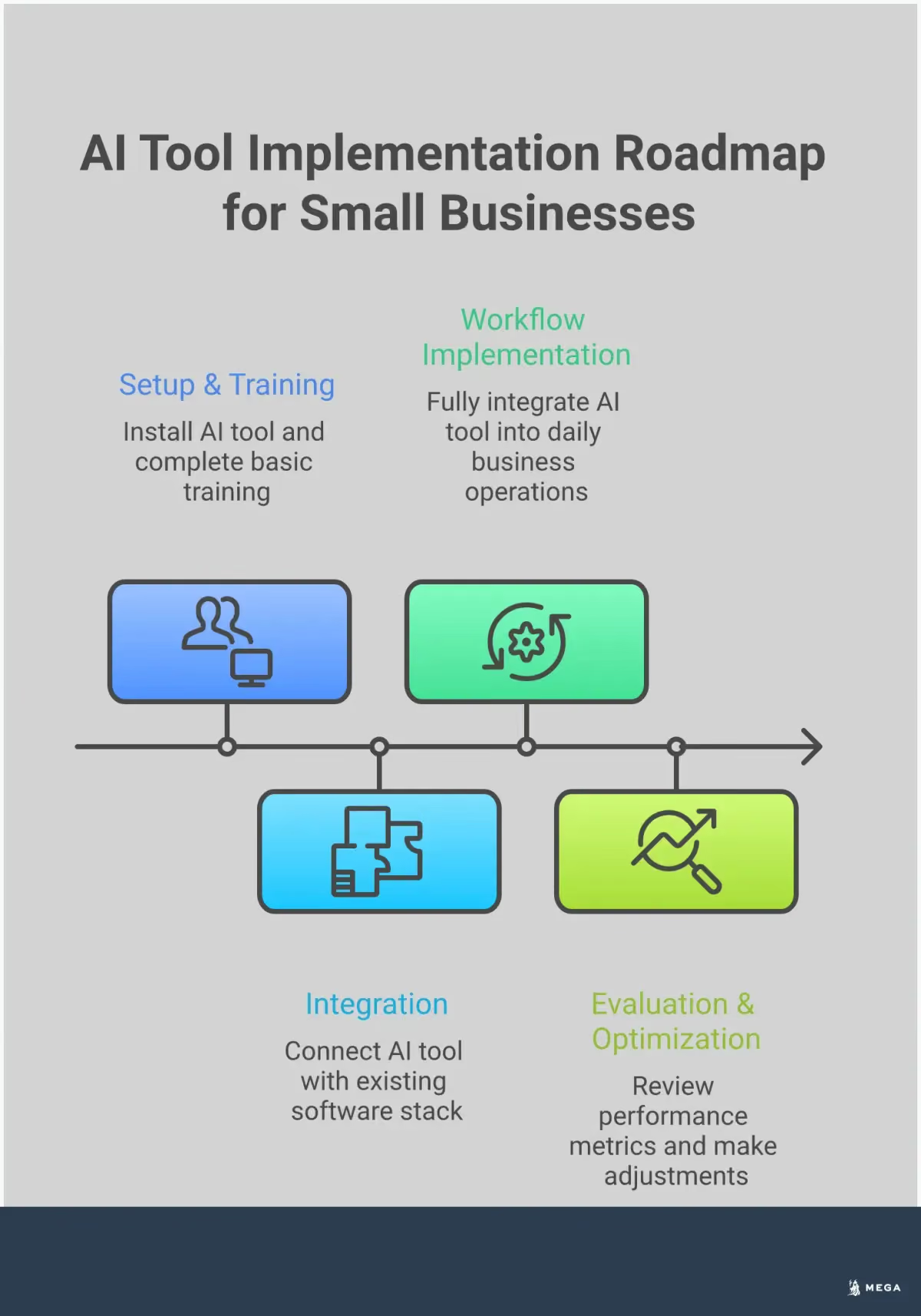
Think of it like hiring a new team member. You'd want to know if they're easy to work with, if they can collaborate with your existing team, and if their contribution will be worth the investment. The same logic applies to AI. By focusing on a few key areas, you can cut through the noise and select a tool that will genuinely help you grow your business instead of just adding another subscription to your monthly expenses. This process helps you move beyond the hype and focus on practical value. Let's look at three critical factors to consider: how simple the tool is to operate, how well it connects with your current systems, and the balance between its cost and the potential return on your investment.
Is It Easy to Use?
As a business owner, your time is your most valuable asset. The last thing you need is an AI tool with a steep learning curve that requires hours of tutorials just to get started. The best tools are intuitive and designed for seamless interaction. A platform should feel less like a complex piece of software and more like a helpful assistant that understands your needs. For example, some tools can now remember your preferences across different projects, saving you from starting from scratch every time. Look for a clean interface, clear instructions, and features that simplify your tasks, not complicate them. If a tool makes you feel confused during the free trial, it's unlikely to become a go-to resource later on.
Does It Integrate with Your Current Tools?
An AI tool shouldn't operate in a silo. For it to be truly effective, it needs to connect with the software you already use every day, like your website's CMS, your email marketing platform, or your analytics dashboard. Seamless integration creates a more efficient workflow and prevents you from having to manually transfer data between systems. For instance, some AI can connect directly to Google Analytics to help you track campaign performance in real time. When evaluating a tool, check its list of integrations. A platform like MEGA AI, for example, is built to work with popular platforms like WordPress, Shopify, and Google Ads, ensuring it fits right into your existing marketing stack.
What's the Cost and Potential ROI?
For any small business, budget is a major consideration. When looking at AI tools, it's easy to focus on the monthly subscription fee, but the true cost is more than just a number. You also have to factor in the time it takes to learn and implement the tool. A free or low-cost option might seem appealing, but if it doesn't deliver results, it's not a good investment. Instead, think about the potential return on investment (ROI). Will this tool save you hours of manual work each week? Will it help you generate more qualified leads or improve your ad performance? Many platforms offer a free AI generator to start, which is a great way to test its value before committing to a paid plan.
How to Choose the Right AI Tool for Your Business
With so many AI tools available, picking the right one can feel like a job in itself. The key is to think of it less like a tech purchase and more like hiring a new team member. You wouldn't hire a graphic designer to manage your finances, and the same logic applies here. The best tool for your business is the one that directly addresses your biggest challenges and fits seamlessly into how you already work.
Before you commit to a subscription, take a step back and define what you need help with most. Are you trying to attract more local customers through search? Do you need to create ad campaigns that actually convert? Or are you simply trying to write emails faster? Answering these questions first will help you filter through the noise and find a tool that delivers real value instead of just adding another task to your to-do list.
Match the Tool to Your Business Goals
Different AI tools are designed with specific outcomes in mind. Your first step is to align a tool’s strengths with your business objectives. If your primary goal is to run more effective advertising, a tool like Google Gemini offers advanced features that support creative and dynamic ad campaigns. Its ability to generate ad copy and visuals can be a huge asset for marketing teams.
On the other hand, if your work involves processing and summarizing large documents, Claude AI might be a better fit. It’s particularly useful for professionals who need an AI assistant that can handle complex information with precision. Clearly defining your goal, whether it's lead generation, content creation, or data analysis, will point you toward the right type of AI.
Check for Workflow Compatibility
The most powerful AI tool is useless if it’s too complicated to use or doesn’t work with your existing systems. Look for tools that integrate smoothly into your current workflow. A great tool should feel like a natural extension of your process, not a disruption. For example, Gemini’s integration with Google Analytics allows you to track performance and make data-driven decisions without switching between platforms.
Similarly, some tools offer connectors that link the AI to software you already use every day, like your email, calendar, or document storage. This allows the AI to work with your real context instead of starting from scratch each time. Prioritizing compatibility ensures you’ll actually use the tool and get the most out of your investment.
Start Small with Free or Low-Cost Tools
Jumping into AI doesn't have to mean a big financial commitment right away. Since the technology is still evolving, it's smart to start small and see what works for your specific needs. Many of the most powerful AI platforms offer free versions or trials that give you a chance to experiment without risk. This approach allows you to test different tools and see if they genuinely add value to your operations before you decide to invest in a paid subscription. Think of it as a trial period to discover which AI assistant best fits your workflow and helps you achieve your goals, whether that's writing emails faster or drafting social media content.
Get Human Advice First
AI can be an incredible partner for executing your business strategy, but it shouldn't be the one creating it from scratch. Your unique understanding of your customers and your market is something AI can't replicate. It's always best to get advice from real people and develop your core strategy first. Once you have a clear plan, you can use AI to help you carry it out more efficiently. Always have a person review any content the AI generates, especially when using free tools. This final check ensures the output is accurate, secure, and truly reflects your brand's voice and values.
What's Behind the Rapid Growth of AI Tools?
It seems like AI tools are everywhere now, but this sudden popularity is the result of a few key developments. The technology behind these tools has taken a massive leap forward, making them more powerful and reliable for business tasks. At the same time, they’ve become much easier for anyone to use, not just developers or data scientists. This combination of power and accessibility is what’s fueling their rapid adoption.
Recent advancements in AI capabilities are a major factor. Models like Google Gemini are designed for more complex reasoning and understanding, which is crucial for business applications. Instead of just performing simple commands, modern AI can help with strategy, analysis, and creative work. This progress is advancing the field from a novelty to a core business utility.
Another driver is the seamless integration of AI into the software we already use every day. When AI features are built directly into platforms like Google Workspace or your favorite marketing software, the barrier to trying them is incredibly low. This improved real-world usability means businesses can start seeing benefits without overhauling their existing workflows or investing in extensive training.
Finally, today’s AI is incredibly versatile. The best tools can work across text, visuals, audio, and code, making them useful for almost every department in a company. A marketing team can use AI to write ad copy, generate images, and analyze campaign performance, all from a handful of platforms. This flexibility allows small businesses to accomplish more with a lean team, which is a powerful incentive for adoption.