
Effective marketing often feels like a choice between two difficult options: hiring a pricey agency or trying to master everything yourself. But there's a new, more accessible path. AI marketing gives you the power of a dedicated team without the high overhead. An AI agent can work around the clock to research keywords, write content, manage ad campaigns, and even handle technical website fixes. This autonomous approach provides the consistency and expertise needed to compete online. This guide will show you how to use AI to execute proven strategies and drive real growth for your business.
Key Takeaways
- Combine AI efficiency with human creativity: Let AI manage the scalable, data-driven tasks like technical SEO audits and ad budget allocation, freeing you to focus on strategic planning, brand storytelling, and building customer relationships.
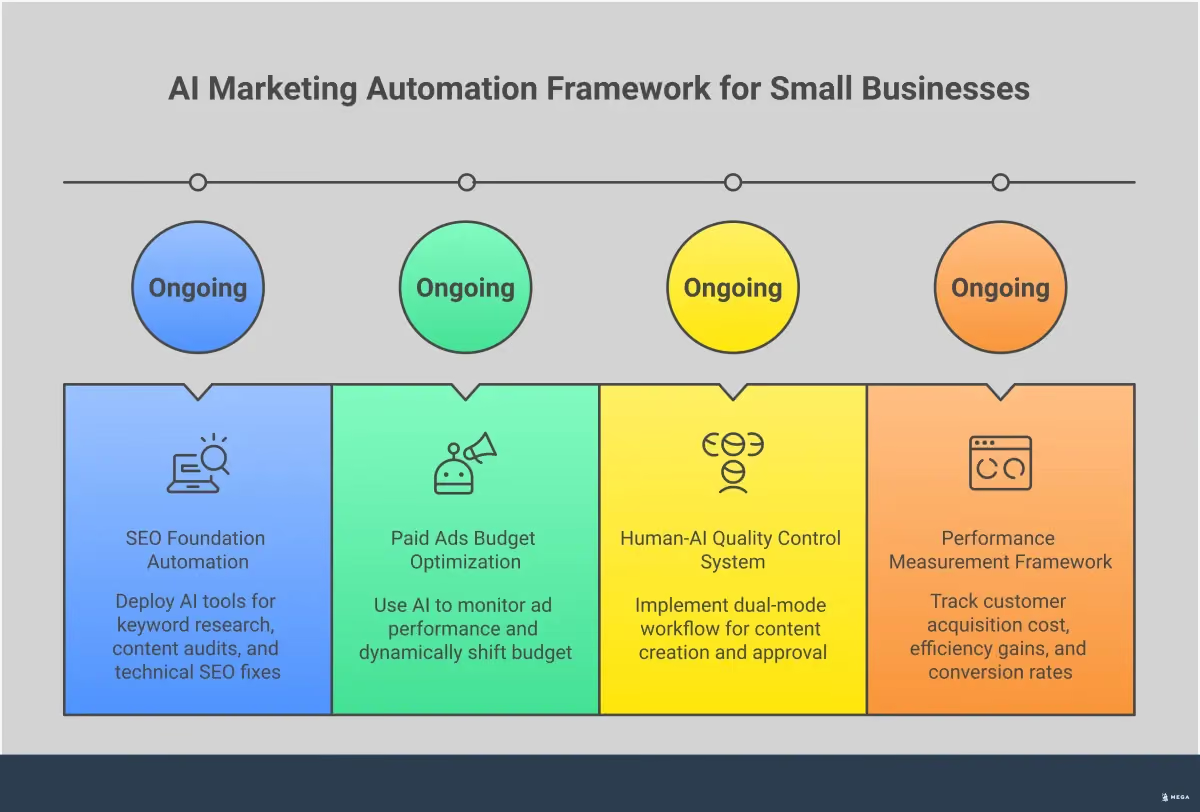
- Automate your foundational marketing tasks: Use AI to build and maintain your SEO by automating keyword research and content updates, and streamline paid ads by letting AI test creative variations and optimize spend across platforms.
- Implement AI with clear oversight and measurable goals: Choose tools that offer both autopilot and manual approval modes to maintain quality control, and track success by focusing on core business metrics like customer acquisition cost, not just surface-level data.
What Can AI Actually Do for Your Marketing?
Think of AI as the most efficient assistant you’ve ever had. It’s brilliant at handling the repetitive, data-heavy tasks that consume your day, allowing you to focus on strategy and creative work. AI marketing tools can streamline your operations, from automating keyword research to analyzing campaign performance and identifying patterns you might have missed. It can generate dozens of ad copy variations for testing or draft a blog post in minutes, giving you a solid starting point for your content. For tasks that require scale and speed, like managing complex Paid Ads campaigns or making technical SEO fixes, AI is an invaluable partner.
However, AI is a tool, not a strategist. It can’t replicate the spark of human creativity, empathy, or the deep understanding of your audience that builds a truly great brand. AI often struggles to capture a unique brand voice, and its writing can feel generic without a human touch to add nuance and authentic storytelling. It can’t build genuine relationships with your customers or devise a high-level marketing plan from scratch. More importantly, AI can make mistakes, producing content that is inaccurate or misaligned with your brand’s values. This is why human oversight is critical. The goal isn’t to let AI run your marketing, but to use it to execute specific tasks more effectively while you guide the overall vision.
The State of AI in Marketing: Key Statistics
AI isn't just a buzzword for large corporations anymore; it's a practical tool that businesses of all sizes are using to grow. The numbers show a clear trend: AI is becoming a standard part of the marketing toolkit. According to a recent report, 73% of CEOs believe that generative AI will deliver significant value for their organizations. This isn't just about future potential; it's happening now. Research shows that nearly 69% of marketers are already using AI in their daily work, relying on it for everything from content creation to data analysis. This widespread adoption signals a shift in how marketing gets done, making it more efficient and data-driven than ever before.
Understanding the Types of Marketing AI
When people talk about "AI in marketing," they're usually referring to a few different technologies working behind the scenes. You don't need to be a tech expert to use them, but knowing the basic types can help you understand what these tools are actually doing for your business. Most marketing AI falls into two main categories: predictive AI, which makes forecasts based on data, and generative AI, which creates new content. Each type serves a different purpose, but they often work together to automate and refine your marketing efforts, from identifying your next best customer to writing the ad that reaches them.
Predictive AI
Predictive AI acts like a data analyst, sifting through past information to make educated guesses about the future. It looks for patterns in your existing customer data to forecast outcomes like which customers are most likely to make another purchase or which marketing leads have the highest chance of converting. For a small business, this is incredibly valuable. Instead of guessing where to spend your ad budget, predictive AI can help you focus on the audience segments that are most likely to respond. It takes the guesswork out of personalization, allowing you to deliver the right message to the right person at the right time.
Generative AI
Generative AI is the creator. This is the technology that can write a blog post, design an image, or draft an email campaign based on a simple prompt. For small business owners who wear many hats, this is a massive time-saver. Instead of staring at a blank page, you can use generative AI to produce a first draft of your website copy or a dozen variations of an ad for testing. Platforms like MEGA AI use this technology not just to create content but to ensure it's optimized for search engines from the start, helping you build a strong online presence more efficiently.
How to Get Leadership on Board with AI
Getting your team’s leadership on board with investing in AI can feel like a major hurdle. It’s not just about showing them a cool new tool; it’s about building a solid business case that connects AI adoption to tangible results. The key is to address their potential concerns head-on by focusing on measurable gains, establishing clear oversight, and setting practical expectations from the start. A well-structured proposal shows you’ve thought through the strategic implications and are ready to manage the process responsibly.
Use Data to Highlight Potential Gains
Instead of talking about abstract AI capabilities, focus on the specific outcomes it can drive for your business. Frame the conversation around efficiency and performance. For example, explain how AI marketing tools can streamline operations by automating time-consuming tasks like keyword research or ad campaign adjustments. Use this to show how your team can reallocate their time to higher-level strategy. Present projections on how AI-driven optimizations in your paid ad campaigns could lower customer acquisition costs or how automated SEO improvements could increase organic traffic over the next two quarters. Connecting AI to core business metrics makes the potential return on investment clear and compelling.
Create a Plan for Human Oversight
Leadership is often concerned about the risks of automation, like brand voice inconsistency or costly errors. Address this by presenting a clear framework for human oversight. Explain that AI is a tool to assist your team, not replace its judgment. Propose a system where AI-generated content or campaign changes require human review before going live. Platforms like MEGA AI are built for this, offering both a full autopilot mode and a manual approval setting to ensure you maintain control. This approach demonstrates that you’re mitigating potential AI risks while still benefiting from the speed and power of automation. It builds trust and shows you value quality assurance.
Define Realistic Goals and Success Metrics
AI is powerful, but it isn’t a magic wand. It’s important to set realistic expectations with leadership to build long-term trust. Acknowledge that AI works best when combined with human expertise and strategy. Before you even begin, define what success will look like and how you’ll measure it. Will you track efficiency gains, like hours saved on content creation? Or will you focus on performance metrics, like a targeted lift in conversion rates? AI won't automatically guarantee better lead generation; its success depends on proper implementation and ongoing management. By establishing clear KPIs, you create a transparent way to track progress and demonstrate the value AI delivers over time.
How to Implement AI in Your Marketing Strategy
Bringing AI into your marketing workflow doesn’t require a massive, disruptive overhaul. The most successful integrations are gradual and strategic, starting with a solid foundation and expanding from there. Think of it as a phased rollout rather than flipping a switch. By taking a methodical approach, you can test what works, train your team effectively, and demonstrate value at each step. This process ensures that AI becomes a sustainable part of your operations, not just a temporary experiment. The goal is to build a system where AI handles specific, scalable tasks, allowing you and your team to focus on the high-level strategy that drives real growth.
The following steps provide a clear roadmap for integrating AI into your marketing efforts. We’ll start with the essential groundwork of preparing your data, move on to selecting a manageable first project, and finish with the crucial step of empowering your team. This approach minimizes risk and helps you build confidence in the technology as you see its impact firsthand. By following this framework, you can ensure a smooth transition and set your business up to get the most out of your new AI tools.
Start with a Solid Data Foundation
Before you can get meaningful results from AI, you need to give it good information to work with. AI tools are only as effective as the data they analyze, so starting with a clean and accurate data foundation is a critical first step. This means ensuring your website analytics, customer information, and campaign performance metrics are organized and reliable. When your data is messy or incomplete, an AI might identify incorrect patterns or make poor recommendations. Taking the time to organize your data properly ensures the AI has a clear picture of your business, which allows it to deliver the precise insights you need to make smarter marketing decisions.
Begin with a Pilot Project
Instead of trying to automate everything at once, begin with a small, well-defined pilot project. This allows you to test the technology in a low-risk environment and measure its impact. A great starting point could be using an AI tool to optimize the titles and meta descriptions of your top 10 blog posts to see if you can improve their click-through rates. Or, you could use it to generate a few variations of ad copy for a single campaign. An end-to-end platform like MEGA AI is ideal for this, as you can use its Maintenance Agent to focus on a specific task like improving existing content. This approach helps you learn the tool’s capabilities and build a case for wider adoption based on tangible results.
Train Your Team for Success
Successfully integrating AI is as much about people as it is about technology. It’s essential to help your team understand how to work alongside these new tools. This involves more than just technical training; it’s about redefining roles to create a powerful human-AI synergy. Encourage your team to focus on strategy, creative direction, and editing AI-generated content to ensure it aligns with your brand voice. When your team sees AI as a collaborator that handles repetitive work, it frees them up to focus on the uniquely human aspects of marketing. This approach not only makes your AI implementation more effective but also empowers your team to work more strategically.
How to Use AI to Build a Stronger SEO Foundation
A strong SEO strategy is the bedrock of sustainable, long-term growth. It’s how customers find you without you having to pay for every single click. But for small businesses, building that foundation can feel like a monumental task. This is where AI can completely change the game. Instead of spending weeks on manual research or hiring expensive consultants, you can use AI to handle the heavy lifting. It can help you identify the right keywords, improve your existing content, and sort out the technical issues that hold your site back from ranking higher. Think of it as giving your one-person marketing team the power of a full agency.
Automate Keyword Research That Works
Keyword research is more than just finding popular search terms; it’s about understanding what your potential customers are looking for and what language they use. AI tools move beyond basic volume metrics to analyze user intent, competitor strategies, and emerging trends. This allows you to make data-driven decisions and uncover high-value keywords that you can realistically rank for. An effective AI-powered SEO agent can continuously scan for new opportunities, ensuring your strategy never becomes stale. This automated approach frees you from endless spreadsheet analysis and helps you focus on creating content that directly addresses your audience’s needs.
Optimize Your Content Beyond Basic AI Suggestions
While there's a lot of discussion about AI versus human-written content, the smartest approach is to use them together. Studies have shown that human-generated content often gets more traffic because it connects on a deeper level. Instead of replacing your voice, use AI to enhance it. AI can analyze your existing blog posts to find content gaps, suggest new sections to add for comprehensiveness, and identify opportunities to improve your click-through rate from search results. It can also help you update older articles to keep them relevant, ensuring your content library continues to work for you long after it’s published.
Using AI for Continuous Content Maintenance
The "publish and forget" approach to content is a common trap for busy small business owners. But your content's value diminishes over time as search algorithms change and information becomes outdated. Continuous maintenance is crucial, but who has the time? This is where an AI agent becomes a game-changer, acting as your content's dedicated caretaker. For instance, MEGA AI's Maintenance Agent is designed specifically for this. It can analyze your existing articles to find opportunities to improve your click-through rate from search results, identify new sections to add for comprehensiveness, and even re-optimize your content after a major Google update. This automated process keeps your entire content library fresh and competitive, protecting your investment and ensuring it continues to drive traffic long after it’s published.
Find and Fix Technical SEO Issues with AI
The term “technical SEO” can sound intimidating, but it’s often a collection of small fixes that make a big difference in how search engines see your website. AI tools are great at performing technical audits to find issues you might not even know you have. This includes identifying broken links, flagging pages with slow load times, fixing incorrect canonical tags, and generating an XML sitemap to help Google crawl your site more efficiently. An AI-driven platform can present these issues with clear instructions or, in some cases, handle the fixes for you automatically. This makes it possible to maintain a healthy, well-optimized site without needing a degree in web development.
Improve Your Paid Ads with AI Automation
Managing paid advertising can feel like a constant balancing act. You have to monitor budgets, test creative, and track performance across multiple platforms, all while trying to run your business. It’s a huge time commitment, and a single misstep can waste your ad spend. This is where AI automation changes the game. Instead of you manually checking in on campaigns every hour, AI can act as your dedicated ads manager, making smart decisions based on real-time data.
Tools like MEGA AI’s Paid Ads agent work around the clock to plan, launch, and optimize your campaigns. Think of it as adding an expert to your team who can analyze performance trends faster than any human could. This allows you to focus on your strategy and your customers, knowing the day-to-day campaign management is handled. AI can identify which ads are performing best, who to show them to, and where to allocate your budget for the highest return, turning your ad spend into a more predictable growth driver.
Automate Real-Time Budget Adjustments
One of the biggest challenges in paid advertising is knowing where to put your money. A campaign that worked well yesterday might underperform today. AI removes the guesswork by continuously analyzing performance data. It can automatically shift your budget away from low-performing ads and toward the ones that are driving results. This dynamic adjustment ensures your budget is always working as hard as it can. Instead of waiting for a weekly report to make changes, AI makes them in the moment, preventing wasted spend and capitalizing on opportunities as they appear.
Test More Ad Creative, Minus the Manual Work
Coming up with fresh ad copy and visuals is a major creative drain. AI can help you break through that barrier by generating hundreds of ad variations in minutes. You can test different headlines, descriptions, and calls to action to see what truly connects with your audience. This capability allows you to test various ad creatives at a scale that would be impossible to manage manually. By letting AI handle the repetitive work of creating and launching tests, you get clear, data-backed insights into which messages drive the most conversions, helping you refine your marketing for better results.
Manage Cross-Platform Campaigns with Ease
If you’re advertising on Google, Meta, and LinkedIn, you know how tedious it is to manage each platform separately. AI tools can serve as a central hub for all your paid ad activities. You can upload campaigns to multiple platforms at once and see all your performance data in a single dashboard. This streamlined approach saves you from jumping between different ad managers and trying to piece together reports. By using AI tools to help you, you can manage your entire paid media strategy more efficiently, giving you a clearer picture of your overall return on investment.
Beyond SEO and Paid Ads: Other AI Marketing Uses
While a strong SEO foundation and optimized ad campaigns are essential for growth, they are just two pieces of the marketing puzzle. AI’s capabilities extend across the entire customer journey, helping you create a more cohesive and intelligent strategy. From the first email a customer receives to the support they get after a purchase, AI can automate and personalize touchpoints that build stronger relationships. By integrating AI into other areas of your marketing, you can ensure every interaction is timely, relevant, and helpful, creating a seamless experience that turns one-time buyers into loyal customers.
Enhance Email Marketing Campaigns
Email marketing remains one of the most effective ways to connect with your audience, but personalization is key. AI can take your email strategy to the next level by moving beyond simple name token personalization. It can analyze customer data to create highly targeted email segments, suggest products based on past purchases, and even write subject lines designed to get more opens. AI also helps you optimize your email campaigns by determining the best time to send messages to each individual subscriber and automatically A/B testing different content to see what resonates most, ensuring your emails land with impact.
Streamline Social Media Management
Maintaining an active and engaging social media presence is a full-time job. AI can act as your social media assistant, helping you manage your channels more efficiently. It can analyze trends and suggest content ideas that are likely to perform well with your audience. More importantly, AI-powered tools can perform social listening, monitoring conversations across platforms to see what people are saying about your brand. This includes analyzing the sentiment behind mentions, allowing you to quickly address negative feedback and amplify positive comments to protect your brand’s reputation online.
Power E-commerce with Personalization
For online stores, a personalized shopping experience can significantly increase sales and customer loyalty. AI is the engine behind the product recommendations you see on major retail sites. By analyzing a user’s browsing history, past purchases, and items they’ve added to their cart, AI can suggest relevant products they are likely to buy. This not only makes the shopping experience more helpful for the customer but also increases the average order value for your business. It turns your website from a static catalog into a dynamic, personal storefront for every visitor.
Improve Customer Service with AI Chatbots
Providing timely customer support is crucial, but it can be challenging for small teams. AI-powered chatbots offer a solution by providing instant, 24/7 assistance to your website visitors. Unlike older, rule-based bots, modern AI chatbots can understand and respond to complex questions in a natural, conversational way. They can handle common inquiries like order status updates, return policies, and product questions, freeing up your human support staff to focus on more complex issues that require a personal touch. This ensures your customers get the help they need, whenever they need it.
Leverage Predictive Analytics for Forecasting
What if you could anticipate what your customers will do next? That’s the power of predictive analytics. AI can analyze your historical data to identify patterns and forecast future trends and customer behaviors. For example, it can predict which customers are at risk of churning, allowing you to proactively reach out with a special offer to retain them. For e-commerce businesses, it can forecast demand for specific products, helping you make smarter decisions about inventory management. This forward-looking insight allows you to move from a reactive to a proactive marketing strategy.
Automate Competitive Research
Keeping an eye on the competition is essential for staying ahead, but it can be a tedious, manual process. AI can automate this for you by continuously monitoring your competitors’ online activities. These tools can track changes in their pricing, new product launches, marketing promotions, and content strategies. By gathering and analyzing this data, AI can help you spot opportunities and identify threats in the market. This gives you the intelligence you need to make informed decisions and maintain your competitive edge without spending hours on manual research.
Industry-Specific Applications
The applications of AI in marketing are not one-size-fits-all; they can be tailored to the unique needs of different industries. For example, a local real estate agent could use AI to analyze market data and predict which listings are most likely to sell quickly. A financial services firm might use AI to personalize client communications and identify opportunities for new investment products. Even a local restaurant could use AI to analyze past sales data to forecast daily foot traffic and optimize staffing levels. The key is to identify the specific, data-heavy challenges in your business and explore how AI can provide a more efficient solution.
What Should You Never Let AI Handle Alone?
AI is an incredible tool for executing tasks, from writing blog post drafts to optimizing ad spend. But it’s just that—a tool. It lacks the judgment, empathy, and strategic foresight that are uniquely human. Relying on AI for everything is a fast track to generic marketing that fails to connect with your audience. The most effective approach is a partnership where AI handles the heavy lifting and you provide the strategic direction and final quality check.
This "human-in-the-loop" model is essential for maintaining control and ensuring your marketing efforts remain authentic and effective. While an AI agent can perform technical SEO fixes or adjust campaign budgets, it can't understand your company's long-term vision or build a genuine relationship with a customer. Knowing where to draw the line is key. Certain areas of your marketing require a human touch to protect your brand, guide your strategy, and create content that truly resonates. By keeping a hand on the wheel, you ensure that technology serves your goals, not the other way around.
Protecting Your Brand Voice and Messaging
Your brand voice is your company's personality. It's how you build trust and connect with your audience on a human level. While AI can mimic a certain tone, it often misses the subtle nuances and core values that make your brand unique. As one Forbes analysis points out, one of the biggest risks of using generative AI is compromising that voice. Let AI generate first drafts or brainstorm ideas, but always have a human review and refine the final message. This ensures every piece of communication, from an ad slogan to a social media post, sounds authentically like you and reinforces your brand identity.
Building Strategy and Customer Relationships
AI excels at optimizing within a given framework, but it can't create the framework itself. High-level strategic planning—defining your business goals, identifying target audiences, and positioning your brand in the market—requires human intuition and experience. AI can’t attend a team meeting and understand the vision for the next quarter. Similarly, building lasting customer relationships is about empathy and genuine connection. Use AI to analyze customer data and automate communications, but reserve the strategic decisions and personal interactions for your team. This ensures your marketing efforts are guided by a clear vision and a deep understanding of your customers' needs.
Creating Content That Requires Emotional Depth
AI can produce factual content, but it struggles to tell a good story. Content that relies on creativity, empathy, and emotional intelligence is best left to human writers. Think about your company's origin story, a heartfelt customer testimonial, or a post addressing a sensitive topic. AI-generated text often lacks the creativity and evocative intelligence that makes these pieces impactful. Use AI to help with structure or research, but the core narrative should come from a person. This human touch is what allows your audience to connect with your brand on a deeper, more meaningful level, turning casual followers into loyal advocates.
Navigating the Challenges and Risks of AI Marketing
Adopting AI in your marketing is an exciting step, but it’s important to go in with your eyes open. Like any powerful tool, AI comes with its own set of challenges and potential risks. Being aware of these issues doesn’t mean you should avoid AI. Instead, it means you can use it more intelligently and effectively. Understanding the common hurdles—from the quality of your data to the transparency of the AI’s decisions—allows you to choose the right tools and set up the right processes. This proactive approach helps you avoid common pitfalls and ensures that AI becomes a reliable asset for your business, not a source of frustration.
The Importance of Data Quality
There’s a classic saying in computing: "garbage in, garbage out." This is especially true for AI. An AI marketing tool learns from the data you provide it, so if that data is inaccurate, incomplete, or outdated, the AI’s performance will suffer. For example, if your customer list has incorrect contact information, an AI-powered email campaign will fail. If your sales data is messy, predictive analytics for future trends will be unreliable. Before you implement any AI solution, take the time to clean and organize your data. Ensuring your foundational information is solid is the most critical step to getting accurate and valuable results from your AI marketing efforts.
Avoiding Algorithmic Bias
AI systems learn from historical data, and if that data contains hidden biases, the AI can learn and even amplify them. For instance, if your past advertising campaigns unintentionally targeted a specific demographic, an AI might learn to focus exclusively on that group, ignoring other valuable customer segments. This not only limits your market reach but can also lead to unfair or exclusionary marketing practices. To counter this, it’s essential to regularly review the recommendations and outputs of your AI tools. Make sure they align with your brand’s values and your goal of reaching a diverse audience. Human oversight is key to catching and correcting potential algorithmic bias before it impacts your campaigns.
Dealing with a Lack of Transparency
Sometimes, AI can feel like a "black box." It might recommend a specific action—like shifting your ad budget or changing a headline—without giving a clear reason why. This lack of transparency can make it difficult to trust the tool or understand your campaign's performance. When you can’t see the logic behind a decision, it’s hard to know if the AI is on the right track or to learn from its insights. When choosing an AI platform, look for one that offers clear reporting and explanations for its actions. Understanding the "why" behind the AI's suggestions empowers you to make better strategic decisions and maintain ultimate control over your marketing.
Overcoming Integration Difficulties
Your business likely already relies on a set of tools, from your website’s CMS to your email marketing platform and CRM. A new AI tool needs to fit seamlessly into this existing ecosystem. If it doesn’t integrate well, you can end up with disconnected data and inefficient workflows, forcing you to spend more time on manual data entry. This defeats the purpose of using AI for automation. Before committing to a platform, verify that it offers robust integrations with the tools you already use. For example, platforms like MEGA AI are designed to connect with popular CMSes and ad platforms, ensuring a smoother implementation and a more unified marketing operation from day one.
Addressing the Need for Skilled Staff
While AI can automate many tasks, it doesn’t eliminate the need for human expertise. Someone on your team still needs to set the strategy, manage the AI tool, and interpret its results. However, this doesn't mean you need to hire a data scientist. The key is to invest in training for your existing team and to choose user-friendly AI tools designed for marketers, not engineers. The goal is to empower your team to work with AI as a partner. By learning how to provide the right inputs and analyze the outputs, your staff can leverage AI to achieve better results without needing a technical background.
How Can You Stand Out When Everyone Uses AI?
As AI marketing tools become more common, the playing field starts to level out. When every business can generate content and optimize campaigns automatically, the new advantage isn't the tool itself—it's the human touch you bring to your strategy. AI is incredibly effective at handling the heavy lifting. An AI agent can manage your SEO foundation, conduct keyword research, and make technical fixes while you sleep. It can also optimize your paid ads, shifting budgets and testing creative variations faster than any human could.
This automation doesn't replace you; it frees you. While your competitors are focused on prompts and outputs, you can invest your time in the areas where humans still have a clear edge: building relationships, crafting a unique brand voice, and developing creative campaigns that truly connect with people. The goal is to use AI as a powerful assistant that handles the repetitive, data-driven tasks, allowing you to focus on the strategic and creative work that makes your brand memorable. By pairing AI's efficiency with human ingenuity, you can create a marketing engine that is both powerful and authentic.
Focus on Authentic Storytelling and Personal Stories
AI can assemble facts and follow instructions, but it can't share a personal memory or a genuine customer success story. Your unique experiences—the reason you started your business, a challenge you overcame, or a behind-the-scenes look at your process—are your most valuable content assets. While AI struggles to capture the nuanced human experiences that make a story compelling, you can easily share narratives that build trust and make your brand relatable. Weave these authentic stories into your blog posts, email newsletters, and social media content to create a brand identity that an algorithm could never replicate.
Let Human Creativity Drive Your Campaigns
AI excels at optimizing based on existing data and patterns, but it rarely creates something truly new. Your most innovative and memorable campaigns will come from human creativity, intuition, and the ability to connect seemingly unrelated ideas. This is backed by data showing that human-generated content can receive significantly more engagement than its AI counterpart. Use AI to gather data and identify trends, but let your team handle the creative brainstorming. Let the AI tell you what your audience is searching for, then use your human creativity to decide how to present that information in a fresh and engaging way.
Build Emotional Connections Through Story
Marketing that truly resonates does so on an emotional level. It requires empathy and a deep understanding of your audience's hopes, fears, and motivations. While AI can generate text that is technically correct, it often lacks the subtlety and emotional depth needed to create deep connections with your audience. Focus on creating content that shows you genuinely understand your customers' problems and are invested in their success. This could be a case study that highlights a client's journey or a blog post that addresses a common industry frustration with an empathetic and supportive tone. This is how you build a loyal community, not just a customer list.
Common AI Marketing Myths to Avoid
With so much buzz around AI, it’s easy to get tangled up in myths that sound good but don’t hold up in practice. Believing the hype without understanding the reality can lead to wasted time and missed opportunities. The key is to see AI for what it is: an incredibly powerful tool that works best when guided by human expertise. Let’s clear up a few common misconceptions so you can use AI to its full potential without getting sidetracked.
Myth: AI Will Replace Human Marketers
One of the biggest fears is that AI will make marketing roles obsolete. The reality is that AI is more of a co-pilot than the pilot. It can execute tasks with incredible speed and precision, but it lacks the strategic foresight, creativity, and empathy that define a great marketer. As one industry report notes, success comes from implementing AI where it adds value while preserving the human elements that create meaningful customer experiences. Think of AI as the ultimate assistant for your SEO strategy, handling the heavy lifting of data analysis and content updates so you can focus on the big-picture thinking that drives real growth.
Myth: AI Delivers Perfect Personalization
Many believe AI can automate personalization entirely, delivering perfectly tailored messages to every customer on its own. While AI is excellent at analyzing user data to suggest personalized content, it can’t fully replicate a human’s nuanced understanding of emotion and context. True personalization requires a marketer to interpret the data, understand the customer’s journey, and craft messages that resonate on a human level. AI provides the building blocks by identifying patterns and segments, but you are the architect who puts them together to create a compelling and authentic experience for your audience.
Myth: AI is a Magic Bullet for Lead Generation
It’s tempting to think that flipping an AI switch will automatically fill your pipeline with qualified leads. While AI can certainly enhance your lead generation efforts by identifying patterns and optimizing campaigns, it doesn’t guarantee success on its own. An effective lead generation strategy still depends on your deep understanding of your ideal customer, a compelling offer, and a clear message. AI tools can help you find potential leads and optimize your ad spend, but the core strategy—who you’re targeting and what you’re saying—still needs to come from you.
How to Use AI Tools Without Losing Control
Adopting AI marketing tools can feel like handing over the keys to your brand. You want the efficiency and power of automation, but you don’t want to sacrifice the quality and voice you’ve worked hard to build. The good news is that you don’t have to. The best AI platforms are designed to work with you, not replace you, giving you the final say on what matters most. For a small business, where every piece of content and every ad dollar counts, maintaining this control is essential for sustainable growth.
Setting up AI responsibly comes down to creating a system that balances automation with human oversight. This isn't about micromanaging a machine. It's about defining clear boundaries, establishing a review process, and ensuring the final output always aligns with your strategic goals. By choosing the right level of control, monitoring performance, and upholding your quality standards, you can get the benefits of AI without losing your brand’s identity. This approach ensures that AI acts as a powerful assistant, executing tasks while you guide the overall strategy. It lets you automate the repetitive work so you can focus on the high-level thinking that truly grows your business.
Decide Between Autopilot and Manual Approval
One of the most practical ways to maintain control is by choosing a tool that offers both autopilot and manual approval modes. Autopilot allows the AI to execute tasks from start to finish, which is ideal for straightforward processes like updating keyword lists or adjusting ad bids. Manual approval, on the other hand, lets the AI do the heavy lifting but requires your final sign-off before anything goes live. This is crucial for sensitive tasks like publishing a blog post or launching a new ad campaign. The risk of using generative AI is that it can sometimes miss the nuance of your brand voice. Having a manual review step prevents misaligned content from ever reaching your audience.
Regularly Monitor Performance and Adjust as Needed
Implementing AI is not a one-time setup. To ensure it’s working effectively, you need to monitor its performance and make adjustments along the way. This starts with creating a simple review process for AI-generated outputs. Marketing leaders should establish an AI accountability framework that includes a human check before content is published. Schedule regular check-ins to review the AI’s performance against your key metrics. Is it improving your search rankings? Is it lowering your cost per click? If not, you can adjust the strategy, refine your prompts, or switch certain tasks back to manual control until the performance improves. This keeps you in the driver’s seat, using real data to guide your AI’s actions.
How to Maintain Your Quality Standards
While AI can generate content quickly, it doesn’t always capture the depth and personality that connects with an audience. In fact, some studies show that human-generated content receives significantly more engagement. Don’t let your quality standards slip for the sake of speed. Use AI as a starting point or a research assistant. Let it generate outlines, summarize data, or create first drafts. Then, have a human team member add authentic stories, refine the tone, and ensure the piece provides genuine value. This hybrid approach allows you to scale content production without creating generic material that fails to resonate with your customers. Your brand’s unique perspective is your advantage, so make sure it shines through in everything you publish.
How to Measure the Impact of Your AI Marketing
Adopting AI is one thing; knowing if it’s actually working is another. Measuring the impact of your AI tools goes beyond watching for a spike in website traffic. It’s about connecting AI-driven activities to tangible business outcomes. A clear measurement framework helps you prove the value of AI, see the return on your investment, and refine your strategy based on what the data shows.
Focus on the Metrics That Actually Matter
For small and local businesses, vanity metrics like page views or social media likes don’t pay the bills. Instead, concentrate on the numbers that directly affect your bottom line. Start by tracking your customer acquisition cost (CAC), conversion rates on key landing pages, and the lifetime value (CLV) of your customers. These are the metrics that show whether your marketing is truly driving growth. AI marketing tools are most effective when they are optimized to improve these specific key performance indicators. For example, an AI agent managing your paid ads should be lowering your cost per lead, not just getting more clicks.
Track Both Efficiency and Quality
Measuring AI’s impact involves looking at two sides of the coin: efficiency and effectiveness. First, calculate the time and resources you’re saving. How many hours did your team get back by automating content creation or ad management? This is your efficiency gain. But speed without quality is pointless. You also need to track performance improvements. Is the AI-generated content ranking for valuable keywords? Are AI-optimized campaigns producing higher-quality leads? A complete picture shows you’re not just doing things faster; you’re doing them better.
Use Data to Refine Your AI Strategy
AI is a powerful tool, but it isn’t a magic wand. It requires human oversight to guide its direction and ensure it aligns with your strategic goals. Regularly review performance data and don’t be afraid to make adjustments. If a campaign isn’t hitting its targets, dig into the data to understand why and refine your prompts or change the parameters. This thoughtful approach helps you avoid common AI mistakes and ensures your tools are working toward your goals. Platforms that offer both autopilot and manual approval modes give you the flexibility to maintain control while benefiting from automation.
The Future of AI in Marketing
As AI technology matures, its role in marketing is shifting from a helpful tool to a strategic partner. We're moving beyond simple automation and into an era where AI can operate with more autonomy, assist with complex creative tasks, and engage with customers in surprisingly human-like ways. This evolution isn’t just for large corporations; it’s creating new opportunities for small businesses to compete on a larger scale. Understanding these future trends will help you prepare your business for what’s next and make smarter decisions about the tools you adopt.
The Rise of Agentic Marketing
The next major shift in AI is the move toward "agentic marketing," where AI agents act on their own to achieve goals. Instead of just following commands, these agents will be able to research, evaluate, and even complete transactions autonomously. This means businesses will soon be marketing to "machine customers." According to one report, by 2026, AI agents will increasingly handle these tasks, changing how companies strategize. For a small business, this could look like an AI agent that manages your entire SEO and paid ads strategy from end to end, making adjustments based on performance without needing constant input.
AI Copilots as Standard Marketing Tools
AI copilots are quickly becoming a standard feature in the marketer's toolkit. Think of them as smart assistants built directly into the software you already use. These tools use generative AI to help with a wide range of tasks, from drafting email campaigns to suggesting ad copy and analyzing performance data. As Salesforce notes, an AI copilot can offer suggestions and draft content, which significantly speeds up workflows. This allows you and your team to offload repetitive tasks and dedicate more time to high-level strategy, creative thinking, and building customer relationships.
A Focus on Trust, Security, and Privacy
As AI becomes more integrated into marketing, building and maintaining customer trust is more critical than ever. Customers are increasingly aware of how their data is being used, and they expect businesses to be transparent and responsible. In fact, 68% of customers believe that advances in AI make it even more important for companies to be trustworthy. For small businesses, whose reputations are often built on strong community ties, this is especially important. Prioritizing ethical AI practices and clearly communicating how you use customer data will be essential for long-term success.
The Evolution of Conversational AI
Conversational AI is evolving at a rapid pace. The chatbots of tomorrow will be far more sophisticated than the rule-based bots we’re used to today. Soon, AI chatbots will become so good at conversation that it will be difficult to distinguish them from a real person. This presents a huge opportunity for businesses to enhance their customer service and engagement. Imagine having a virtual assistant that can handle complex customer inquiries, provide personalized recommendations, and guide users through their purchase journey 24/7. This level of support can help small businesses provide exceptional service without a large support team.
How to Build an AI Marketing Stack on a Small Budget
Building a marketing stack can feel like a high-stakes game, especially when you're working with a tight budget. The good news is you don’t need a dozen expensive subscriptions to make an impact. The key is to be strategic and choose tools that solve your most pressing problems without creating new ones. Think of your AI stack as a small, efficient team of specialists. You want tools that handle the heavy lifting for core functions like SEO and paid advertising, freeing you up to focus on your business.
An effective AI stack automates repetitive tasks, offers data-driven insights, and executes campaigns with precision. For a small business, this means getting the power of a marketing agency without the high overhead. Instead of juggling multiple complex platforms, you can find solutions that act as a central operator for your growth. The goal is to invest in a few powerful tools that work together, rather than a collection of single-task apps that drain your budget and your time. By focusing on value and integration, you can build a stack that supports your growth from day one.
Identify Your Must-Have vs. Nice-to-Have Tools
The market is flooded with AI tools, and it’s easy to get distracted by the latest trends. Before you spend a dollar, map out your core business needs. Are you struggling to rank on Google? Is content creation taking up all your time? Are your ad campaigns failing to convert? By identifying which tools are essential for your specific marketing needs, you can focus your budget on solutions that deliver the most value. Start with foundational areas that directly drive traffic and sales, like a tool that can manage your SEO from keyword research to technical fixes. A flashy AI video generator might be fun, but a solid SEO and ads platform is what builds a business.
Prioritize Tools That Integrate with Your Current Systems
A powerful AI tool becomes much less useful if it doesn’t work with the systems you already have. A fragmented tech stack creates data silos and manual work, which is the opposite of what you want. It's crucial to choose tools that can seamlessly integrate with your existing systems to maximize efficiency and minimize disruption. Look for solutions that connect directly to your CMS, whether it’s WordPress, Shopify, or Webflow, and your ad platforms like Google and Meta. This creates a smooth workflow where your AI marketing agent can execute tasks across your digital presence without constant oversight from you. This level of integration is what turns automation into true autonomy.
Choose Tools That Can Scale with Your Business
Your needs today won't be the same a year from now. Avoid locking yourself into expensive, enterprise-level contracts for features you don't need yet. Instead, choose tools with flexible plans that can grow with you. As your business grows, you can gradually scale your AI usage to meet increasing demands and enhance your marketing efforts. Start with a plan that covers your immediate needs, and as your revenue and customer base expand, you can upgrade to access more advanced features or higher usage limits. This approach lets you maintain control over your budget while ensuring your marketing capabilities keep pace with your success. Check a platform's pricing to see if they offer a clear path for growth.