
Your website's ranking in traditional search results is just one piece of a much larger puzzle. Google is an expansive ecosystem, encompassing YouTube, Google Discover, Google Maps, and more. To truly connect with your audience in the AI era, your brand needs to be strategically visible across these varied platforms. It's about meeting potential customers wherever they are within Google's world, not just waiting for them to find your site. This article explains how to expand your reach beyond standard search, optimizing for video, local discovery, and image-based queries. By diversifying your presence, you build a more resilient digital footprint and engage users at multiple touchpoints.
Key Takeaways
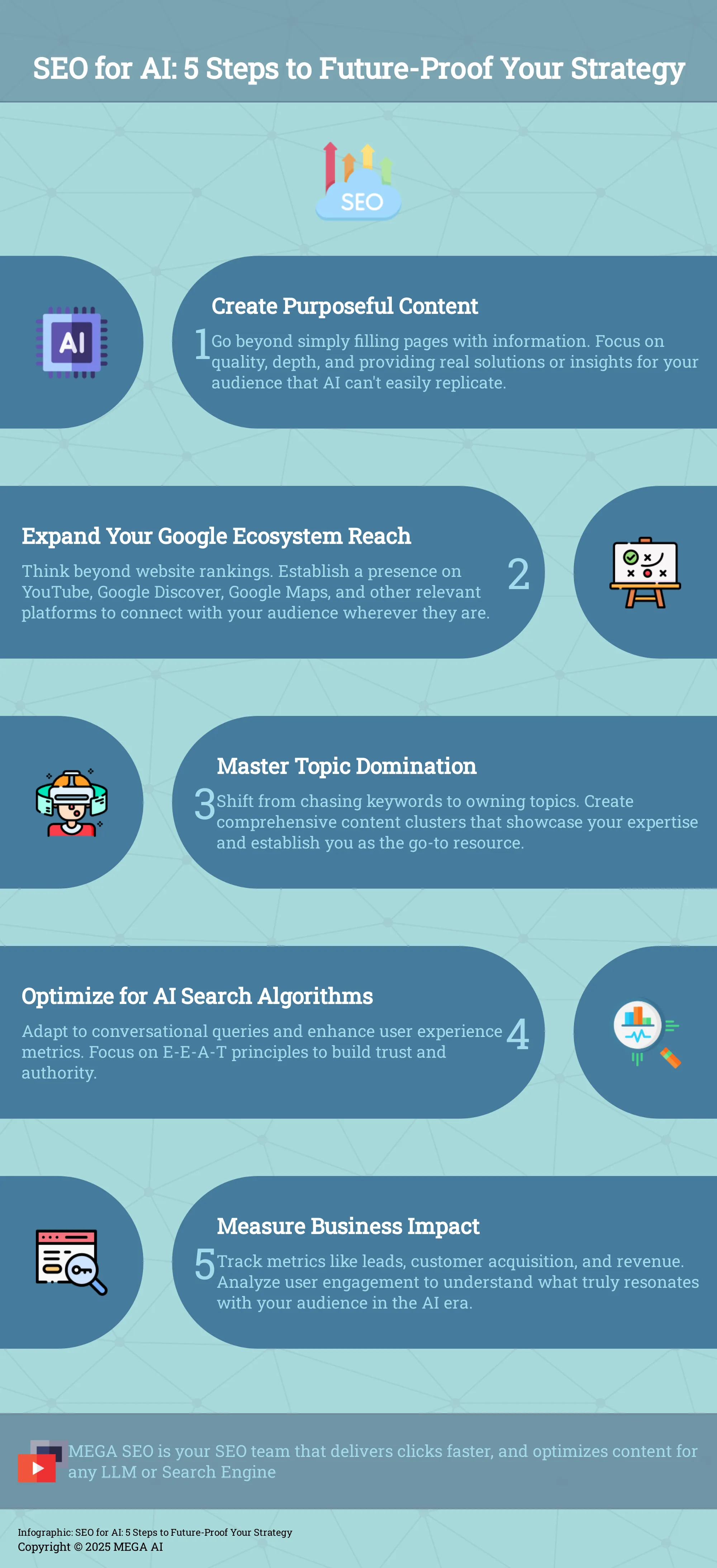
- Craft Content AI Can't Copy: With Google providing more direct answers, make sure your content offers unique insights and a clear purpose that truly stands out, encouraging those valuable clicks to your site.
- Become the Go-To Source on Your Topics: Broaden your strategy from specific keywords to establishing deep authority across your subject areas, using Google's various platforms to reach your audience wherever they are.
- Align Your Content with AI Search and User Needs: Optimize your material for how AI understands queries and what users genuinely seek, focusing on E-E-A-T principles and a seamless website experience.
How is AI Changing Google Search?
Google Search is really changing, and artificial intelligence is at the heart of it all. You've probably seen how Google now often gives you answers right on the results page, instead of just a list of websites. This is a big shift – Google is becoming more of an "answer engine." As expert Nathan Gotch puts it, "Google has just become an answer engine. Okay, they are not trying to send traffic anymore." Their aim is to give you information quickly, and a lot of the time, keep you right there on Google.
This move towards what Gotch describes as a "very closed system" means Google wants to be your first stop, and maybe even your only stop, for information. This really changes things for how we all approach search engine optimization. If your website mainly offers basic informational content, you might find it tougher to get visitors, because Google might just show that info directly. Gotch warns, "If you're just going to go and create like an informational website... you're really going to struggle." This doesn't mean SEO is dead, but our strategies definitely need to adapt.
The good news is Google has been pretty open about these changes. As Gotch mentions, "Google has been completely transparent about this change...slowly pushing websites out of the search results." These aren't sudden surprises; they're part of a slow and steady evolution. At the core of this is the growing power of large language models (LLMs). Gotch even says, "Everything is going to become a large language model." These LLMs are fundamentally changing how search algorithms understand what we're looking for and how they give us answers. Understanding these shifts is key to making sure your content stays visible and valuable. It’s all about learning the new rules and updating your game plan.
Adapt Your SEO for AI
The way we approach Search Engine Optimization is changing, and AI is a big part of that shift. What worked yesterday might not be as effective tomorrow, so it's time to think about how our strategies need to evolve. It's less about just "doing SEO" and more about understanding how AI and large language models are reshaping the search landscape. As SEO expert Nathan Gotch explains, we should be "thinking more about AI search or large language model optimization." This means looking beyond traditional keyword stuffing and technical tweaks.
A crucial question to ask yourself before creating any new content is, as Gotch suggests, "Can AI generate this exact thing in 10 seconds? And if the answer is yes, don't do it." This really highlights the need for originality and unique value. If your content is easily replicable by an AI, it's unlikely to stand out or provide the distinct insights users and search engines are looking for. Your content needs a clear purpose, something that delivers real impact for your business, rather than just being another item ticked off your weekly content calendar. This shift requires a more strategic approach, focusing on quality and genuine user engagement. We'll get into more specifics, but the core idea is that adapting your SEO strategy is no longer optional; it's essential for staying visible and relevant.
Create Purposeful Content for AI Search
As AI continues to reshape how search engines like Google understand and rank content, simply producing articles is no longer enough. To succeed, your content needs a clear purpose. This means every piece you create should be thoughtfully designed to provide genuine value to your audience while also supporting your business objectives. Think of it as moving beyond just filling space on your website to strategically crafting resources that answer specific questions, solve problems, or offer unique perspectives.
When AI algorithms evaluate your content, they're looking for signals that indicate relevance, quality, and user satisfaction. Purposeful content naturally sends these positive signals. It’s about understanding what your audience is truly searching for—the questions behind their queries—and then delivering answers so effectively that they don’t need to look anywhere else. This approach not only helps you connect with your audience but also positions your brand as a trusted authority in your niche, which is increasingly important in an AI-driven search landscape.
Focus on Unique Value and Quality
In a digital world overflowing with information, making your content stand out is key. This means prioritizing quality over sheer quantity and striving to offer something genuinely unique. Ask yourself: What can I provide that isn't already out there, or how can I present information in a way that's significantly better or more insightful? This could involve original research, expert interviews, or a fresh perspective on a common topic.
The goal is to create material that is not just different, but demonstrably superior to existing resources. When you invest in high-quality content, you're building a long-term asset. AI search algorithms are becoming increasingly adept at recognizing and rewarding content that truly satisfies user needs with well-crafted, authoritative information. This focus on unique value is what will help you win in the long run.
Align Content with User Intent and Business Goals
Every piece of content you publish should have a well-defined purpose. It’s not just about checking off a box in your content calendar; it’s about making a tangible impact. This starts with deeply understanding user intent—what is your audience trying to achieve when they type a query into Google? Are they looking for information, comparing products, or ready to make a purchase?
Once you grasp user intent, you can craft content that directly addresses those needs. Simultaneously, ensure this content aligns with your broader business objectives. Whether your goal is to generate leads, increase sales, or build brand awareness, your content should actively contribute to these outcomes. This dual alignment ensures your efforts are both audience-centric and strategically sound, making your SEO strategy more effective.
Develop Comprehensive, In-Depth Content
Dedicating time and resources to creating comprehensive, in-depth content typically delivers better results than churning out a high volume of superficial articles. Especially as AI can generate basic content quickly, the real differentiator lies in providing unique, valuable insights that can't be easily replicated. Think about covering a topic so thoroughly that your piece becomes the go-to resource.
This doesn't necessarily mean every article needs to be exceptionally long, but it should be complete and satisfying for the user's query. By developing in-depth content, you demonstrate expertise and authority, which are qualities highly valued by AI search algorithms. This commitment to depth helps your content perform well and establishes your credibility with your audience.
Expand Your Reach in Google's Ecosystem
When we talk about showing up online, it's easy to get hyper-focused on where our website ranks in Google's search results. But that’s like looking at only one instrument in a full orchestra. Google is a huge ecosystem, a collection of different platforms and services where people find information, watch videos, get directions, and discover new things. To really connect with your audience and make a lasting impression, we need to broaden our view. It’s about strategically placing your brand and content across these various Google properties, meeting your potential customers right where they are.
Expanding your reach in this ecosystem means looking beyond just those traditional blue links. Think about how your content could shine in image searches, how your videos could engage users on YouTube, or how your business details could pop up in local map listings. What about appearing in news feeds or getting your content suggested through Google Discover? When you diversify your presence like this, you’re doing more than just getting seen more often. You’re building a stronger, more resilient digital footprint. This approach allows you to engage users at multiple points in their journey and solidifies your brand's authority. The key is to be present and offer value wherever your audience might find you within Google’s expansive world.
Use Multiple Google Platforms
Let's shift our focus from just our website's ranking in the usual search results. The aim should be to secure as much prime "digital real estate" on Google as we can. Given Google's continued dominance in search, making sure your brand appears across its various services is a strategic advantage. People use Google in so many different ways: they might look for visual ideas on Google Images, watch videos on YouTube, find local spots via Google Maps, or compare products on Google Shopping.
Your plan should pinpoint which of these Google platforms best suit your business and where your audience spends their time. For example, if you're selling products, a solid presence on Google Shopping and eye-catching images for Google Images are essential. If you provide services or share information, YouTube and Google News can be very effective. The more strategically you showcase your business across these varied platforms, the better your chances of connecting with people, regardless of how they're using Google.
Optimize for Google Discover and Video
How people find and engage with content is always evolving, so our SEO approach must adapt too. It's becoming less about fixating on specific keyword rankings and more about achieving what we can call "topic domination." Ranking in Google search is still important, but it's just one aspect. Platforms like YouTube and Google Discover present fantastic opportunities to broaden your content's reach. Google Discover, for instance, brings content directly to users based on their interests, without them even typing a search query.
Think about someone interested in home improvement. They might watch your DIY video on YouTube, read your detailed article found via search, and later see your newest blog post in their Google Discover feed. This creates multiple touchpoints. Creating varied content, especially video, and optimizing for services like Google Discover can really help your message spread further.
Use Google My Business and Ads
If your business serves a local area, tools like Google Business Profile and Google Ads are essential. A well-maintained Google Business Profile acts as your online shopfront within Google Search and Maps. It gives local searchers quick access to key details like your address, opening hours, customer reviews, and the services you offer. Often, this is the very first online interaction a local customer will have with your business.
Google Ads lets you run targeted ad campaigns that appear in search results, on YouTube, and across Google's Display Network, giving you immediate visibility. While these are especially powerful for local businesses, other content creators might need to adjust their strategies. For direct customer acquisition and local engagement, however, a robust Google Business Profile and thoughtful Google Ads campaigns are key parts of any complete Google ecosystem plan.
Master Topic Domination in the AI Era
As AI continues to reshape how Google understands and presents information, our approach to SEO needs to evolve too. It's no longer enough to chase individual keywords. Instead, the focus is shifting towards establishing your brand as the definitive authority on entire topics. Think about it: Google's aim is increasingly to provide answers and solutions directly within its search results, sometimes without users even needing to click through to a website. This means your strategy should be about comprehensively covering subjects relevant to your audience, making your expertise undeniable. This is where topic domination becomes key.
Build Authority Beyond Keywords
To truly establish authority in the age of AI, you need to think bigger than just your own website. Your goal should be to claim as much valuable digital space as possible across Google's landscape. This means your expertise should be visible wherever your potential customers are looking for information. Consider contributing guest articles to reputable sites in your industry, participating in relevant online communities, or even ensuring your business information is accurately represented on various directories. Each touchpoint reinforces your credibility and signals to Google that you are a trusted source on your core topics. This broader presence helps you build brand authority that search engines recognize and reward.
Create Content Clusters and Ecosystems
One of the most effective ways to demonstrate topic mastery is by developing content clusters. This involves creating a central "pillar" page that provides a comprehensive overview of a broad topic, then linking out to several "cluster" pages that delve into specific subtopics in more detail. This interconnected web of content signals to search engines that you have thoroughly covered a subject from multiple angles. It also creates a better user experience, allowing visitors to easily find related information. By focusing on the subjects your audience genuinely cares about and structuring your content thoughtfully, you build a robust content ecosystem that supports your authority. Tools like MEGA AI's Maintenance Agent product can even help identify opportunities to expand existing articles, further strengthening these clusters.
Implement Diverse Content Formats
People consume information in many different ways. Some prefer in-depth articles, while others might engage more with videos, podcasts, infographics, or interactive tools. To maximize your reach and appeal to a wider audience, it's important to present your expertise through a variety of content formats. This not only caters to different user preferences but also increases your chances of appearing in diverse sections of Google's search results, such as video carousels or image packs. Think about how you can repurpose your core content into different formats to build true topic authority across multiple platforms. This strategy ensures your valuable insights are accessible and engaging, no matter how your audience chooses to learn.
Optimize Content for AI Search Algorithms
As search engines increasingly integrate AI, the way they understand and rank content is evolving. It's no longer enough to simply target keywords; your content must align with how AI algorithms process information and prioritize user satisfaction. This means adapting your strategies to focus on conversational queries, user experience, and demonstrable credibility. By understanding these shifts, you can refine your content to perform well in this new AI-driven search landscape. Tools like MEGA AI can assist in this transition, helping you analyze and update your existing content to meet these new standards.
Adapt to Conversational and Contextual Search
Search is becoming less like a list of links and more like a direct conversation. Think about how you interact with AI assistants; you ask questions in natural language and expect comprehensive answers. Search engines are moving in this direction, aiming to provide solutions directly within the search results. As some experts, like Nathan Gotch, have observed, Google is behaving more like a "closed system," similar to ChatGPT, where it aims to answer the query without necessarily sending the user to another website.
This shift means your content needs to be structured to provide clear, concise answers to potential questions. Focus on long-tail keywords that mimic natural speech and thoroughly address user intent. Your content should aim to be the definitive answer, making it valuable even if a user only sees a snippet in an AI-generated summary. Consider how MEGA AI can help you re-optimize existing content to better suit these conversational patterns.
Enhance User Experience Metrics
With search engines aiming to satisfy user queries directly on their platforms, the bar for getting a click-through to your website is higher. When users do decide to visit your site, the experience must be exceptional. The goal for search engines, as some analysts suggest, is to keep searchers within their ecosystem. If your site offers a poor experience, users will quickly return to the search results, signaling to the algorithm that your page wasn't a good match.
Key user experience metrics like page load speed, mobile-friendliness, intuitive navigation, and low bounce rates are more critical than ever. Your content should be easy to read, engaging, and deliver on the promise made in the search results. Improving these aspects can lead to better engagement and signal quality to AI algorithms. For instance, MEGA AI's Maintenance Agent can help improve the click-through rate (CTR) of your existing content by refining titles and meta descriptions.
Focus on E-E-A-T Principles
In an environment where AI can generate content quickly, demonstrating Experience, Expertise, Authoritativeness, and Trustworthiness (E-E-A-T) is how you differentiate your content. If AI can create something identical to your content in seconds, its value diminishes. As Nathan Gotch advises, if AI can generate the exact same thing in 10 seconds, you should reconsider creating it. The key is to produce content that is uniquely human, insightful, and backed by genuine credentials.
Showcase your experience through case studies or real-world examples. Highlight the expertise of your authors with clear bylines and bios. Build authoritativeness by earning backlinks from reputable sources and creating comprehensive content that covers a topic in depth. Foster trust with transparent information, clear sourcing, and a professional website. This focus on high-quality, E-E-A-T rich content is essential for standing out. You can book a demo with MEGA AI to see how our platform can help you build out authoritative topic clusters.
Measure SEO Success in the AI Age
As AI continues to reshape how search engines understand and rank content, the way we measure SEO success also needs to adapt. While foundational metrics remain important, the emphasis is shifting towards more business-centric outcomes and deeper insights into content effectiveness. It’s about understanding not just if you’re getting traffic, but if that traffic is truly valuable and if your content resonates in an AI-driven search landscape.
What New Metrics and KPIs to Track?
The core principle now is to connect SEO efforts directly to business impact. Instead of solely focusing on rankings or overall traffic volume, we need to prioritize metrics that businesses genuinely care about: leads, customer acquisition, and revenue. Your content must have a clear purpose, and your Key Performance Indicators (KPIs) should reflect its effectiveness in achieving that purpose. Think about conversion rates from specific articles or the quality of leads generated.
It's also crucial to evaluate the uniqueness and relevance of your content. Generic, uninspired informational content simply won’t cut it anymore. Consider tracking metrics like user engagement (time on page, scroll depth), content differentiation scores (if you develop them internally), and the ability of your content to answer specific user queries comprehensively.
What Tools Track AI Search Performance?
While there isn't a single "AI search performance" dashboard yet, many familiar SEO tools are essential for gathering the data you need. Google Analytics remains fundamental for tracking user behavior, conversions, and the business impact of your SEO efforts. Platforms like Ahrefs and SEMrush are still vital for keyword tracking, competitive analysis, and understanding your backlink profile, all of which continue to be important signals.
The key is to use these tools to gather data that informs your AI-focused strategy. Look for features within these platforms that are incorporating AI for deeper analysis, such as understanding user intent or content quality. Furthermore, platforms like MEGA AI can help automate the monitoring and optimization process, ensuring your content continually adapts to perform well by identifying areas for improvement and even suggesting new content additions to existing articles.
What Skills Do SEO Pros Need for AI?
As AI continues to reshape the search landscape, the skills that make an SEO professional successful are also evolving. It's less about rote tasks and more about strategic thinking and creativity. If you're wondering how to stay ahead, focus on developing capabilities that AI can't easily replicate.
First, strategic content creation is paramount. Ask yourself, "Can AI generate this exact piece of content in 10 seconds?" If so, you need to aim higher. The skill lies in producing genuinely unique and valuable content that offers a distinct perspective or depth that current AI tools struggle with. This means you'll want to create differentiated content that is demonstrably better and more insightful than what already exists.
Second, ensure your content has a clear purpose. It's not just about hitting a weekly publishing target; every article, video, or listing should contribute to a specific business objective and serve a genuine user need. This requires a shift towards topic domination rather than just chasing individual keyword rankings. Think about owning as much real estate on Google for your core topics as possible, which means looking beyond just your website to other platforms and formats where your audience spends time.
Finally, adaptability and critical thinking are crucial. The digital landscape, especially with AI's influence, is constantly changing. SEO professionals need to be agile, ready to adjust strategies based on new Google updates and shifts in user behavior. If your current approach is solely creating informational content for your website, it's time to broaden your perspective and adapt to how users are interacting with AI-driven search results and the varied ways they seek information.
Use AI Tools to Enhance Your SEO
Keeping up with the ever-evolving landscape of SEO can feel like a full-time job in itself, especially when you're juggling multiple roles in a startup or small business. Search engine algorithms change, new competitors emerge, and the sheer volume of data can be overwhelming. This is where AI tools come into play, not as a magic wand, but as a powerful assistant to make your SEO efforts smarter and more manageable. For digital marketing agencies, AI can help scale operations and deliver more sophisticated strategies to clients without a proportional increase in manual labor.
AI-powered SEO tools offer a range of capabilities designed to streamline your workflow. They can process vast amounts of data to identify patterns and opportunities that might take a human analyst days or weeks to uncover. From automating routine tasks like rank tracking and site audits to providing deep insights for content strategy and competitive analysis, AI helps you make more informed decisions. This means you can free up valuable time to focus on higher-level strategy, creative content development, and building relationships, rather than getting bogged down in repetitive tasks. Platforms like MEGA AI are designed to simplify this by offering end-to-end solutions, making advanced SEO accessible even if you don't have a large, dedicated SEO team.
Use AI for Content Optimization and Maintenance
Ensuring your website content stays fresh, relevant, and optimized is a key piece of the SEO puzzle. AI tools are incredibly helpful for this. Many AI-powered platforms can analyze your existing articles and webpages. They look at factors like keyword density, readability, backlink profiles, and overall user experience. Based on this, they provide clear, actionable recommendations to improve your content's quality and search engine ranking.
Think of these tools as an always-on assistant, helping you refine your message. Some even offer real-time suggestions as you write, guiding you to optimize your content effectively right from the start. If you want to maximize the impact of your published work, MEGA AI's Maintenance Agent product can identify improvement opportunities, suggest valuable additions to existing articles, and even re-optimize content for different search platforms or after algorithm updates. This helps your content continue to perform well long after it's published.
Automate Keyword Research with AI
Identifying the right keywords is fundamental to any strong SEO strategy, though it can often feel like a complex task. AI tools make this process much simpler. Many AI SEO platforms feature sophisticated keyword research capabilities that do more than just basic term matching. These tools help you uncover relevant keywords, understand search intent, analyze search volume, and assess keyword difficulty.
Some AI-driven tools can also help you brainstorm new content ideas based on promising keywords. This ensures your content calendar is filled with topics your audience is actively searching for. With tools like MEGA AI, you can automate a good portion of this keyword discovery and analysis. This allows your team to focus more on creating high-quality content that connects with your target audience and brings in organic traffic.
Future-Proof Your SEO: Keep Pace with AI
The world of SEO is evolving quickly, and AI is at the forefront of this transformation. To stay ahead, it's no longer enough to rely solely on traditional SEO tactics. We need to understand how AI is reshaping search and adapt our strategies accordingly. One key observation, as Nathan Gotch discusses, is Google's increasing tendency to provide answers directly on its platform, aiming to keep users within its ecosystem. This means our content and optimization efforts need to be smarter and more purposeful than ever.
This shift requires us to rethink the very nature of our content. Every piece you create must have a clear purpose and deliver tangible business impact. Ask yourself, as Gotch suggests, "Can AI generate this exact thing in 10 seconds?" If the answer is yes, it's time to dig deeper and create something with unique value that an algorithm can't easily replicate. This is where focusing on quality, originality, and in-depth insights becomes crucial. Your content needs to be the compelling reason a user would click through, even when Google offers a quick answer. MEGA AI's SEO tools can assist here, helping to identify opportunities for unique content and optimize existing pieces to stand out.
Furthermore, the focus is moving from simply ranking for keywords to achieving topic domination. Instead of chasing individual rankings, aim to become the recognized authority in your niche. This involves creating comprehensive content clusters that thoroughly cover a subject from multiple angles. This approach aligns with the idea of thinking less about traditional SEO and more about "AI search or large language model optimization." The goal is to provide such comprehensive and valuable information that AI-driven search technologies recognize your site as a primary source. Adapting to this new paradigm means continuously learning and leveraging tools that can help maintain your content's relevance and authority in an AI-first search world.
Related Articles
- How to Deal With Declining Google Search Result Quality
- Adapt Your SEO Strategy to Keep Up With AI Changes
- AI Content for SEO: Benefits, Risks & Best Practices
- Google's Dominance Exposed: Implications and Strategies for Startups in 2024
- AI Agents: Revolutionizing Business Operations
Frequently Asked Questions
How is AI changing the way I should approach my website's content? The biggest shift is moving away from just filling pages with information. With AI, search engines are getting much better at understanding what users truly need. This means your content needs a clear purpose. Before you create anything, ask if it offers genuine, unique value that an AI couldn't just generate in seconds. Focus on quality, depth, and providing real solutions or insights for your audience.
If Google wants to keep users on its own pages, what's the point of SEO anymore? It's a valid concern, but SEO is far from obsolete; it's just evolving. While Google might answer simple queries directly, users still click through for more comprehensive information, unique perspectives, or when they're ready to engage further with a brand. Your SEO efforts should now focus on creating that compelling, in-depth content that makes users want to visit your site and on making your brand visible across Google's entire ecosystem, not just traditional search results.
What's one practical thing I can do today to make my content more suitable for AI search? Start by critically evaluating your existing content and planning for new pieces with a focus on originality. If your content simply rehashes what's already widely available, AI-driven search might not prioritize it. Aim to provide a unique angle, original research, expert insights, or a more comprehensive take on a topic than what's currently out there. This distinct value is what will help you stand out.
You mentioned "topic domination." What does that actually mean for my business? Topic domination means becoming the go-to authority for a specific subject area relevant to your business, rather than just trying to rank for a handful of keywords. It involves creating a comprehensive suite of content—articles, videos, tools—that covers a topic from all angles. This signals to search engines, and users, that you have deep expertise in that area, making your site a more trusted and valuable resource.
How can AI tools help my SEO efforts without just taking over? Think of AI tools as powerful assistants that can handle the more time-consuming or data-intensive parts of SEO. They can help you with tasks like in-depth keyword research, analyzing your content for optimization opportunities, or tracking performance. This frees you up to focus on the strategic and creative aspects, like developing unique content ideas, building relationships, and understanding your audience on a deeper level.