
Chances are, you don't just type keywords into a search bar anymore. You ask full questions, expecting a direct answer without sifting through pages of results. This intuitive experience is powered by artificial intelligence, which interprets natural language to understand what you’re truly looking for. For businesses, this change in user behavior is a critical signal. Your content must evolve to meet these new expectations. Building a forward-thinking AI search strategy is no longer optional. This article explains how to create content that satisfies user intent, optimizes for conversational queries, and provides the value that both users and AI search engines reward.
Key Takeaways
- Prioritize User Intent Over Keywords: AI search understands the why behind a query. Shift your focus from targeting single keywords to creating comprehensive content that directly answers your audience's questions and solves their underlying problems.
- Structure Content for Machines and People: Use clear headings, lists, and structured data so AI can easily interpret your content for generated answers. This same structure, along with accessibility best practices, also improves the experience for your human readers.
- Adopt a Flexible, Data-Driven Strategy: The search landscape is constantly changing. Use performance data and user feedback to continuously refine your content, meet technical requirements, and adapt to new search technologies as they emerge.
How AI Changes the Way We Search
Artificial intelligence is reshaping the core of how search engines work. Instead of simply matching keywords to content, AI-powered search aims to understand the context and intent behind every query. This shift means that the old rules of SEO are evolving. For marketers and business owners, it’s no longer enough to just have a website with the right keywords. You now need to create content that directly answers user questions, provides a seamless experience, and is structured for AI to easily interpret. Understanding these changes is the first step toward building a search strategy that works today and prepares you for tomorrow.
How User Search Habits Are Changing
Search is becoming more intuitive. AI helps search engines interpret user signals in real time, moving beyond literal keywords to understand what someone is truly looking for. Think of it as the difference between a user typing “running shoes” and asking, “what are the best shoes for running on trails with flat feet?” AI-powered search can understand customer needs with that level of specificity, delivering more relevant results. For your business, this means your content strategy must focus on answering specific questions and addressing the underlying problems your audience faces, rather than just targeting broad keywords. This contextual understanding is key to connecting with potential customers in the moments that matter.
Key Statistics Shaping AI Search Strategy
The shift toward AI-driven search is clearly reflected in the data. Recent figures show that user habits are already changing, with 37% of consumers now starting their searches on AI platforms. Businesses are responding to this change with significant investment. In fact, 98% of organizations plan to maintain or increase their AI spending, and for good reason—75% of marketers are already reporting tangible benefits from their AI initiatives, primarily through improved efficiency and deeper insights. These numbers highlight a clear direction: adapting to AI search isn't just about keeping up with technology, but about meeting your audience where they are and making smarter, data-backed marketing decisions.
The Rise of Conversational and Visual Search
The way people interact with search engines is changing. Thanks to AI, search is becoming more of a two-way dialogue. Users are typing or speaking full questions, and they expect direct, comprehensive answers. This trend toward conversational search means your content should be written in a natural, question-and-answer format. At the same time, visual search is on the rise, allowing users to search with images instead of text. This makes high-quality, well-optimized images and videos essential components of your content strategy, as they provide another way for your audience to find you. Both trends point to a future where content must be more dynamic and multi-faceted.
The Growing Role of Voice Search
With the growing popularity of smart speakers and virtual assistants, voice search has become a major part of daily life. People use voice commands to find local businesses, get quick facts, and even make purchases. This behavior requires a specific approach to content. Optimizing for voice search means focusing on long-tail keywords that mimic natural speech patterns and structuring your content to provide clear, concise answers that a virtual assistant can read aloud. Since AI assistants provide instant responses, having content that directly addresses common questions can put your business front and center in audio results.
How AI Shapes the User Experience
Ultimately, AI is changing search to create a better, more personalized user experience. AI solutions allow search engines to analyze huge amounts of data to identify what users want and how they behave. They can extract patterns to predict what a user might be looking for next, serving up content that is more relevant and helpful. This has a direct impact on your website. Search engines now prioritize pages that offer a great user experience—pages that load quickly, are easy to use, and keep visitors engaged. Your site’s performance is no longer just a technical detail; it’s a critical part of your search strategy.
How AI Search Works: A Look Under the Hood
To understand how AI improves search, it helps to look at the mechanics behind it. AI search isn't a black box; it's a structured problem-solving process. Think of an AI program, often called an "agent," as a detective trying to solve a case. The case is your search query. This detective has a set of strategies it can use to sift through all the possible evidence—the entire internet—to find the most relevant clues and present the best answer. These strategies are called search algorithms, and they are the engine that powers modern search.
Each algorithm has a different way of exploring the vast amount of information available. Some are slow and methodical, checking every possibility to guarantee a perfect result. Others are quick and use educated guesses to find a good-enough answer quickly. The effectiveness of a search engine depends on its ability to choose the right strategy for the right query, ensuring it can deliver a fast, accurate, and helpful response every time. Understanding these core methods gives you insight into why some content ranks better than others and how search engines decide what information is most valuable to a user. It’s the foundation for creating content that not only appeals to people but is also easily understood and prioritized by machines.
The Building Blocks: Search Space, States, and Goals
Every AI search starts with three basic components. First is the search space, which is the entire set of all possible solutions. For a GPS, it’s every road and intersection on the map; for a search engine, it’s the billions of pages on the web. Next are states, which are the individual points within that space. A state could be a specific city on a map or a single webpage. Finally, there’s the goal, which is the desired outcome. This is the destination you type into your GPS or the answer you’re looking for with a search query. The AI’s job is to navigate from an initial state through the search space to find the best path to the goal state.
What Makes a Good Search Algorithm?
Not all search algorithms are created equal. To determine which one is best for a given task, computer scientists evaluate them based on four key criteria. These criteria help measure how efficient and effective an algorithm is at finding a solution. Think of it like comparing different delivery drivers. You’d want to know if they always find the address, if they take the fastest route, how much fuel they use, and how much space their truck takes up on the road. For AI search, these measures are completeness, optimality, time complexity, and space complexity. Together, they provide a framework for understanding an algorithm's performance.
Completeness and Optimality
Completeness and optimality determine the quality of the solution an algorithm finds. An algorithm is considered complete if it guarantees it will find a solution if one exists. It won’t give up or get stuck in a loop without an answer. Optimality, on the other hand, is about finding the best solution. An algorithm is optimal if it finds the lowest-cost or most efficient path to the goal. For a search engine, this means finding the most relevant and authoritative answer, not just the first one it stumbles upon. While completeness ensures you get an answer, optimality ensures you get the right one.
Time and Space Complexity
Time and space complexity measure an algorithm's efficiency. Time complexity refers to how long it takes for an algorithm to find a solution. In search, speed is critical; users expect answers almost instantly. An algorithm that takes too long is impractical, no matter how good its results are. Space complexity refers to how much memory the algorithm needs to run. An algorithm has to store information about the paths it has explored and the ones it still needs to check. If it requires too much memory, it might not be feasible for a massive search space like the internet. The ideal algorithm finds a balance, delivering a great result quickly without using excessive resources.
Two Main Approaches: Uninformed and Informed Search
AI search strategies generally fall into two categories: uninformed and informed. The difference comes down to whether the algorithm has any extra information to guide its search. Imagine you’re looking for a specific book in a massive library. An uninformed search is like starting at the first aisle and checking every single book, one by one, until you find it. It’s thorough but very slow. An informed search, however, uses a clue. You might know the book is in the "Fiction" section, so you head there first. This clue, or "heuristic," makes the search much more efficient by allowing the algorithm to prioritize promising paths and ignore irrelevant ones.
Uninformed (Blind) Search Algorithms
Uninformed search algorithms, also known as blind searches, are the methodical explorers. They don't use any problem-specific knowledge to guide them, so they systematically check every possibility until a solution is found. Two common examples are Breadth-First Search (BFS) and Depth-First Search (DFS). BFS explores level by level, like the ripples from a stone dropped in water. It checks all the closest options first before moving further out. DFS dives deep down one path as far as it can go. If it hits a dead end, it backtracks and tries another path. These methods are simple and can be effective for small problems, but they are often too slow for the scale of the web.
Informed (Heuristic) Search Algorithms
Informed search algorithms are much smarter because they use a heuristic—an educated guess—to estimate how close a state is to the goal. This allows them to make more intelligent decisions about which path to explore next. One popular example is Greedy Best-First Search, which always chooses the path that appears to be the closest to the solution. A more sophisticated and widely used algorithm is A* Search. A* is powerful because it balances the cost of the path taken so far with the estimated cost to reach the goal. This prevents it from being misled by paths that look promising at first but lead to dead ends, making it both efficient and optimal for many problems.
Local Search Algorithms
Unlike the previous methods that explore many paths, local search algorithms focus on improving a single solution. They start with one potential answer and try to make small changes to improve it. The classic example is Hill Climbing. Imagine you're on a foggy hill and want to reach the highest point. You’d simply take a step in whichever direction goes up. You repeat this until you can no longer step up, and you assume you've reached the peak. The risk is getting stuck on a smaller hill (a local maximum) instead of the true highest point. More advanced techniques like Simulated Annealing help avoid this by occasionally allowing a "downhill" move, giving the algorithm a chance to escape local peaks and find a better overall solution.
Decoding User Intent for AI Search
AI search is less about matching keywords and more about understanding context and intent. It aims to answer the question behind the query, not just the query itself. This shift requires marketers to think differently about how they connect with their audience. Instead of just targeting keywords, the focus is now on creating content and experiences that directly address a user's underlying needs and goals. By leveraging AI, you can gain a much clearer picture of what your customers are looking for and deliver it to them at the perfect moment.
Look for Patterns in Search Data
To understand intent, you first need to see the patterns in how users behave. AI excels at processing vast amounts of data to find these connections. It can analyze data points like click-through rates, browsing behavior, and demographics to build a comprehensive view of your audience. As Forbes notes, AI helps businesses break down data silos to create a "much clearer customer picture." This analysis reveals what content resonates with different segments and where people might be getting stuck. By understanding these patterns, you can start to refine your content strategy and improve the overall user journey on your site.
How to Map Content to User Intent
Analyzing patterns is the first step; mapping those patterns to specific user intentions is next. AI-powered search interprets customer signals in real time to figure out what a user is trying to accomplish. Are they in the early stages of research, comparing different options, or ready to make a purchase? Context helps AI search deliver more relevant results that are in tune with a shopper's immediate needs. This allows you to move beyond generic content and serve information that directly addresses their current stage in the marketing funnel. When you successfully map intent, you can guide users to the right solution more effectively.
Personalize Content for Every User
The real power of understanding user intent is the ability to create a truly personalized experience. When you know what a user wants, you can tailor their journey accordingly. AI can dynamically change search results, recommend relevant products, and surface helpful content based on an individual's behavior and inferred intent. This capability helps businesses "uncover customer preferences, anticipate needs, [and] personalize interactions," making each user feel seen and understood. This level of personalization builds trust and fosters loyalty, turning a one-time visitor into a repeat customer. Tools like MEGA AI's Paid Ads platform even allow for automatic content variations to match different audience segments.
Get Ahead with Predictive Search Features
Beyond reacting to current behavior, AI can also anticipate future needs. By analyzing trends across your user base and tracking individual journeys over time, predictive AI can forecast what a customer might be interested in next. This offers businesses the tools to understand customers on a deeper level and "deliver personalized experiences that drive loyalty and growth." Imagine suggesting a complementary product or sending a helpful guide right before a customer realizes they need it. This proactive approach to marketing improves the customer experience and opens up new opportunities for engagement. Exploring tools with predictive capabilities can show you how this works in practice.
How to Make Your Content AI-Search Ready
Preparing your content for AI-powered search goes beyond traditional keyword placement. It’s about structuring your information so that AI models can easily understand, interpret, and present it to users. AI search engines aim to provide direct answers and engage in a more natural, conversational way. This means your content needs to be clear, contextually rich, and built to satisfy user intent directly. By focusing on formatting, semantic meaning, quality, and accessibility, you can ensure your content is not just visible but valuable in this new search landscape.
Structuring Content for AI
Think of interacting with an AI search engine as having a conversation. To perform well in conversational search, your content needs to be structured in a way that’s easy to digest. Use clear, hierarchical headings (H1, H2, H3) to organize your topics logically. Break up long blocks of text with shorter paragraphs, bullet points, and numbered lists. This makes your content scannable for human readers and easily parsable for AI crawlers looking for specific pieces of information to feature in generated answers. Including a frequently asked questions (FAQ) section can also be highly effective, as it directly mirrors the question-and-answer format that AI search often uses.
Focus on Topics, Not Just Keywords
Semantic search is all about understanding the meaning and intent behind a user's query, not just matching keywords. AI excels at this by interpreting context and user signals to deliver more relevant results. To optimize for this, you need to create comprehensive content that covers a topic in depth. Instead of focusing on a single keyword, use related terms, synonyms, and concepts throughout your article. This helps establish a strong contextual foundation, showing AI that your content is an authoritative resource on the subject. Tools like MEGA AI's Maintenance Agent can help by identifying new topics to add to existing articles, deepening their semantic relevance over time.
Write for Citations, Not Clicks (Generative Engine Optimization)
AI search engines like Google's AI Overviews don't just list links; they read, understand, and summarize information to give users a direct answer. This changes the goal of your content. Instead of aiming solely for a high ranking to get a click, your new objective is to be cited by the AI. To achieve this, your content must be exceptionally clear, accurate, and factual. Think of it as becoming a primary source that the AI trusts to answer user questions. This new AI search strategy focuses on building authority by providing such reliable information that your brand is mentioned directly in the AI-generated response, establishing your expertise without needing a click.
Create and Get Into Authoritative Lists
One of the most effective ways to improve your visibility in AI search is to get your business featured in authoritative lists. These are articles like "Best Coffee Shops in Austin" or "Top Marketing Tools for Startups." For AI engines, these curated lists are strong signals of quality and relevance. In fact, being mentioned in these lists has the biggest impact on AI search rankings across most platforms. You can pursue this by creating your own valuable listicles featuring complementary local businesses or by reaching out to industry blogs and publications that create roundups. Consistently maintaining your business name, address, and phone number online also helps AI confidently include you in its results.
What Does Quality Content Mean to AI?
AI systems are designed to identify and promote high-quality content that demonstrates expertise and trustworthiness. These systems analyze vast amounts of data to find patterns that correlate with user satisfaction. To meet these quality metrics, focus on creating content that is accurate, well-researched, and provides genuine value to your audience. Customer insights from AI show that users value content that understands their sentiment and needs. Cite credible sources, include original data or perspectives, and keep your information up-to-date. Ultimately, writing for your human audience first is the best way to signal quality to an AI.
Why Accessibility Is Key for AI Search
Accessibility is crucial for creating an inclusive web, and it also plays a key role in AI search readiness. AI-powered tools like voice assistants and screen readers pull information directly from your content to serve users. If your site isn't accessible, these tools can't interpret it correctly. Simple practices like adding descriptive alt text to images, using proper heading structures, and ensuring your videos have captions make your content usable for everyone. Following established guidelines, such as the Web Content Accessibility Guidelines (WCAG), makes your content more structured and easier for AI to understand and repurpose across different platforms.
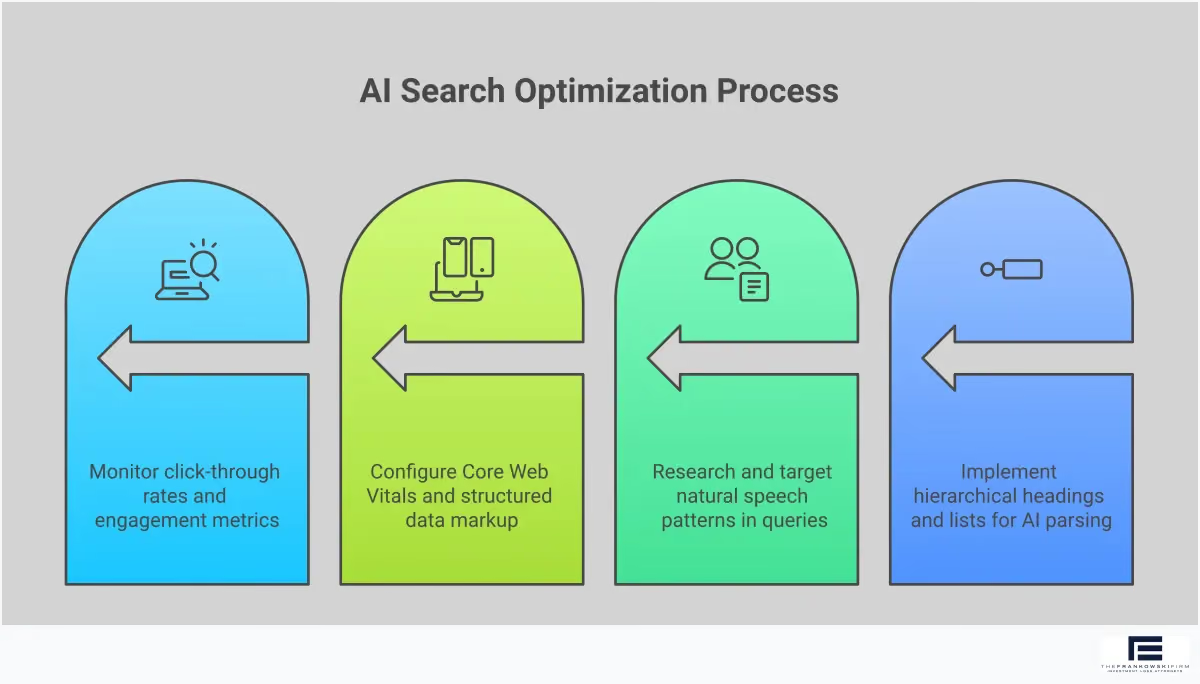
Implement an AI Search Strategy
Success in the new search landscape is not accidental. It requires a deliberate shift to an intent-driven strategy that aligns with how AI-powered search engines operate. An effective plan is built on four key pillars: creating content specifically for AI, ensuring your site meets technical standards, measuring performance with the right metrics, and continuously integrating user feedback. By addressing each of these areas, you can build a resilient approach that keeps up with the evolving search landscape and connects you with your audience in more meaningful ways.
Develop an AI-First Content Plan
AI-powered search engines are designed to understand context and intent, not just keywords. Your content strategy needs to reflect this shift by focusing on comprehensive, well-structured articles that directly answer your audience's questions. Think about the entire user journey and provide information for each stage. AI search interprets customer signals as they happen, so content that provides immediate, relevant answers performs best. Using a tool for automated content generation can help you produce high-quality, intent-focused articles at scale, ensuring your brand provides the solution when a user needs it most.
Handle the Technical SEO for AI
Great content won't get far if AI search engines can't understand it. Technical SEO provides the foundation that allows AI to effectively crawl, interpret, and rank your pages. This includes implementing structured data (schema markup) to define your content, ensuring fast page load speeds, and maintaining a mobile-first design. These elements are essential for visibility in AI-generated results. A deep understanding of consumer intent combined with a technically sound website signals to search engines that your content is a reliable and useful resource. Platforms like MEGA AI can automate many of these technical improvements for you.
Use Databases and Directories for Visibility
AI search engines gather information from many places online, not just your website. They rely on established databases and directories to verify information and understand who you are. Getting your business listed on these authoritative lists is a critical step in building trust with AI systems. For local businesses, this includes platforms like Google Business Profile, Yelp, and industry-specific directories. When your information appears consistently across these trusted sources, it signals to AI that your business is legitimate and relevant, which can improve your visibility in search results.
Is Your AI Search Strategy Working?
As search evolves, so must the methods for measuring success. While keyword rankings still have a place, the focus is shifting toward user-centric metrics. Pay close attention to engagement rates, time on page, and conversion rates from search traffic, as these indicators show if your content is satisfying user intent. AI enables more detailed customer segmentation by analyzing real-time behavior, giving you a clearer picture of who your audience is and what they need. Tools that automatically update content to improve click-through rates, like MEGA AI's Maintenance Agent, use this performance data to make your existing articles work harder.
Measure Your AI Citation Share
AI citation share is a metric that reflects how often your brand, products, or content are mentioned as a trusted source within the datasets that AI models use for generating answers. AI search engines compile information by referencing multiple sources, and getting your business included in what they consider authoritative lists is a primary goal. This means your focus should extend beyond your own website to earning mentions on reputable industry blogs, forums, and review sites. Each mention acts as a vote of confidence, telling the AI that your business is a relevant and reliable answer to a user's query.
Monitor Sentiment and Accuracy
AI evaluates the quality of your brand mentions, not just the quantity. AI systems are built to find content that leads to user satisfaction, so they analyze the language around your brand to gauge public perception. Consistently positive reviews and discussions signal that you offer a high-quality experience. It's equally important that the information about your business is accurate. Inaccurate details can confuse potential customers and the AI models trying to learn about your brand, which can hurt your trustworthiness. Regularly reviewing your online presence ensures the narrative remains positive and correct.
Check for Entity Consistency
In AI search, your business is an "entity" with specific attributes like its name, address, and services. AI models build a comprehensive understanding of your business by cross-referencing information from your website, Google Business Profile, social media pages, and even customer reviews on community sites. Any discrepancies in this data can create confusion and signal to the AI that your information may not be reliable. Regularly auditing your online presence to ensure all details are accurate and consistent is a foundational step in building a strong digital identity that AI can trust and recommend.
Use User Feedback to Refine Your Strategy
User feedback is one of the most valuable data sources for refining your AI search strategy. It provides direct insight into whether your content is hitting the mark. Systematically collect and analyze feedback from sources like reviews, surveys, and customer support interactions. AI tools can help you analyze this feedback at scale, identifying common themes, pain points, and content gaps you might have missed. Use these insights to create new content and update existing pages. This creates a powerful feedback loop where you constantly refine your content based on real user needs, improving both user experience and search performance.
Essential Tools for AI Search Success
Adapting your strategy for AI search means equipping your team with the right technology. The old toolkit won't be enough to keep up with evolving algorithms and user behaviors. Success requires a suite of tools designed for understanding user intent, optimizing content for new formats, tracking performance in a new landscape, and ensuring your content is accessible to everyone.
How MEGA AI Helps with Search
AI-powered search works by interpreting customer signals in real time to deliver exactly what they’re looking for. To show up in these results, you need a platform that can keep pace. MEGA AI’s SEO tools are built for this dynamic environment. Our platform automates everything from keyword research to content generation and linking. More importantly, our Maintenance Agent continuously updates existing articles to improve click-through rates and add new, relevant information. This ensures your content stays fresh and aligned with the subtle shifts in user intent that AI search engines are constantly learning from, helping you deliver more relevant results in the moment.
Tools for AI Content Optimization
Visibility in AI-generated results depends on a deep understanding of consumer intent and creating content that supports conversational engagement. Your strategy needs to shift from just keywords to the underlying questions users are asking. Content optimization tools help you make this transition by analyzing search trends and identifying semantic relationships between topics. These platforms guide you in structuring your content with things like schema markup and clear headings, making it easier for AI to parse and feature in rich results. This focus on AI-friendly content strategies is essential for earning a spot in AI-powered search answers.
Tools for Tracking Performance
Measuring success in an AI-driven search world goes beyond tracking keyword rankings. You need tools that can analyze large volumes of data to identify patterns and predict user behavior. Modern performance tracking platforms help you unlock customer insights by looking at user sentiment, engagement metrics, and conversion paths without requiring manual analysis. These solutions show you how users interact with your content within AI-generated environments like SGE. This allows you to understand what’s working and refine your strategy based on how people are actually using the new search features.
Tools to Test Your Site's Accessibility
If your content isn't accessible, it's not ready for AI search. AI assistants and voice search devices rely on well-structured, accessible information to provide answers. Accessibility testing tools help you identify and fix issues that could prevent both users and AI from properly understanding your content. This includes checking for proper alt text, logical heading structures, and screen reader compatibility. As experts recommend, inclusive AI testing should start early in the content creation process. By making your site accessible to people with disabilities, you also make it more machine-readable, improving your chances of being featured in all forms of AI search.
Create an Accessible AI Search Experience
As AI reshapes how users find information, ensuring your search experience is accessible to everyone is more important than ever. Accessibility isn't just a box to check for compliance; it's a core part of creating a user-friendly experience that serves the widest possible audience, including people with disabilities. An accessible AI search is one that everyone can perceive, understand, and operate, regardless of their abilities.
Building an inclusive experience from the ground up improves usability for all users and future-proofs your strategy against evolving standards. When you prioritize accessibility, you’re not just meeting legal requirements—you’re building a stronger, more inclusive brand. This involves applying universal design principles, establishing rigorous testing protocols, actively collecting user feedback, and adhering to established compliance standards. By focusing on these areas, you can create an AI search experience that is truly helpful for everyone who interacts with it.
Start with Universal Design Principles
Universal design is the practice of creating products and experiences that are usable by all people, without the need for special adaptations. When applied to AI search, this means thinking about the different ways people might interact with your content. For example, a user might use a screen reader, voice commands, or other assistive technologies. Your AI search should be able to accommodate these different interaction methods seamlessly.
Embracing inclusive design from the start helps you meet accessibility standards naturally. This includes practical steps like using clear and simple language, ensuring high color contrast for text, providing text alternatives for images, and creating a logical content structure. When you design for the widest range of abilities, you create a more intuitive and effective experience for every single user.
Set Up a Regular Testing Process
To ensure your AI search is truly accessible, you need to integrate testing throughout your development process. It’s a common mistake to save accessibility checks for the very end, but this often leads to costly and time-consuming fixes. Instead, you should start accessibility testing early, and don’t leave it as an afterthought. This "shift left" approach involves building accessibility into your workflow from the beginning.
Salesforce, for example, integrates accessibility research and usability testing from the start of AI development, rather than waiting for a technical audit after the tool is built. You can adopt a similar strategy by combining automated testing tools with manual checks. More importantly, involve people with disabilities in your usability testing. Their direct feedback is invaluable for identifying barriers you might have missed and ensuring your AI search works for real people in real-world scenarios.
Gather Feedback on Accessibility
Testing protocols give you a solid foundation, but the work doesn’t stop there. The best way to refine your AI search experience is to listen to the people who use it every day. Actively collecting and implementing user feedback is critical for identifying ongoing issues and adapting to the evolving needs of your audience. This means creating clear channels for users to report problems and share their experiences.
Product teams should continually learn from real user feedback and adapt to changing accessibility standards. For example, if your AI search provides audio or video results, you need to ensure that information is also accessible through transcripts or captions for users with hearing disabilities. By treating accessibility as an ongoing conversation with your users, you can consistently refine your approach and build a more inclusive platform.
Understand Accessibility Compliance
While the goal of accessibility is a better user experience, it’s also important to meet established legal and technical standards. The Web Content Accessibility Guidelines (WCAG) are the global benchmark for web accessibility. These guidelines provide a clear framework for making your digital content accessible to people with a wide range of disabilities.
WCAG 2.2 provides essential criteria for accessible AI development, covering everything from font size and color contrast to media timing and non-text inputs. Following these guidelines helps ensure all users can perceive, operate, understand, and access your AI tools. Viewing WCAG not as a restrictive checklist but as a roadmap for quality will help you build a robust and compliant AI search experience that serves everyone effectively.
Build a Future-Proof Search Strategy
The world of search is in constant motion, and AI is the force driving its rapid evolution. Building a future-proof strategy isn’t about having a crystal ball; it’s about creating a resilient and adaptable framework that can withstand shifts in technology and user behavior. This means moving away from rigid, keyword-focused tactics and toward a more dynamic, intent-driven approach. As MarTech notes, "Success in this new search landscape — both in visibility and customer acquisition — requires a shift to an intent-driven strategy that aligns with AI-powered search engines."
A forward-thinking strategy anticipates change rather than just reacting to it. It involves understanding the core principles of how AI interprets information and what users are truly looking for. By focusing on creating high-quality, user-centric content and maintaining technical excellence, you build a strong foundation that is less susceptible to the whims of algorithm updates. This approach ensures your content remains relevant no matter how the search algorithms change. Using automated SEO tools can help manage the technical complexities, allowing you to focus on the strategic elements that drive long-term growth and visibility in an AI-first world. The goal is to create a system where your search presence grows stronger over time, supported by technology that adapts alongside the market.
Keep an Eye on New Technology
To stay ahead, you need to keep a close watch on the technological horizon. This involves more than just reading headlines; it means understanding how new technologies like large language models (LLMs) are being integrated into search and how that changes user expectations. As your audience becomes more accustomed to conversational queries and direct answers, your content strategy must adapt. Focus on creating content that directly addresses user intent and provides comprehensive answers to the questions your audience is asking. This proactive monitoring ensures you’re prepared to adjust your strategy as the search landscape continues to evolve.
Let Data Guide Your Decisions
In an AI-driven marketing world, data is your most valuable asset. While intuition can guide you, concrete data provides the evidence needed to build effective strategies. As Forbes points out, "AI tools help businesses analyze vast amounts of data and extract key insights to better inform strategies and enhance digital customer experiences." This data helps you understand user behavior on a deeper level, revealing patterns in how people search, what content they engage with, and where they drop off. Using these insights allows you to move beyond guesswork and make informed decisions that refine your content, personalize user journeys, and optimize your overall search performance.
How to Adapt When Search Changes
A future-proof strategy is an agile one. The ability to adapt quickly to new information or changes in the search environment is critical. AI-powered search is particularly good at understanding user needs in the moment. According to Bloomreach, "AI-powered search bridges those gaps by interpreting customer signals as they happen, so shoppers get what they’re looking for." Your strategy must be flexible enough to respond to these real-time signals. This could mean re-optimizing an article after a Google update, tweaking your content for voice search, or shifting your paid ads budget based on new performance data.
Make Continuous Improvement a Habit
Future-proofing your search strategy is not a one-time task but an ongoing commitment. It’s a continuous cycle of implementing, measuring, learning, and refining. AI provides increasingly sophisticated ways to understand your audience. As CallMiner explains, "AI enables more detailed customer segmentation by processing real-time behavior data together with demographic information and sentiment analysis." Use these deeper insights to constantly improve your content and campaigns. This iterative process, whether done manually or with automated tools that update content, ensures your strategy remains effective and aligned with both search engine requirements and user expectations over the long term.