
Content marketing can feel like an uphill battle for small business owners. You're told to publish high-quality articles to find customers, but who has the time for all the keyword research, writing, and optimization? An AI content strategy offers a smarter way to work. It’s a clear framework that uses artificial intelligence to handle the entire process, from brainstorming ideas to optimizing existing content. Think of it as your own content engine, working around the clock so you can compete with larger companies—all without a massive marketing team.
Key Takeaways
- Think beyond writing assistants: A true AI content strategy automates the entire content process, from keyword research and topic ideation to creation, optimization, and ongoing article updates.
- Gain the capabilities of a full marketing team: Use AI to automate repetitive work and personalize content for different audience segments, allowing you to operate more efficiently and improve your return on investment.
- Implement a human review process: While AI provides speed and data-driven insights, human oversight is essential for ensuring factual accuracy, maintaining your unique brand voice, and adding a final layer of quality control.
What is an AI content strategy?
An AI content strategy uses artificial intelligence to plan, create, manage, and optimize your content. Think of it as a framework that puts AI to work on the entire content lifecycle, from brainstorming blog topics to updating old articles so they continue to rank well. Instead of manually handling every step, you use AI to automate and improve the process.
For small businesses, this approach is a game-changer. It allows you to execute a sophisticated content plan without needing a large marketing team. An AI-driven strategy isn't just about using a tool to write a blog post. It’s about creating a smart, efficient system that handles keyword research, content generation, SEO optimization, and performance analysis. This frees you up to focus on the bigger picture of your business. The goal is to produce high-quality, relevant content consistently and at a scale that would be difficult to achieve otherwise.
AI vs. Traditional Content: What's the Difference?
Traditional content marketing relies heavily on manual effort for research, writing, and analysis. AI transforms this by introducing speed, scale, and deep personalization. While a human marketer might analyze a handful of competitor articles, AI can process thousands in minutes to identify trends and content gaps. This allows for a more data-driven approach to what you create.
The biggest difference is in personalization. AI can analyze customer data to deliver highly relevant content to specific audience segments, much like how Netflix suggests shows you might like. This level of customized marketing was once only possible for large corporations with huge budgets. Now, AI can automate routine tasks like drafting ad copy or analyzing campaign data, giving small business owners back valuable time.
How Marketers Are Using AI Today
Marketers are using AI to automate the entire content workflow, not just to draft articles. This starts with data-driven keyword research, where AI systems analyze competitor content at scale to find untapped opportunities. From there, AI can generate topic ideas, create initial drafts, and handle SEO optimization by suggesting internal links and meta descriptions. This allows a small team to operate with the efficiency of a much larger one, freeing up marketers to focus on strategy and ensuring the content truly connects with their audience.
The most effective marketers view AI as a powerful assistant, not a replacement. While AI provides speed, human oversight remains essential for ensuring factual accuracy and maintaining a unique brand voice. This approach is about augmentation, not just automation. For example, AI can identify which old blog posts are losing traffic and suggest updates. The AI does the analysis, but the marketer provides the final polish and strategic approval, making sure the content perfectly fits what the audience needs.
For a practical framework on running this work as a repeatable operating system, see AI SEO for Startups: A Practical Framework.
What Makes an AI Content Strategy Work?
A solid AI content strategy is built on several core components working together. It starts with AI-powered ideation and research, where tools analyze search trends, competitor content, and audience discussions to suggest topics with the highest potential for impact. From there, AI assists in content creation, helping draft articles, social media posts, and ad copy that is optimized for both search engines and your target audience.
Another key piece is personalization. AI helps you segment your audience and tailor your messaging for different groups. It also plays a crucial role in SEO by identifying the best keywords and ensuring your content meets technical requirements. Finally, an AI-driven strategy includes performance analysis, where AI tools track metrics, provide insights, and suggest optimizations to improve your results over time.
The Strategic Shift: From Ranking to Winning the Answer
For years, the primary goal of SEO was to secure the top spot on a search engine results page. That landscape is changing rapidly with the rise of AI-powered search. Now, instead of just seeing a list of links, users often get a direct, summarized answer generated by an AI. This shift means the new objective isn't just to rank on the page; it's to be the authoritative source that the AI uses to construct its answer. Your content needs to be so clear, accurate, and trustworthy that AI models choose it as the foundation for what they tell users.
This new reality requires a more sophisticated approach. To "win the answer," your content must be structured in a way that is easily digestible for AI. This involves providing direct answers to common questions, using clear headings, and presenting factual information concisely. The goal for marketers is evolving from trying to rank a page to becoming the go-to source for AI-generated content. For a small business owner, consistently creating and maintaining this type of highly optimized content is a significant challenge, making an automated system an invaluable asset in this new competitive environment.
Prioritizing AI-Friendly, Quotable Facts
To position your content as a primary source for AI, you need to make it incredibly easy for algorithms to parse and quote. This means structuring your articles with clear, factual statements that can stand on their own. Think of it as creating soundbites that an AI can easily lift and feature in its responses. Instead of burying key information in long, narrative paragraphs, present it directly. You should aim to create clear, quotable facts and explanations that AI assistants can use with your brand's specific wording. This could be a simple definition, a bulleted list of steps, or a direct answer to a frequently asked question, making your content a prime candidate for inclusion in AI-generated summaries.
Augmenting Human Strategy, Not Replacing It
With all this talk of automation, it's natural to wonder if the human element is becoming obsolete. The reality is quite the opposite. While AI is a powerful tool for managing the scale and complexity of modern content marketing, it cannot replicate genuine human experience or a unique brand voice. As one expert aptly puts it, "AI doesn't make the content human. Humans make the content human." Your creativity, strategic judgment, and personal insights are what make your content trustworthy and relatable. An effective AI content strategy uses technology to augment your expertise. Tools like MEGA AI's SEO platform automate tedious work like keyword research and initial drafting, freeing you to focus on ensuring the final product is accurate, authentic, and aligned with your brand's mission.
How AI Fits Into Your Content Workflow
An AI content strategy touches every stage of your marketing, from the initial spark of an idea to long-term article maintenance. Instead of treating content as a series of manual, disconnected tasks, AI creates a cohesive and automated system. This allows you to produce higher-quality content more efficiently, freeing you up to focus on running your business. For small businesses, this means you can execute a sophisticated content plan without needing a large marketing team.
Find Better Ideas Faster with AI
Coming up with fresh content ideas and performing thorough research is time-consuming. AI agents can analyze massive amounts of data to identify industry trends, understand customer needs, and see what your competitors are doing. This process uncovers high-potential keywords and topics that will resonate with your audience. Instead of guessing what to write about, you get a data-driven plan. An AI-powered SEO strategy can generate outlines, suggest unique angles, and ensure your content is relevant from the start, giving you a solid foundation for everything you publish.
Use Advanced Prompts for Deeper Audience Insights
To get truly useful information from AI, you need to move beyond simple questions. A basic prompt might give you generic ideas, but an advanced one can uncover the specific pain points and motivations of your audience. Instead of asking, “What topics should a local plumber write about?” try giving the AI a detailed persona to work with. For example: “Act as a marketing consultant for a plumber in Austin, Texas, who specializes in emergency repairs for first-time homeowners. What are their biggest fears when a pipe bursts, and what are the top three blog post titles that would address those fears directly?” This detailed context forces the AI to analyze the problem from a specific customer’s perspective, helping you create content that truly connects and builds trust. Understanding these deeper needs is fundamental to creating an effective customer persona.
Using AI to Write and Refine Your Content
Once you have a topic, AI can help you create and refine the content itself. AI tools can generate first drafts, which your team can then edit to add a human touch and ensure brand alignment. This dramatically speeds up the writing process. Beyond creation, AI excels at optimization. It can ensure your articles include the right keywords, follow SEO best practices, and are structured for readability. AI can also re-optimize existing content for different platforms, like updating a blog post to perform well in AI-powered search results from Google or ChatGPT.
Develop a Human-Led Outlining Process
While AI can generate a complete article, the most effective approach is to keep a human in the driver's seat during the planning stage. Start by defining the core message and goals for your article. Then, use AI as a powerful research assistant to build out your outline. AI tools can analyze search trends and competitor content to suggest key subtopics, frequently asked questions, and data points to include. This method combines your strategic insight with AI’s data-processing power, creating a comprehensive and well-structured content plan that is optimized from the start.
Use AI to Sharpen and Improve Your Drafts
After you have a draft, AI can act as your co-editor to refine and polish it. Use AI tools to check for readability, tone consistency, and grammatical errors. More advanced platforms can also handle complex optimization tasks. For example, MEGA AI’s Maintenance Agent can analyze your published articles and suggest updates to improve their click-through rate (CTR) or add new sections to help them rank higher. This turns content creation from a one-time task into an ongoing optimization process, ensuring your articles continue to perform well long after they’re published.
Automate Your Content Distribution and Promotion
Creating great content is only half the battle; you also need to get it in front of the right people. AI helps you distribute your content more effectively by identifying the best channels and times to post for maximum reach. For example, an AI agent can manage your paid ad campaigns to promote your latest blog post, automatically allocating your budget to the best-performing platforms. This ensures your content connects with your target audience, driving more traffic and engagement without the manual effort of managing multiple channels.
Keep Your Content Fresh with AI
Your content library is a valuable asset, but it can become outdated over time. AI makes content maintenance a simple, automated process. An AI agent can continuously monitor your existing articles, identify opportunities for improvement, and make updates automatically. This includes adding new information, fixing broken links, and incorporating relevant FAQs to keep your content fresh and accurate. This ongoing maintenance helps improve your search rankings and ensures your audience always has access to the most current information, extending the life and value of every article you publish.
Why Use an AI content strategy?
Adopting an AI content strategy is about working smarter, not harder. For small businesses and local shops, it’s a way to gain the capabilities of a full marketing team without the associated overhead. Instead of spending hours on manual research, writing, and analysis, you can automate the heavy lifting and focus on the parts of your business that need you most. AI handles the repetitive, data-intensive tasks that are essential for growth but often drain your time and resources.
This approach allows you to create a larger volume of high-quality, targeted content more consistently than a manual process ever could. An AI-powered system can analyze market trends, identify valuable keywords, and even draft entire articles, all based on data from top-performing content in your niche. It’s not about replacing human creativity but augmenting it with speed and precision. By integrating AI, you can build a powerful SEO engine that works for you around the clock, helping you connect with more customers and grow your online presence efficiently.
Work Faster and More Efficiently
One of the most immediate benefits of using AI in your content process is the massive gain in efficiency. AI tools can perform routine tasks like keyword research, data analysis, and content drafting in a fraction of the time it would take a person. This frees you and your team to concentrate on higher-level strategy, customer relationships, and creative thinking. Instead of getting bogged down in the mechanics of content creation, you can direct your energy toward steering the ship. This automation streamlines your entire workflow, allowing you to publish more content and respond to market changes much faster.
Understanding the Time Investment for Quality Content
Creating a single, well-researched blog post can take hours, sometimes even days. When you're running a business, that's time you often don't have. An AI content strategy fundamentally changes this equation. Instead of spending your weekend doing keyword research, AI can analyze search trends and suggest high-impact topics in minutes. It can generate a solid first draft that you simply need to review and refine, adding your unique brand voice. The time savings don't stop there. AI also handles the ongoing work of keeping your content relevant. An AI agent can continuously monitor your existing articles, automatically updating them with new information to maintain their search rankings. This consistent, automated approach allows you to build a library of quality content without the constant manual effort.
Create Higher-Quality, More Consistent Content
AI helps you create better content, more consistently. By analyzing vast amounts of data, AI can identify the topics, formats, and styles that resonate most with your target audience. It also ensures your content maintains a consistent tone and voice, which is crucial for building a strong brand identity. You can train AI tools on your specific brand guidelines to ensure every piece of content aligns with your style. While human oversight remains important for final polishing, AI provides a solid, data-informed foundation that improves the overall quality and relevance of your articles, blog posts, and social media updates.
Get a Better ROI From Your Content
An AI-driven strategy is directly tied to better business outcomes. By automating tasks and optimizing content for performance, you reduce wasted resources and get more from your marketing budget. Companies that effectively use AI in their marketing often see a significant increase in their return on investment. AI systems can track key performance indicators in real time, helping you understand which content drives traffic, leads, and sales. This data-driven approach allows you to double down on what’s working and adjust your strategy quickly, ensuring your efforts translate into measurable growth.
Personalize Content at Scale
Personalization is key to connecting with modern customers, but it can be incredibly difficult to do at scale. AI solves this problem by analyzing customer data to deliver tailored experiences automatically. It can segment your audience based on their behavior, preferences, and past interactions, then adapt your messaging for each group. This means you can create messages that feel personal and relevant to every individual, whether you have one hundred customers or one hundred thousand. This level of personalization builds stronger relationships, improves engagement, and ultimately drives more conversions.
Top AI Content Tools for Your Business
For small businesses, AI isn't just a buzzword; it's a practical way to get more done with less. The right tools can automate repetitive tasks, provide valuable insights from data, and help you create high-quality content that connects with your audience. Instead of juggling dozens of different subscriptions, many platforms now offer integrated solutions that cover multiple aspects of your marketing strategy.
Choosing the right AI tools depends on your specific goals. Are you trying to rank higher on Google, create more engaging social media posts, or understand what your customers really want? There are specialized tools for each of these needs. However, the real power comes from platforms that can manage the entire process for you. An end-to-end system can handle everything from initial research to final analytics, giving you back time to focus on running your business. These tools help you compete effectively by automating the complex marketing work that was once only possible with a large team.
Platforms for Writing and Ranking Content
AI-powered content and SEO platforms help solve some of the biggest marketing challenges for small businesses, like coming up with fresh ideas and figuring out what keywords to target. These tools can generate blog posts, social media updates, and ad copy, all while maintaining your brand's voice. They go beyond just writing by performing keyword research, optimizing articles for search engines, and even suggesting updates to existing content to keep it relevant.
This automation allows you to produce a higher volume of quality content without burning out your team. Instead of spending hours on manual research and writing, you can use an AI agent to build a content strategy and execute it for you. This frees you up to focus on the bigger picture while the AI handles the day-to-day tasks of creating and optimizing your online presence.
Tools to Track Your Content's Performance
Understanding how your content performs is critical, but wading through data can be overwhelming. AI analytics tools simplify this process by tracking key metrics and presenting them in an easy-to-understand format. They can show you which blog posts are driving the most traffic, how long visitors stay on your pages, and what content leads to conversions.
Beyond just tracking your own performance, these tools can also provide valuable competitive intelligence. AI can quickly analyze what your competitors are doing, identify gaps in their content strategy, and find opportunities for you to capture more of the market. This data-driven approach helps you make more informed decisions and refine your strategy based on what’s actually working.
Put Your Social Media on Autopilot
Managing multiple social media accounts is a full-time job in itself. AI social media tools can automate nearly every part of the process, from scheduling posts to engaging with followers. These platforms can analyze when your audience is most active and recommend the best times to post for maximum reach and engagement. Some tools can even help you create and remix content for different platforms.
By automating your social media workflow, you can ensure a consistent presence across all your channels without having to manually post every update. This not only saves a significant amount of time but also helps you build a more engaged community around your brand. It allows you to maintain a steady stream of content that keeps your business top-of-mind with your customers.
How to Add AI to Your Current Workflow
Adopting AI doesn't have to be an all-or-nothing decision. The best approach is to start small with a single use case and expand as your team gets comfortable with the new technology. For example, you could begin by using AI to generate ideas for your blog or to schedule your social media posts. As you see the benefits, you can gradually introduce more automation into your process.
It's also important to maintain a strong review process. While AI can handle the heavy lifting, a human touch ensures the final output is accurate and on-brand. Platforms that offer both full automation and manual approval give you the flexibility to choose the right level of control. Seeing how these systems work can help you build a custom implementation roadmap that fits your business needs perfectly.
How to Personalize Content with AI
Personalizing content used to mean adding a customer's first name to an email. Today, AI allows you to create deeply relevant experiences for every person who interacts with your brand. For small businesses, this level of customization was once out of reach. Now, AI tools can analyze customer data and automate personalized messaging, making it possible to connect with your audience on a much deeper level without needing a huge team. This approach helps you build stronger relationships and guide customers toward the solutions they need.
Let AI Segment Your Audience for You
AI is incredibly good at finding patterns in customer data. It can analyze everything from website behavior and purchase history to social media engagement and demographics. From this information, it creates detailed customer segments based on shared interests and behaviors. For example, a local bakery could use AI to identify one group of customers who always buy gluten-free products and another group that only visits on weekends for special occasion cakes. By understanding these distinct groups, you can stop using one-size-fits-all messaging and start creating content that speaks directly to what each segment truly wants.
Adapt Content for Different Audiences Automatically
Once you have your audience segments, AI can help you deliver the right message to the right person at the right time. This is often done through dynamic content, where parts of your website, emails, or ads change automatically based on who is viewing them. Imagine a visitor lands on your site who has previously shown interest in a specific service. AI can ensure the homepage they see highlights that service. This ensures each user gets a unique experience tailored to their needs. This level of automated personalization makes your marketing feel more like a helpful conversation and less like a generic broadcast.
Predict What Your Audience Wants Next
One of the most powerful aspects of AI is its ability to anticipate future needs. By analyzing vast amounts of data on customer behavior, industry trends, and competitor activities, AI can make informed predictions about what your audience will be looking for next. This allows you to be proactive with your content strategy. For instance, AI might identify a growing local interest in sustainable products, prompting you to create a blog post or campaign around your eco-friendly options. Using predictive analytics helps you stay ahead of the curve, answering your customers' questions before they even think to ask them.
What Are the Challenges of an AI Content Strategy?
Adopting an AI content strategy can streamline your marketing, but it’s not without its hurdles. While AI tools offer powerful automation, they require careful setup and oversight to be truly effective. For small businesses, the main challenges often involve managing data, integrating new tools with existing systems, maintaining a consistent brand voice, and finding the right balance between automation and human creativity. Approaching these issues with a clear plan is the key to making AI a valuable part of your team rather than another complicated tool to manage.
Working with Limited Data and Resources
AI systems are powerful, but their output is only as good as the data they learn from. If your customer data is incomplete, outdated, or disorganized, the AI’s insights and content personalization will be inaccurate. For many small businesses, cleaning and organizing data is a significant undertaking. There’s also a risk of relying too heavily on automation without a solid data foundation. To get the most out of AI, you need to ensure you’re feeding it high-quality information, which requires a commitment to good data management practices.
Handling Complex Tool Integrations
Getting your new AI platform to work smoothly with the tools you already use can be a major technical challenge. Your marketing efforts likely rely on a mix of software, including your CMS, analytics tools, and social media schedulers. Integrating an AI tool so it can pull data and push content across these systems often requires technical know-how. Without seamless integration, you can end up with disconnected workflows and spend more time manually moving information around, which defeats the purpose of automation. Platforms like MEGA AI are built to connect with dozens of tools like WordPress and Shopify to simplify this process.
How to Maintain Your Brand Voice
One of the biggest concerns with AI-generated content is its ability to capture your unique brand personality. AI can produce technically sound writing, but it can lack the specific tone, style, and nuance that makes your brand recognizable to your audience. It’s essential to have a human in the loop to review and edit AI-generated drafts. This ensures the final content truly reflects your brand’s voice and values. Creating a detailed brand style guide that you can reference is a great first step to guide both your AI tools and your human editors.
Balance Automation with a Human Touch
The goal of an AI content strategy isn’t to replace your marketing team; it’s to make them more strategic and efficient. The most successful strategies use AI to handle repetitive, data-intensive tasks like keyword research, performance analysis, and drafting initial content. This frees up your team to focus on higher-value work like strategy, creative direction, and building customer relationships. It’s important to remember that AI is a tool to support human creativity and judgment, not a complete substitute for it. Keeping people at the center of your strategy ensures your marketing remains authentic and connects with your audience on a human level.
Avoiding Common AI Pitfalls
Snapshot Bias and Outdated Information
AI models are trained on vast datasets, but that information is a snapshot from the past. They don’t have real-time access to current events, which means they can present outdated information as fact. This is why human oversight is so critical. As one marketer noted, "AI is only as good as the person handling it," and relying on it without human input is unlikely to lead to long-term success. For a small business, publishing an article with old statistics or referencing a trend that has since passed can damage your credibility. The best practice is to treat AI as a research assistant, not a final authority. Always have a person verify critical data, dates, and facts before you hit publish.
Convergence Risk and Sounding Generic
When everyone uses the same AI tools, there's a risk that content starts to sound the same. This "convergence" toward generic language is a major pitfall, as creating content with "just one click" often leads to articles that are too similar to your competitors'. Over time, publishing generic content can make your brand seem less trustworthy and dilute your unique voice. Your personality and perspective are what make your business stand out. Use AI to generate a solid first draft, but always take the time to infuse it with your brand’s specific tone, personal stories, and expert insights. This human layer is what builds a genuine connection with your audience and turns casual readers into loyal customers.
How to Build Your AI Content Workflow
An effective AI content strategy relies on a structured workflow. Instead of treating AI as a simple on/off switch, think of it as a system you build to assist your team. This involves mapping out how AI will handle specific tasks, where human oversight is required, and how the system will improve over time. A well-designed workflow ensures you get the efficiency of automation without sacrificing the quality and authenticity your audience expects.
Start by Auditing Your Current Process
Before you automate anything, take a close look at your existing content process. Identify the manual, repetitive tasks that consume the most time, such as initial keyword research, formatting articles, or pulling performance data. Where are the bottlenecks? Maybe your team struggles to generate new ideas or takes too long to update old posts. These are the perfect opportunities to introduce AI. Remember, the goal isn't to replace your team but to support them. It's critical to plan for human review at key stages to ensure accuracy and maintain your brand’s unique voice.
Defining Your Content Mix
Your AI content strategy should cover more than just blog posts. A healthy content mix includes various formats designed to meet your audience where they are, whether they're searching on Google or scrolling through social media. This could include long-form articles that build authority, short video clips for social engagement, and targeted ad copy to drive immediate action. AI can help you determine the right mix by analyzing where your audience spends their time and what content formats they prefer. By diversifying your content, you create multiple touchpoints for customers to find and connect with your brand, building a more resilient marketing plan that doesn't rely on a single channel for traffic and leads.
Balancing Social-First and SEO-Driven Content
A successful content strategy finds the right balance between content made for search engines and content made for social media. SEO-driven content, like in-depth blog posts, is designed to answer specific questions and rank on Google over the long term. This is your foundation for attracting consistent, organic traffic. On the other hand, social-first content is created for immediate engagement—think short videos, quick tips, or behind-the-scenes posts that build community and brand personality. AI can streamline the creation of both. An AI agent can perform the keyword research and generate a long-form article, then help you repurpose its key ideas into a series of engaging social media posts, ensuring your message is consistent across all channels.
How to Set Up Your Automated Workflow
Once you know where AI can help, you can build your automated workflow. This involves connecting your tools and setting up rules for how tasks are handled. For example, you can use an AI agent to automatically generate content briefs based on top-ranking articles or schedule social media posts for new blog content. Platforms like MEGA AI offer an end-to-end SEO service that automates the entire content lifecycle, from ideation and creation to optimization and updates. This approach allows your team to focus on high-level strategy while the AI manages the repetitive, data-driven tasks.
Build in Ways to Continuously Improve
One of the most powerful aspects of AI is its ability to learn. A strong AI workflow includes a feedback loop where performance data from your content is used to make future decisions. For instance, if the AI notices that articles with a certain structure or tone achieve higher engagement, it can adapt its approach for the next piece of content. This creates a cycle of continuous improvement, where every article you publish helps the system get smarter. This iterative process ensures your content strategy evolves and adapts based on real-world results, not just assumptions.
Putting Quality Checks in Place
While automation saves time, quality control is non-negotiable. You must establish clear checkpoints for human review and approval. An AI can generate a draft, but a human should always check it for factual accuracy, tone, and alignment with your brand voice. A common mistake is trusting AI completely without oversight, which can lead to off-brand or incorrect information being published. Create a simple brand style guide and a checklist for your team to use when reviewing AI-generated content. This balances the speed of AI with the critical thinking and nuance that only a human can provide.
Demonstrating E-E-A-T in Your Content
Google’s ranking system prioritizes content that shows Experience, Expertise, Authoritativeness, and Trustworthiness (E-E-A-T). The good news is that AI-generated content can absolutely meet these standards. Google has made it clear that its focus is on whether content is helpful and original, not on how it was created. The key is to use AI as a starting point, not a final product. Your personal experience and professional expertise are what make your content valuable. Use AI to generate a solid draft, then have a human expert review it to add unique insights, verify facts, and ensure it aligns with your brand’s voice. This human oversight is what builds trust with your audience and satisfies search engine quality guidelines.
Performing Rigorous AI and Plagiarism Checks
Even the most advanced AI can sometimes produce content that sounds generic or is unintentionally similar to existing text online. That’s why a rigorous checking process is a non-negotiable part of any AI content workflow. Before publishing, you should run every piece of content through both plagiarism and AI-detection tools. This isn't about trying to trick an algorithm; it's a critical quality control step to ensure your content is original and provides unique value. Establishing these checkpoints helps you maintain high standards and protects your brand’s reputation. Think of it as the final proofread that confirms your content is polished, authentic, and ready for your audience.
How to Measure the Success of Your AI Content
Creating content with AI is just the first step. To know if your strategy is working, you need to measure its performance. The good news is that AI not only helps you create content but also gives you powerful ways to track its impact. By focusing on the right data, you can move beyond simply producing articles and start building a content engine that drives real business growth. This involves tracking specific metrics, understanding which pieces of content contribute to your goals, and using those insights to make your strategy even better over time.
What Metrics Should You Track?
To measure success, you need to watch a few key performance indicators, or KPIs. Start with the basics: organic traffic, which tells you how many people are finding you through search engines, and keyword rankings, which show your position for important search terms. But don't stop there. Look at engagement metrics like time on page to see if people are actually reading your content. Most importantly, track your conversion rate. This shows how many visitors take a valuable action, like signing up for a demo or buying a product, tying your content directly to revenue.
Understand Your Content's Real Impact
Once you're tracking KPIs, the next step is to understand the story behind the numbers. This is where content attribution comes in. It helps you connect specific pieces of content to business outcomes. For example, which blog post led to the most newsletter sign-ups last month? AI systems can process large amounts of customer data to find these connections, giving you a clear picture of what resonates with your audience. Instead of guessing, you can see exactly how your SEO efforts are contributing to your bottom line and which topics are the most valuable for your business.
Turn Your Data into a Better Strategy
The ultimate goal of measurement is to make smarter decisions. The data you collect should fuel a cycle of continuous improvement. AI tools are great at spotting patterns and identifying opportunities you might miss. For instance, an AI agent can analyze your existing articles and find ways to improve their click-through rate or add new sections to help them rank higher. This data-driven approach allows you to refine your strategy over time, focusing your resources on the types of content that deliver the best results and ensuring your marketing efforts become more effective with every article you publish.
Using AI Content Ethically and Effectively
Using AI in your content strategy is powerful, but it comes with a responsibility to be ethical. Think of AI as a new team member that needs guidance. Establishing best practices from the start helps you build trust with your audience, stay compliant, and ensure your content is genuinely valuable. It’s about using technology smartly while keeping your human touch and brand integrity at the forefront.
How to Keep AI-Generated Content Authentic
The biggest mistake is letting AI run without human oversight. Your brand has a unique voice a machine can only imitate. It’s essential to have a human review process to check for accuracy, tone, and alignment with your brand identity. An AI might not catch a subtle joke, a cultural nuance, or a factual error. Treat AI-generated drafts as a starting point. A final human touch ensures your content connects emotionally with your audience and truly represents your business. This is why platforms like MEGA AI incorporate human-in-the-loop oversight.
Staying Compliant with Data Privacy Rules
When you use AI to personalize content, you’re often working with customer data. It's crucial to handle this information responsibly and understand privacy regulations like GDPR and CCPA. These rules govern how you collect, store, and use personal information. The best practice is to choose AI tools built with compliance in mind and be transparent with customers about how their data is used. This not only keeps you on the right side of the law but also builds significant trust, showing them you respect their privacy.
How and When to Disclose AI Use
Honesty is key to building a relationship with your customers. While you don’t need a disclaimer on every AI-assisted post, being open about how you use technology can build trust. You can mention it on your "About Us" page or in a post explaining your content philosophy. The goal is to show you're using AI to become more efficient and deliver better content, not to cut corners. When your audience knows a real person is guiding the strategy and ensuring quality, they’ll have more confidence in your brand.
How to Start Your AI Content Strategy
Choosing Your AI Toolkit
Choosing the right AI tools can feel overwhelming, but the goal is to find a solution that solves your specific challenges. AI can help with everything from running out of content ideas to automating tedious SEO research. Instead of patching together multiple single-purpose tools, consider a platform that manages the entire process. An end-to-end SEO agent handles keyword strategy, content creation, and technical fixes in one place. This approach saves you from juggling different subscriptions and ensures your strategy is cohesive from start to finish. The best tool is one that integrates into your workflow and automates repetitive tasks, giving you more time to focus on your business.
Train Your Team for Success
Bringing AI into your workflow is as much about people as it is about technology. The goal isn't to replace your team but to make them more strategic and efficient. Start by training them on how to use the new tools effectively, emphasizing that AI is there to handle repetitive tasks, freeing them up for creative and strategic work. It's crucial to implement a human review process to ensure factual accuracy and maintain your unique brand voice. A great first step is creating a detailed brand style guide that both your team and your AI can reference. This approach ensures that while AI provides speed, your team adds the final layer of quality control and authenticity that builds customer trust.
Map Out Your Implementation Plan
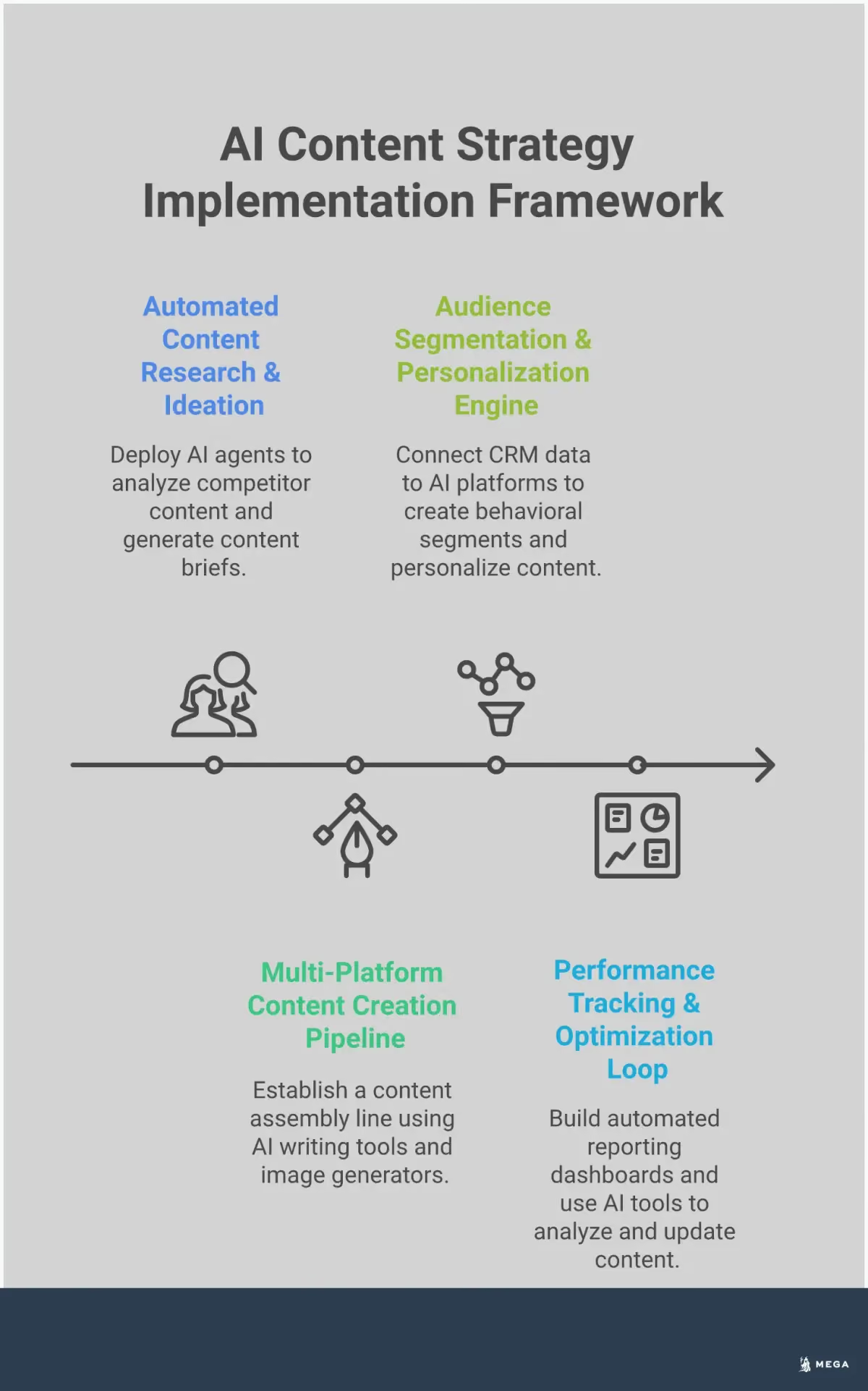
Once you have your tool, you need a plan to put it into action. It’s best to start small and scale up. Begin with a single, clear use case, like automating the creation of two blog posts per week. As you get comfortable with the process and see results, you can gradually expand. A good way to organize this is with an AI Content Strategy Framework, which provides a step-by-step guide for working with AI. For example, with MEGA AI, your first step is to connect your data sources. From there, the agent begins executing tasks, which you can review before switching to a fully autonomous mode. This phased approach helps your team adapt without disrupting your entire workflow.
Budgeting for Your AI Strategy
Adopting AI is an investment in efficiency. AI-driven platforms take over repetitive tasks, freeing up your team to make quicker, smarter decisions based on data. When planning your budget, think about the return on investment. Companies that fully use AI in their marketing often see significant improvements in their ROI. Compare the cost of an AI platform to the expense of hiring a full-stack agency or another full-time employee. Transparent pricing helps you see how an automated solution can deliver agency-level results for a fraction of the cost. This allows you to reallocate resources toward other growth areas in your business.