
Let's be honest: most cold outreach is terrible. We’ve all received those generic, templated emails that get deleted on sight. The problem is that sending personalized messages to hundreds of prospects has always been too time-consuming to be practical. This is where building an AI-powered service comes in. Instead of just inserting a first name, modern AI tools can research prospects, understand their specific business challenges, and help you write messages that feel personal and handwritten. When a recipient feels like you've taken the time to understand them, they are far more likely to respond. This guide shows you how to build that system.
Key Takeaways
- Prioritize Personalization Over Volume: Use AI to research prospects and craft unique messages that show you’ve done your homework. A single, well-researched email is more powerful than a thousand generic templates and significantly improves response rates.
- Build an Integrated Outreach System: A successful operation depends on a connected toolkit. Combine AI for research and writing, an email automation platform for sending and warming up accounts, a CRM for tracking conversations, and data tools for building accurate prospect lists.
- Combine AI Efficiency with a Human Touch: Let AI handle the heavy lifting of research and initial drafting, but always have a human review and personalize the final message. This hybrid approach ensures your outreach is both efficient and authentic, allowing you to build genuine connections at scale.
What is AI-Powered B2B Cold Outreach?
AI-powered B2B cold outreach is the process of using artificial intelligence to find, research, and contact potential business customers. It moves beyond the generic, templated emails that typically fill a prospect's inbox. Instead of blasting the same message to a massive list, this approach uses AI to create highly personalized messages at scale. The goal is to make every email feel like it was written specifically for the recipient, referencing their company's recent achievements, their role, or specific industry challenges.
The key difference lies in the level of customization. Traditional cold outreach often relies on simple mail-merge fields like [First Name] and [Company Name]. AI takes this much further. It can analyze a prospect's LinkedIn profile, read their company's latest blog posts, or scan recent news articles to find unique details. This information is then used to craft a relevant opening line or a compelling value proposition that speaks directly to that individual's situation. As a result, AI has completely transformed how emails get personalized, giving you a way to stand out.
This method is particularly effective for B2B sales, whether you're a startup selling a new software solution or a marketing agency looking for new clients. When everyone else is sending generic pitches, a genuinely personalized message cuts through the noise. It shows you’ve done your homework and have a real reason for reaching out. This builds credibility from the very first interaction and significantly increases your chances of getting a positive response. It’s about working smarter, not just sending more emails.
Why Build an AI-Powered B2B Cold Outreach Service?
Let's be honest: most cold outreach is terrible. We've all received those generic, templated emails that get deleted on sight. The good news is that because the bar is so low, it's not difficult to stand out. This is where building an AI-powered service comes in. You can offer something genuinely different and valuable that most businesses desperately need but don't know how to create themselves.
AI has completely changed how email personalization works. This isn't about simple mail merges that just insert a first name. Modern AI tools can research prospects, understand their specific business challenges, and help you write messages that feel personal and handwritten. When a recipient feels like you've taken the time to understand them, they are far more likely to respond. This ability to create genuine connections at scale is the core of a successful outreach service.
Historically, cold email has been plagued by major technical hurdles. Deliverability issues, aggressive spam filters, and the generic feel of mass emails often killed campaigns before they even started. A new wave of AI-powered tools helps solve these problems. They can warm up email accounts, optimize sending patterns, and ensure your carefully crafted messages actually land in the primary inbox, not the spam folder. This technical advantage gives your service a layer of reliability that clients will value.
The business case is just as strong. Companies desperately need new leads and are willing to pay for a system that delivers them consistently. By using relatively inexpensive AI tools to automate the research, writing, and sending process, you can build a high-margin service. You are selling a direct path to revenue for your clients, and that is an easy conversation to have. Offering a service that can fundamentally change a business's growth trajectory is a powerful position to be in.
Your AI-Powered Cold Outreach Toolkit
Building an effective AI-powered outreach machine isn't about finding one magic tool. Instead, it's about assembling a toolkit where each piece of software handles a specific, crucial part of the process. Think of it as a digital assembly line for generating leads. You'll need tools to find prospects, research them, write personalized messages, send emails at scale, and manage all the conversations that result. Each component integrates with the others to create a seamless workflow from initial contact to a booked meeting.
The right combination of tools allows you to automate the repetitive, time-consuming tasks so you can focus on strategy and building relationships. This setup includes platforms for data enrichment, AI-driven writing assistants, email automation systems, and a central CRM to keep everything organized. By connecting these systems, you create a powerful engine for B2B growth that complements your other marketing efforts, like the automated SEO and content strategies you might already have in place. The goal is to build a stack that is both efficient and effective, letting you reach the right people with the right message consistently.
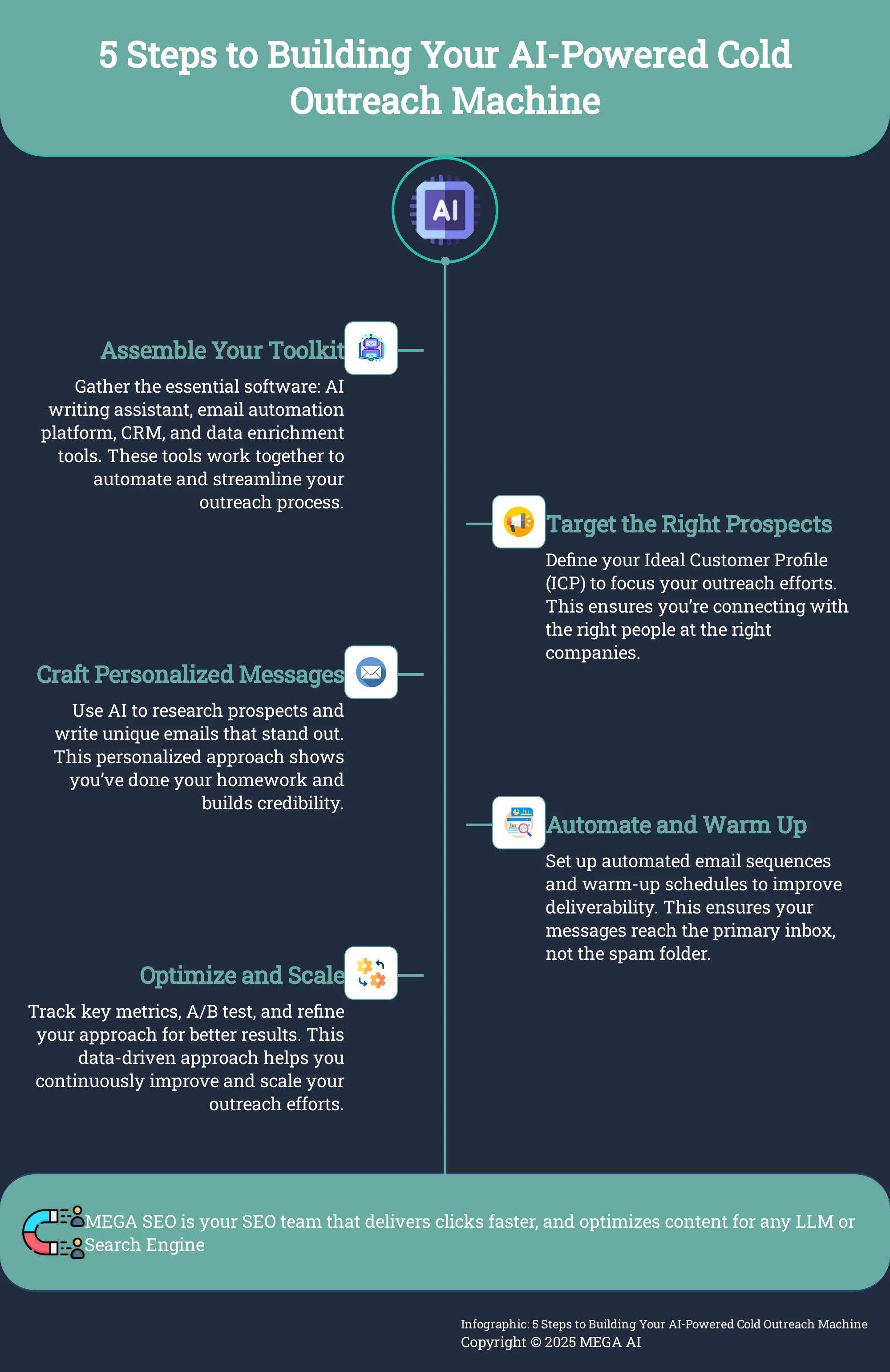
AI Writing and Research Tools
AI has fundamentally changed how we approach personalization in cold outreach. We've moved far beyond inserting a {first_name} tag into a generic template. Modern AI tools act as your personal research assistant, helping you understand a prospect's business, their recent company news, and their specific challenges. This allows you to craft genuinely personalized messages that show you’ve done your homework. These tools can analyze a prospect's LinkedIn profile or company website to suggest relevant opening lines and talking points, making your outreach feel authentic and relevant. This level of customization is key to cutting through the noise and getting a response.
Email Automation and Warm-up Platforms
To send emails at scale without landing in the spam folder, you need a specialized email automation platform. Tools like Instantly.ai are designed specifically for cold outreach. They allow you to manage multiple email accounts and automate the "warm-up" process, which involves gradually increasing sending volume to build a positive sender reputation with email providers like Google and Outlook. These platforms also let you create and test multi-step email sequences, so you can automatically follow up with prospects who don't reply to your first message. This automation ensures your outreach is persistent and professional.
Customer Relationship Management (CRM) Software
A CRM is the brain of your outreach operation. It’s where you store all your prospect data, track interactions, and manage your sales pipeline. Without a CRM, trying to keep track of hundreds of conversations across multiple channels is nearly impossible. When choosing a CRM, it’s important to select one that fits your business model. A system designed for high-volume B2B sales will have different features than one built for ecommerce. Your CRM will help you stay organized, ensure timely follow-ups, and provide valuable insights into which outreach strategies are performing best.
Data Enrichment and Prospecting Tools
Your outreach campaigns are only as good as the data that fuels them. Data enrichment and prospecting tools are essential for building accurate, targeted lead lists. Platforms like Apollo.io or Clay give you access to vast databases of professional contacts, allowing you to filter for prospects by industry, company size, job title, and other specific criteria. These tools provide the email addresses and other key data points you need to start a conversation. Using them ensures you’re spending your time reaching out to people who are a genuine fit for your service, making your entire outreach process more efficient.
How to Set Up Your AI Outreach Infrastructure
Building a successful AI outreach service starts with a solid technical foundation. Think of it as building the digital factory floor where your campaigns will be assembled and launched. Getting this infrastructure right from the start saves you countless hours and headaches down the line. It ensures your emails actually land in inboxes, your personalization efforts are effective, and you can manage relationships at scale without losing track of conversations. The goal is to connect the right tools so they work together seamlessly, allowing you to focus on strategy and building relationships rather than getting stuck on technical configurations. This setup involves selecting your core AI and automation platforms, implementing them correctly, and ensuring your data is clean and targeted.
Select and Integrate Your AI Tools
The first step is choosing the right tools for research and writing. Modern AI has moved far beyond simple name-merging in emails. The best tools help you research prospects, understand their specific business challenges, and write genuinely personalized messages that get responses. Instead of a single generic outreach tool, look for specialized platforms that can handle different parts of the process. For example, you might use one AI tool for generating hyper-personalized "icebreaker" sentences based on a prospect's LinkedIn profile and another for drafting the main body of your email. The key is to find a set of tools that can be integrated to create a smooth workflow for content creation and personalization.
Implement Your Email Automation and CRM
Once you have your writing tools, you need a platform to send and manage your emails. This is where email automation and a Customer Relationship Management (CRM) system come in. Platforms like Instantly.ai or Mailshake are designed for cold outreach and handle the critical process of "warming up" your email accounts. This involves sending a low volume of emails that gradually increases over time, signaling to email providers that you're a legitimate sender. Many of these platforms can even set up your domains and accounts for you, so you don't have to manually configure technical settings like SMTP or DNS. Integrating this with a CRM helps you track every interaction and manage your sales pipeline effectively.
Use Data Enrichment for Better Targeting
Sending the same generic email to a huge list is a fast track to the spam folder. To avoid this, you need clean, accurate, and detailed data. Data enrichment is the process of taking a basic prospect list and adding valuable information to it. This helps solve common problems, like emailing multiple people from the same company with the same message. More importantly, it provides the raw material for personalization. AI tools can use this enriched data to generate unique opening lines or reference specific company news for each prospect. This level of personalization is what separates a successful campaign from one that gets ignored, as it dramatically improves your email deliverability and response rates.
Develop a Personalized Cold Outreach Strategy
With your AI toolkit and infrastructure ready, it's time to focus on the strategy that will drive your campaigns. A successful outreach plan is more than just sending a high volume of emails; it's about sending the right message to the right person at the right time. This is where human insight directs the power of automation. Your strategy is the blueprint that tells your AI tools who to target, what to say, and how to follow up. It’s the critical step that turns a cold list of contacts into a warm pipeline of genuine business conversations.
Developing a solid strategy involves three core components. First, you must have a crystal-clear understanding of who your ideal customer is. A generic approach will fall flat, so specificity is key. Second, you need to leverage AI to create messages that feel personal and relevant, showing each prospect you’ve done your homework. This is what separates your email from the hundreds of generic templates they delete every day. Finally, you need a thoughtful follow-up plan, because most conversations don't start after the first email. Nailing these three elements will provide a repeatable framework for generating predictable results and building meaningful business relationships.
Define Your Target Audience and Ideal Customer Profile
Before you write a single line of copy, you need to know exactly who you're talking to. A highly targeted outreach strategy is most effective for specific B2B markets, not for selling general products to a wide audience. The first step is to create an Ideal Customer Profile (ICP), which is a detailed description of the perfect company for your service. Think about firmographics like industry, company size, annual revenue, and geographic location. Once you have your ICP, you can identify the key decision-makers within those companies. This detailed profile acts as the primary instruction for your AI tools, guiding them on which prospects to research and what information is most relevant for personalization.
Craft Personalized Messages with AI
AI has completely transformed how email personalization works. This goes far beyond a simple mail merge that just inserts a first name. Modern AI tools can research your prospects, understand their business challenges by analyzing recent company news or LinkedIn activity, and help you craft a unique message that gets a response. This level of personalization is what makes you stand out. When you send 100 different people 100 unique emails, you also improve your email deliverability. Internet service providers are smart enough to recognize when the same template is being sent repeatedly and are more likely to flag it as spam. A truly personalized message is your ticket to the primary inbox.
Set Up Effective Email Sequences
Most prospects are busy and won't reply to your first email. That’s why a thoughtful follow-up sequence is a non-negotiable part of any outreach campaign. An effective sequence typically consists of two to three emails in total. Your first email introduces your core value, but your follow-ups are where you can build the relationship. It’s critical to write a follow-up email that adds new value instead of just "bumping" the first one. For example, you could share a different case study or comment on a recent company announcement. A good rule of thumb is to send one or two follow-ups; any more can feel spammy. Be sure to track your reply rates for each step to see which messages resonate most with your audience.
How to Optimize Your Outreach Campaigns
Launching your outreach campaign is the first step, but the real progress happens during optimization. By consistently monitoring performance, testing your approach, and using smart tools, you can refine your strategy for better results. This process turns your outreach from a shot in the dark into a well-aimed effort that connects with your ideal customers. It’s about learning from every email you send and making data-informed decisions to improve your next campaign.
Key Performance Metrics to Track
To understand if your campaigns are effective, you need to track the right metrics. Key performance indicators (KPIs) like open rates, click-through rates, and reply rates tell you how your audience is responding to your messages. For cold email outreach, a reply rate between 2.1% and 2.8% is a solid benchmark. If your numbers are below this, it’s a sign that your subject lines or email copy may need adjustments. Consistently monitoring these email marketing metrics helps you identify what resonates with your prospects and where you can make improvements.
A/B Test and Continuously Improve
A/B testing is a straightforward way to refine your outreach. This involves creating two versions of an email—changing only one element, like the subject line, call to action, or opening sentence—and sending them to different segments of your list. This controlled approach helps you learn what works best. While AI can generate great copy, without testing, you won’t know which specific elements are driving your success. By implementing a consistent A/B testing process, you can gather clear insights and make incremental improvements that lead to significant gains in engagement over time.
Use AI to Analyze and Optimize Performance
AI tools can help you make sense of your campaign data and find opportunities for improvement. In a competitive market, leveraging AI for analysis can help your outreach stand out. These platforms can analyze performance data to identify patterns in engagement, helping you understand the best times to send emails or which message variations perform best with certain audience segments. By integrating AI platforms into your workflow, you can move beyond basic metrics and gain deeper insights that inform your strategy, leading to more effective campaigns and better allocation of your resources.
How to Scale Your AI Outreach Service
Once you have a proven system for generating leads with AI-powered outreach, the next logical step is to scale your operations. Scaling isn't just about doing more of the same; it's about building a resilient business that can handle a larger client load without sacrificing the quality of your results. This means moving from a hands-on, founder-led process to a systemized operation that leverages technology and people effectively. The goal is to increase your capacity and revenue while maintaining, or even improving, your service delivery.
Successfully scaling your service involves three core pillars: automating your workflows to create efficiency, building a team to handle the increased workload, and expanding your service offerings to increase the value you provide to each client. Each of these steps builds on the last, creating a powerful growth engine for your business. By focusing on these areas, you can transition from being a freelancer or a small operation to running a full-fledged agency that delivers consistent, high-quality results for a growing roster of B2B clients. This phase is where your initial hard work really starts to pay off, turning your effective outreach method into a scalable business model.
Automate Your Workflows
As you grow, you can’t manually manage every detail. This is where you lean more heavily into automation. AI can do more than just personalize an opening line; it can research prospects, identify their specific business challenges, and help you craft messages that resonate on a deeper level. Using tools to warm up your email accounts and send messages automatically ensures you can manage a high volume of outreach without getting flagged as spam. This level of SEO and outreach automation frees you from repetitive tasks, allowing you to focus on strategy, client relationships, and high-level business development. The key is to build a workflow that runs smoothly in the background, generating leads with minimal daily intervention.
Build a Team to Support Growth
You can't scale alone. As your client list grows, you'll need to bring on team members to help manage the workload. You can start by hiring virtual assistants or junior outreach specialists to handle tasks like list building, email verification, and campaign monitoring. To keep your team motivated, consider a performance-based compensation model. For example, you could offer a base rate plus a bonus for each qualified lead generated or meeting booked. This structure aligns your team's goals with your business objectives, essentially creating your own internal affiliate program where everyone wins when the company succeeds. This approach helps you maintain quality control while expanding your capacity to serve more clients.
Expand Your Service Offerings
Once you've mastered driving traffic to your clients' websites through cold outreach, you can increase your value by offering complementary services. For example, many of the site visitors from your campaigns won't convert on their first visit. You can introduce a Paid Ads service to run retargeting campaigns on platforms like LinkedIn or Google, bringing those interested prospects back to your client's site. This creates a more comprehensive marketing funnel for your clients, turning your initial outreach into a more robust lead generation system. Expanding your services not only increases revenue per client but also makes your business stickier and more integrated into their overall growth strategy.
Address Common AI Outreach Challenges
Using AI for outreach can streamline your process, but it’s not a "set it and forget it" solution. To be successful, you need to address a few common challenges. Managing these areas ensures your campaigns are effective, compliant, and build genuine connections.
Maintain Email Deliverability and Avoid Spam Filters
The best cold email is useless if it lands in the spam folder. With providers like Gmail and Outlook getting smarter about filtering, maintaining email deliverability is the name of the game. Most cold outreach is generic, so a little effort here helps you stand out. Start by properly warming up your email domain to build a good sender reputation. Always clean your prospect lists to remove invalid addresses, which reduces bounce rates. Finally, use AI to create personalized messages that don't feel like a mass email, as this genuine approach is less likely to be flagged.
Ensure Regulatory Compliance
When sending emails at scale, you have to be mindful of regulations like CAN-SPAM and GDPR. Non-compliance can lead to fines and damage your brand's reputation. A simple first step is to always include a clear unsubscribe link and honor opt-out requests promptly. Also, ensure your prospect lists are well-managed to avoid emailing dozens of people at the same company simultaneously. A well-configured CRM system can help you manage these rules and keep your outreach organized and compliant, preventing costly mistakes.
Balance Automation with a Human Touch
AI is a powerful assistant, but it shouldn't be the only one talking. The most successful outreach campaigns balance automation with a human touch. Use AI for heavy lifting, like researching prospects or drafting messages, but have a human review and refine the final output. The first sentence is the most important part of the interaction; a mistake there can lose the lead. Focus your manual efforts on personalizing this opening line. This hybrid approach allows you to work efficiently while creating the genuine connection needed to build relationships and get responses.
Price and Package Your AI Outreach Service
Once your AI outreach system is running smoothly, the next step is to structure your pricing and service packages. How you price your service determines your profitability, the type of clients you attract, and how your brand is perceived in the market. A well-defined pricing strategy communicates the value you provide and makes it easy for potential clients to understand what they get for their investment. The key is to align your pricing with the tangible results you deliver.
Determine Your Value Proposition
Before setting a price, you need to understand the value you’re offering. The most effective way to do this is to focus on clients for whom a single lead is highly valuable. As some experts suggest, you should target businesses where a lead is worth thousands of dollars, not hundreds. This allows you to anchor your price to the significant return on investment your clients can expect.
Consider a pay-per-lead model to directly tie your fee to performance. For example, you could propose a model where clients pay a set amount, like $150, for every qualified lead you generate. This approach clearly defines your value and aligns your success with your client's. It shifts the conversation from cost to investment and makes your service an easy decision for high-ticket businesses.
Set Competitive Pricing Models
Understanding the market landscape is essential for positioning your service. Research what established AI outreach providers are charging to get a sense of standard rates. For instance, a recent analysis of the AI service market found that agencies charge between $2,000 and $7,200 per month for a single campaign. These packages often promise to deliver between 20 and 80 qualified leads, depending on the tier.
Using this data as a benchmark helps you set prices that are both competitive and profitable. You don’t necessarily need to be the cheapest option. Instead, focus on justifying your price through the quality of your leads and the sophistication of your AI-powered process. A solid pricing model, backed by market data, gives clients the confidence to invest in your service.
Create Tiered Service Packages
Tiered packages are an excellent way to cater to clients with different needs and budgets. By creating multiple service levels, you can make your offering accessible to a broader range of businesses, from startups to established enterprises. Structure your tiers based on the volume of outreach or the number of guaranteed leads. For example, you could offer a starter package that delivers 20 leads per month, a growth package with 40, and a premium tier with 80 or more.
If your system can generate a high volume of prospects, you can build packages that reflect that scale. A service that delivers two qualified leads per day could easily justify a price point in the mid-to-high thousands per month. You can see examples of tiered offerings on our own pricing page. Clearly outline what is included in each tier to help clients choose the best fit for their goals.
Best Practices for AI-Powered B2B Cold Outreach
Focus on Quality Over Quantity
AI makes sending thousands of emails seem easy, but this approach often backfires. Most cold outreach is generic, creating an opportunity for you to stand out by prioritizing quality. Instead of blasting a massive list, use AI to create highly targeted messages for a smaller, qualified group of prospects. This method respects the recipient's time and increases your chances of getting a positive response. A well-crafted message to the right person is far more effective than a thousand generic emails that land in the spam folder. This focus on quality separates successful campaigns from noise.
Personalize the First Sentence
The first sentence of your email is the most important part of your outreach. If it feels generic, you’ve likely lost the lead before they get to your pitch. This is where AI can be a powerful assistant. Use it to research a prospect's recent LinkedIn activity, their company's latest news, or their blog posts. AI can then help you craft an opening line that shows you’ve done your homework. A personalized opener demonstrates genuine interest and immediately sets your message apart from the flood of automated emails in their inbox.
Use AI for In-Depth Prospect Research
Effective personalization goes beyond just using a prospect's name. AI tools are exceptional at conducting deep research quickly. You can feed an AI a prospect's LinkedIn profile or company website, and it can summarize key information, identify potential pain points, and find common ground. This detailed prospect research allows you to tailor your message to their specific context. Using AI for this task saves hours of manual work and improves email deliverability, as unique emails are less likely to be flagged as spam by email providers.
Maintain a Human Element in Your Communication
AI is a tool, not a replacement for human connection. Without specific guidance, AI-generated text can sound generic or overly salesy. It's crucial to treat AI as a co-pilot. Let it handle the research and initial drafting, but always apply a final human touch. Review and edit every message to ensure it reflects your brand's voice and personality. Your prompting strategy is key; be precise about the tone and style you want. This balance ensures your outreach feels authentic and builds genuine relationships, which is the ultimate goal of B2B communication.
Related Articles
- AI Outreach: The Ultimate Guide to Personalization
- Top 10 Digital Marketing Tools for Lead Generation
- AI Marketing Automation: A Practical Guide
- Unlocking B2B Success: Marketing Automation Strategies
- Transform Your Marketing with AI-Powered Strategies
Frequently Asked Questions
Is building an AI outreach service too technical if I don't have a deep IT background? Not at all. Many of the modern tools designed for cold outreach handle the most technical aspects for you, like warming up email accounts and configuring domains. Your primary job is to focus on the strategy—defining your target audience and crafting a compelling message. The technology is there to support your plan, not to create a technical hurdle.
How does AI actually improve email deliverability instead of getting my messages marked as spam? Email providers are very good at spotting when hundreds of identical messages are sent at once, which is a classic spam signal. AI helps you avoid this by generating unique, personalized content for each prospect. When every email is slightly different, especially the opening line, it looks more like genuine, one-to-one communication. This significantly reduces the chances of being flagged and helps your messages land in the primary inbox.
My biggest concern is sounding like a robot. How do I ensure my AI-assisted emails still feel personal? This is a valid concern, and the key is to treat AI as a research assistant, not the final writer. Use it to gather information and draft the initial message, but always have a human review and edit the final copy. Your focus should be on refining the opening sentence to make it specific and authentic. This hybrid approach gives you the efficiency of automation while maintaining the genuine human touch needed to build a connection.
What's a realistic starting budget for the necessary AI tools? You can get started with a surprisingly lean toolkit. The core functions you need are prospecting, AI-powered writing, and email automation. Many platforms bundle these features, or you can subscribe to a few specialized tools for a reasonable monthly cost. Think of it as an investment that can be quickly returned with just one or two new clients, especially if you target businesses where a single lead is highly valuable.
Can I start with just one or two tools, or do I need the entire toolkit from day one? You can absolutely start small. The most effective approach is to begin with a core set of tools that covers the essentials: a platform for finding prospects and their data, an AI tool for research and writing, and an email automation system to send your campaigns. This creates a solid foundation. You can add other tools for CRM or advanced analytics as your business grows and your needs become more complex.