
The market is flooded with AI tools, each promising to revolutionize your marketing. It can be difficult to know which ones are worth your time and which are just hype. An AI ad creative generator is one of the most practical applications of this technology for small businesses, directly addressing the challenge of producing high-quality ad content at scale. But not all generators are created equal. Some focus on copy, others on visuals, and some offer a complete, hands-off service. This article cuts through the noise to give you a clear comparison of the leading options, helping you make an informed decision for your business.
Key Takeaways
- Prioritize data-driven creative over simple automation: AI ad generators save time, but their primary benefit is using performance data to create ads that are more likely to improve your return on ad spend.
- Match the tool to your team’s capacity: Evaluate whether a self-service platform for creating assets or a fully managed AI service that handles the entire campaign is a better fit for your available time and expertise.
- Track metrics that impact your bottom line: Measure success by focusing on key performance indicators like Customer Acquisition Cost (CAC) and Return on Ad Spend (ROAS) instead of surface-level engagement.
What Is an AI Ad Creative Generator?
An AI ad creative generator is a tool that uses artificial intelligence to automatically create the different parts of an advertisement. Think of it as a digital assistant for your marketing team. Instead of spending hours brainstorming ad copy or designing images, you provide the tool with some basic information, and the AI produces a variety of ad content for your campaigns.
These platforms are designed to make high-quality ad creation faster and more accessible, especially for small businesses that may not have a dedicated design team. The main goal is to streamline the creative process, allowing you to test more ideas and find what resonates with your customers without a massive investment of time or money.
How AI Generates Ad Creative
At its core, this technology relies on a type of artificial intelligence called generative AI. These AI models are trained on vast amounts of existing data, including successful ad campaigns, images, videos, and text from across the internet. By analyzing these examples, the AI learns the patterns, styles, and structures that capture attention and drive engagement.
When you give the generator a prompt—like your product name, key features, and target audience—it uses this learned knowledge to create something entirely new. It doesn't just copy and paste; it combines different elements to generate original ad variations. This process allows advertisers to produce a high volume of diverse ads quickly, making it easier to run tests and optimize campaigns for better performance.
Core Features of an AI Creative Tool
Most AI ad creative tools offer a similar set of core features designed to automate and simplify your workflow. One of the most important is the ability to generate multiple ad variations from a single input. This lets you easily create different versions of an ad to see which headline, image, or call to action performs best.
Many platforms also include access to a library of stock images and videos, which the AI can incorporate into its designs. You’ll also find tools for writing and refining ad copy for different platforms, from Google Ads to Facebook. Some of the more advanced generators provide features for A/B testing, helping you systematically compare ad creatives to identify the top performers and improve your campaign results over time.
Key Features and Benefits of AI Ad Creative Tools
AI ad creative generators are more than just tools for making images. They function as a marketing partner for your business, giving you access to capabilities that were once only available to companies with large creative teams and budgets. For a small business owner, the main benefit is a combination of speed, intelligence, and efficiency. Instead of spending hours with complex design software or paying an agency for every new campaign, you can generate dozens of ad variations in minutes.
These tools work by analyzing huge datasets of successful ads to understand what captures attention and drives action. They learn which colors, layouts, and copy combinations connect with specific audiences. This data-driven approach removes much of the guesswork from advertising. The platform doesn't just give you a creative asset; it gives you an asset with a higher probability of success. This process covers everything from generating initial concepts and writing compelling ad copy to producing video ads with AI avatars and analyzing campaign performance. By handling the entire creative workflow, these tools free you up to focus on your business strategy, confident that your advertising is built on a solid foundation of data.
Must-Have Features to Look For
When evaluating AI creative tools, look beyond the initial excitement of image generation. The most valuable platforms offer a suite of features that support your entire advertising workflow. A critical feature is the ability to create a brand kit, which stores your logos, color palettes, and fonts to ensure every ad is consistent with your brand identity. You should also look for multi-format support. A good tool, like Creatify, can produce not just static images but also video ads, including popular user-generated content (UGC) styles. Finally, check for robust analytics and integration capabilities. The tool should provide insights into which creatives are performing best and allow you to easily push your ads directly to platforms like Meta and Google.
How They Save You Time and Money
The most immediate benefit of using an AI ad creative tool is the significant reduction in time and cost. Manually creating a single ad can take hours, and hiring a freelance designer or agency can cost hundreds or thousands of dollars per campaign. AI platforms automate this entire process. According to Quickads, its customers spend 72% less time creating ads. This efficiency allows you to test more ideas and launch campaigns faster. The financial savings are just as compelling. For example, some platforms claim they can lower ad production costs by as much as 90%, offering a cost-effective alternative to traditional creative production without sacrificing quality. This makes high-frequency testing accessible even for businesses with tight budgets.
How They Improve Ad Performance
Ultimately, the goal of any ad is to drive results, and this is where AI tools truly shine. By analyzing data from millions of successful campaigns, these platforms can predict which creative elements are most likely to lead to conversions. This data-driven approach removes human bias and guesswork from the creative process. The results speak for themselves. One platform reports that ads made with its tool can generate 2.7 times more leads than standard image ads. Another tool, Quickads, states its users see an average Return on Ad Spend (ROAS) of 5.12. This means for every dollar spent, businesses are making more than five dollars back, a testament to the power of AI-optimized creative.
The Best AI Ad Creative Generators: A Comparison
Choosing the right AI ad creative generator depends entirely on your business needs, resources, and goals. Some tools are designed for hands-on marketers who want to speed up asset creation, while others focus specifically on writing compelling copy. There are also fully managed services that handle the entire process for you, from creative design to campaign optimization. To help you find the best fit, let's look at five top contenders and see where each one shines. We'll cover their core strengths, ideal users, and what makes them unique in a crowded market.
MEGA AI
MEGA AI offers a different approach. Instead of a self-service tool, it provides a fully managed Paid Ads service powered by an AI agent. This is built for business owners and marketing teams who want to delegate the entire ad creation and management process. You provide the business goals, and the AI agent handles the strategy and execution. This includes designing new image and video creative, generating hundreds of variations, translating copy and captions for different markets, and testing everything automatically. Because it’s a complete service, the agent also manages campaign setup, budget optimization, and performance reporting across all major ad platforms. It’s an end-to-end solution for teams that need expert results without the hands-on work.
AdCreative.ai
AdCreative.ai is a powerful tool for marketers who want to generate a high volume of ad creatives quickly. You input your brand details, target audience, and campaign goals, and the platform produces a wide variety of tailored ad designs. Its strength lies in using data to inform creative decisions, suggesting which assets are most likely to perform well. The platform supports numerous formats suitable for platforms like Facebook, Instagram, and LinkedIn. This makes it a strong choice for performance marketers who actively manage their own campaigns and need a steady stream of fresh, data-driven creative to test and optimize. It simplifies the design process while keeping you in full control of campaign strategy.
Canva Magic Studio
Canva has long been a go-to for user-friendly design, and its Magic Studio suite integrates AI to make the process even smoother. This platform is ideal for small businesses or marketers who need to create visually appealing ads without a background in graphic design. Its vast library of templates and design elements gives you a strong starting point, and AI features can help with tasks like background removal, text generation, and even creating short videos. While it’s more of a general design tool than a specialized ad generator, its accessibility and versatility make it an excellent option for teams that want to produce a wide range of marketing assets, including ads, in one place.
Jasper AI
Jasper AI focuses on the art of the written word. While it doesn't generate images or videos, it excels at producing high-quality, persuasive ad copy. Marketers use Jasper to craft compelling headlines, product descriptions, and social media ad text that resonates with their target audience. It’s a valuable tool for overcoming writer's block and scaling content creation for multiple campaigns or A/B tests. You can define the tone of voice and key messaging to ensure the copy stays on-brand. Jasper is best used alongside a visual design tool, allowing you to pair its powerful ad copy with stunning visuals for a complete and effective advertisement.
Copy.ai
Similar to Jasper, Copy.ai is a specialized tool for generating marketing copy. It stands out with its straightforward, template-based approach. The platform offers a wide range of pre-built templates specifically for advertising needs, such as Facebook primary text, Google headlines, and call-to-action phrases. This structure makes it incredibly fast and easy to generate multiple copy variations for a single campaign. It’s a practical choice for marketers who need to produce effective ad copy quickly and efficiently without a steep learning curve. If your primary bottleneck is writing content for your ads, Copy.ai provides a streamlined solution to get the job done.
How AI Ad Creative Generators Compare on Price
Pricing for AI ad creative generators can feel all over the map. Some platforms charge based on the number of users, while others use a credit system for every ad you generate or download. You'll also find tiered subscription plans that offer more features as the price increases. This variety makes a direct, apples-to-apples comparison tricky. The key is to look beyond the monthly fee and consider the total value you're getting.
For a small business, the most straightforward approach is often a flat-rate model that includes not just creative generation but also the strategy and management behind it. This is different from DIY tools where you pay for the software but still have to do all the work of testing, optimizing, and managing campaigns. A fully managed service like MEGA AI’s Paid Ads agent bundles creative production, campaign execution, and optimization into one predictable monthly cost. This simplifies budgeting and frees you up to focus on other parts of your business, which is a crucial consideration when evaluating the true price of any tool.
Understanding Pricing Models
Most AI creative tools use a tiered subscription model. For example, platforms like AdCreative.ai and Creatify offer different plans for starters, professionals, and enterprise teams, with costs scaling based on features and usage limits. These plans often operate on a credit system, where you spend credits to generate or download ad creatives. This can be effective if you have a clear idea of your needs, but it requires you to constantly monitor your usage.
In contrast, a service-based model offers a more all-inclusive solution. With MEGA AI, you aren't buying a tool; you're hiring an AI agent to manage your entire paid ads strategy. The pricing is a flat monthly fee that covers everything from designing new creative and producing unlimited variations to launching and optimizing the campaigns. This model eliminates the complexity of credits and tiers, offering a clear, predictable investment for end-to-end ad management.
Finding the Best Value
Value isn't just about the lowest price; it's about the return on your investment. Many tools promise impressive results, with some users reporting a 240% increase in Return on Ad Spend (ROAS) or a significant lift in conversions. These metrics are certainly attractive, but they often depend on your ability to effectively use the tool and manage the resulting campaigns. The value of a DIY tool is directly tied to the time and expertise you can put into it.
A managed service provides value differently. Instead of just giving you the creative assets, it handles the entire process required to achieve those results. For instance, the team behind MEGA AI previously used their technology to increase ROAS by 300%. The value here is not just in the AI-generated creative but in the automated optimization, budget management, and strategic execution that drives campaign performance without requiring your constant attention.
Watch Out for Hidden Costs
When evaluating pricing, it’s important to look for potential hidden costs. Free plans or low-cost trials can be appealing, but they often come with limitations. For example, some tools place a watermark on creatives made with a free plan or limit your access to premium features and templates. Credit-based systems can also lead to unexpected expenses if you need to generate more ads than your plan allows. These extra fees can quickly add up, making a seemingly affordable tool much more expensive.
This is another area where a transparent, all-inclusive model stands out. With a flat-fee service, what you see is what you get. There are no credits to track or surprise charges for downloading an extra set of creatives. The monthly cost covers unlimited creative variations, multi-platform campaign management, and continuous optimization. This predictability is especially important for small businesses that need to maintain a strict marketing budget.
What Results Can You Expect?
Using an AI ad creative generator is about driving real, measurable growth. While exact outcomes depend on your industry and audience, these tools deliver tangible results by automating the creative process. You can test more ideas, find what works faster, and get a better return on your ad spend. Instead of spending days on design, you can launch campaigns in hours and gather the data needed to make smarter marketing decisions.
Key Performance Metrics to Watch
Once your AI-generated ads are live, you need to know if they're working. Focus on a few key performance indicators (KPIs) that reflect your campaign's health. Start with Click-Through Rate (CTR), which shows how many people who saw your ad clicked on it. A high CTR means your creative is grabbing attention. Next, look at your Conversion Rate—the percentage of clickers who take a desired action, like making a purchase. Finally, track your Return on Ad Spend (ROAS) to see the revenue you’re generating for every dollar spent. These essential AI metrics give you a clear picture of performance.
What ROI to Expect for Your Business
The return on investment from AI ad tools can be significant because they enable rapid, wide-scale testing. For example, some users report seeing a 240% increase in ROAS after implementing AI-generated creative. At MEGA AI, we increased our own ROAS by 300% by using AI to manage our paid ad campaigns. The key is that AI doesn't just create one ad; it creates dozens, finds the winners, and helps you put your budget behind what’s proven to work. This process maximizes your potential return by focusing spend on top-performing creative.
How Quickly Will You See Results?
One of the biggest advantages of AI is speed. You can go from an idea to a live campaign with multiple ad variations in minutes, not days. Some platforms even let you set up your brand and start creating in about 60 seconds. You’ll see initial performance data like impressions and clicks almost immediately, which helps you identify which concepts are resonating. While you can see these early indicators right away, achieving a significant increase in ROI may take a few weeks as the platform gathers enough data to optimize. A managed service like MEGA AI can accelerate this with an autopilot feature that executes changes instantly.
Common Challenges with AI Creative Tools
AI creative generators offer incredible potential, but they aren't a simple plug-and-play solution. For small business owners and startup teams already stretched thin, the hurdles can sometimes outweigh the benefits. Understanding these common challenges will help you choose the right solution and set realistic expectations for your ad campaigns.
Keeping Your Ads On-Brand
A major challenge with AI tools is ensuring the output aligns with your brand identity. While an AI can generate variations in seconds, it doesn't understand your company's specific voice or visual style. The result is often creative that feels generic or off-brand. Your team will likely spend valuable time refining the AI's output to maintain brand consistency, which reduces the tool's efficiency.
Understanding Data Privacy and AI Bias
You need to be mindful of the data involved with any AI tool, including its training data and the information you provide. The challenges of AI in advertising include data privacy concerns and potential algorithmic bias. A biased AI model can produce inaccurate content that damages your brand's reputation. Always understand how a tool handles your data and critically review its outputs for fairness and accuracy before publishing them.
The Learning Curve and Integration
Even user-friendly AI tools have a learning curve to produce high-quality results. Small businesses often lack the in-house expertise to manage new software effectively. Learning the best prompts, advanced features, and how to integrate the tool into your workflow takes time. For founders and small teams, becoming an expert on another platform is a distraction from core business activities. The setup and ongoing management can become a significant time commitment.
How to Manage Your Budget
Pricing models for AI creative tools can be confusing. Many use credits, user seats, or tiered features, making it hard to predict monthly costs. A free plan might get you started, but you can quickly hit a wall that requires a costly upgrade. For small businesses needing predictable expenses, this variability is a problem. It’s important to find a solution with a transparent cost structure. Some businesses find an all-inclusive service with a flat monthly fee, like MEGA AI's Paid Ads agent, offers better value and budget predictability.
The Right Tool for Your Business Size
The best AI ad creative generator isn’t a one-size-fits-all solution. The right choice depends on your team’s size, your budget, and how much time you can dedicate to managing another tool. A startup founder who needs to create ads quickly has different needs than a mid-sized marketing team looking to scale their campaigns or an enterprise that requires brand consistency across hundreds of products.
For some businesses, a self-serve tool is perfect for generating ideas and assets on demand. These platforms are great if you have someone on your team with the time and expertise to direct the AI, refine the outputs, and manage the campaigns. For others, especially small businesses and startups where everyone wears multiple hats, a fully managed service is a better fit. Instead of learning a new tool, you get a dedicated AI agent that handles the entire creative process from design to optimization. This approach lets you focus on running your business while an expert system manages your Paid Ads for you. Understanding where your business fits helps you choose a solution that saves you time instead of creating more work.
For Startups and Small Businesses
If you’re a small team, your priorities are likely speed, affordability, and ease of use. You need a tool that can help you create professional-looking ads without a steep learning curve or a dedicated designer. Tools like Quickads are built for this, promising "effortless ads in 30 seconds." Similarly, Creatify is designed to help you produce winning ads without a lot of effort. AdCreative.ai is another strong option, aiming to be an "all-in-one tool for marketers who want to create ads that get more people to click and buy." These self-serve tools empower you to take control of your ad creative, which is perfect if you have the bandwidth to manage the process yourself.
For Mid-Sized Businesses
As your business grows, your needs become more complex. You’re likely running more campaigns across different channels and need a tool that can keep up. Mid-sized businesses need features that support scaling, testing, and collaboration. For example, Creatify’s "AdMax" feature helps you find popular ad trends and create many ad versions for testing. This is crucial for optimizing performance at a larger scale. AdCreative.ai also serves this market well, particularly for e-commerce stores that need to generate professional product photos and videos from simple images. These tools help your marketing team produce more creative variations and make data-driven decisions, but they still require hands-on management to guide the strategy and analyze the results.
For Enterprise Teams
At the enterprise level, the focus shifts to massive scale, brand governance, and deep integration. Large companies need to generate thousands of creative assets while ensuring every ad aligns with brand guidelines. AdCreative.ai has proven its ability to handle this volume, citing a case where a client generated over 150 customized creatives per product. However, at this scale, AI is most effective when guided by human expertise. As one agency notes, "AI-generated ads can speed up production and testing, but the best results come from refining those outputs with human creativity and brand alignment." This human-in-the-loop approach ensures that the vast number of ads generated are not just plentiful but also effective and on-brand.
How to Choose the Right AI Ad Creative Generator
Choosing the right AI ad creative generator is about more than just picking the one with the most features. It’s about finding a solution that fits your workflow, aligns with your business goals, and genuinely makes your life easier. As a small business owner or marketer, your time is your most valuable asset. The right tool should give you more of it back, not create another complex system to manage. Many businesses get caught up in flashy demos, only to find themselves with a tool that’s difficult to use or doesn’t connect with their other systems.
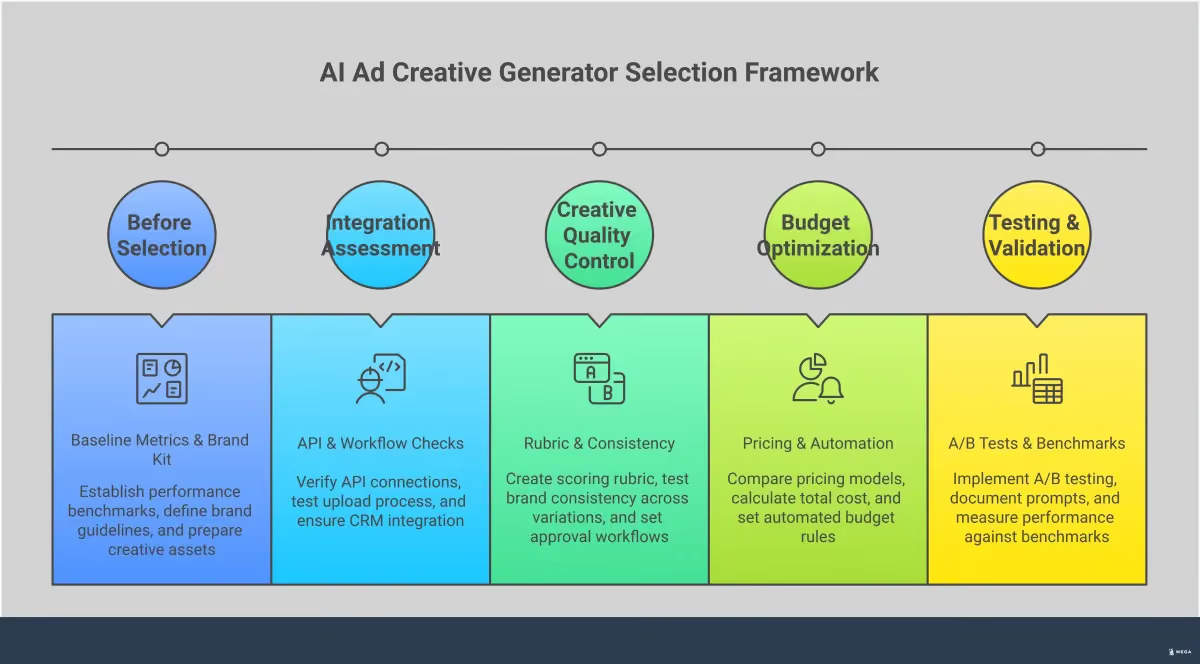
To avoid this, it helps to think of it less like buying software and more like hiring a new team member. Would you hire someone who couldn’t communicate with the rest of your team, produced off-brand work, and required constant supervision? Probably not. When you’re evaluating your options, apply the same logic and focus on three key areas: how the tool connects with your existing platforms, the quality of the creative it produces, and the level of support you’ll receive. This approach helps you look past the hype and find a generator that will actually contribute to your bottom line.
Check for Important Integrations
Your AI ad generator doesn’t operate in a vacuum. To be effective, it needs to connect seamlessly with the ad platforms where you run campaigns. Before committing to a tool, verify that it integrates with your essential channels, whether that’s Meta, Google, TikTok, or LinkedIn. A lack of integration means you’ll be stuck manually downloading and uploading creatives, which defeats the purpose of automation. The best AI tools for creating ads don’t just generate content; they streamline the entire process from creation to launch. For businesses that want to avoid managing multiple integrations, some services offer an all-in-one approach, handling creative and campaign management across all major platforms.
How to Assess Creative Quality
AI can produce stunning visuals, but quality is about more than just aesthetics. The best results happen when you can refine AI-generated outputs with your own human creativity and brand knowledge. Look for a tool that gives you control over the final product, allowing you to tweak designs, copy, and layouts to ensure they are on-brand. Quality also means performance. A generator should be able to produce numerous variations of your top-performing ads for A/B testing. This ability to rapidly test and iterate is what drives real results, helping you find the creative that truly connects with your audience and improves your return on ad spend.
Consider the Support and Training
Implementing any new technology can be a challenge, and AI is no exception. A steep learning curve can quickly turn a time-saving tool into a time-consuming project. Before you choose a generator, look into the support and training resources it offers. Does the company provide clear documentation, tutorials, or customer support to help you get started? Because the technology changes so quickly, it's important that your team has access to continuous learning resources. For teams without the bandwidth for extensive training, a fully managed service can be a better fit. Instead of learning a new tool, you get an AI-powered agent that handles the entire creative process for you.
Are Free Trials or Discounts Available?
Testing a new marketing tool is a significant decision, especially when you’re running a small business with a tight budget. Many AI ad creative generators understand this and provide ways for you to try their platforms before making a financial commitment. These offers can range from time-limited free trials to discounts on your first subscription period, giving you a chance to see if the tool is the right fit for your workflow and brand.
While many self-service tools provide a free trial to let you explore the software on your own, some managed services take a different approach. Instead of a trial, they might offer a personalized walkthrough to show you exactly how their platform can meet your specific business goals. For instance, you can book a demo with MEGA AI to see how an AI agent can manage your entire ad creative process from start to finish. This helps you understand the full value of the service beyond just the creative output. Evaluating these different entry points can help you find a partner that aligns with both your budget and your operational needs.
Find Free Trials and Guarantees
Free trials are one of the most direct ways to test an AI creative platform. They give you hands-on access to the features so you can judge the quality and speed for yourself. For example, AdCreative.ai offers a 7-day free trial, allowing you to generate and test ads without any initial investment. This is a great way to explore the platform’s full capabilities.
Similarly, Creatify provides a free trial that does not require a credit card, making it easy to sign up and start experimenting without any friction. These no-commitment trials are particularly useful for seeing how easily you can create on-brand assets and whether the AI-generated ideas align with your marketing strategy before you subscribe.
Find Promotional Offers to Get Started
Beyond traditional free trials, many platforms use promotional offers to help new users get started. These can include discounts on annual plans or free credits to use on your first few projects. Quickads, for instance, allows you to create your first ad for free, giving you a chance to see a finished product and evaluate its quality.
For businesses ready to make a longer-term commitment, some services offer significant savings. Creatify provides a 50% discount if you choose an annual plan, which can be a cost-effective option. Quickads also offers a promotional code, LAUNCH100, which gives you one month free on its $99 All-Access Plan. These kinds of offers make it more accessible to integrate powerful AI tools into your marketing efforts.
How to Measure Your Success
Using an AI ad creative generator is just the first step. To make sure your investment pays off, you need a clear way to measure what’s working and what isn’t. Tracking performance helps you understand your audience better, refine your messaging, and ultimately, get more out of your ad spend. It’s not about finding one perfect ad, but about creating a system of continuous improvement fueled by data. This process helps you move from guessing what your customers want to knowing what drives them to act.
KPIs That Matter for Small Businesses
It’s easy to get caught up in metrics like likes and impressions, but for a small business, the focus should be on results that directly impact your bottom line. Start by tracking a few key performance indicators (KPIs). Your Customer Acquisition Cost (CAC) tells you how much you spend to get a new customer. Return on Ad Spend (ROAS) measures the revenue generated for every dollar spent on advertising. Finally, Conversion Rate shows the percentage of people who take a desired action, like making a purchase. These core marketing KPIs give you a clear picture of financial performance and campaign effectiveness, helping you make smarter budget decisions.
Tools for Monitoring Campaign Performance
You don’t need a complex analytics department to monitor your campaigns. Every ad platform, from Meta to Google, has a built-in dashboard with detailed performance data. These tools let you see your KPIs in real-time, so you can track how your AI-generated creatives are performing. While the world of AI in advertising introduces advanced analytics, you can start with the basics. For a more hands-off approach, a fully managed service like MEGA AI’s Paid Ads agent handles the monitoring for you. This frees you up from checking dashboards daily and provides expert analysis on what the numbers actually mean for your business growth.
How to Optimize Using Data
Data is only useful if you act on it. The goal of monitoring your campaigns is to find opportunities for optimization. Look at your best-performing ads—what do they have in common? Maybe it’s a specific color, a certain type of headline, or a particular call to action. Use these insights to inform the next batch of creatives you generate. This creates a powerful feedback loop where your ads get smarter over time. Generative AI can accelerate this process by analyzing user data to improve performance marketing campaigns. By continuously testing and refining, you turn your ad spend into a predictable engine for growth.