
For startups and small businesses, making every marketing effort count is crucial. When it comes to SEO, understanding your backlink profile can reveal significant opportunities for growth that you might be missing. Backlink analysis isn't just a technical task; it's a strategic way to see how your website is perceived by others online and how you stack up against the competition. This article will guide you through the process of dissecting your own backlinks and those of your competitors. We'll cover how to identify what makes a good link, spot opportunities for new connections, and build a link building strategy that drives meaningful results for your business.
Key Takeaways
- Focus on Link Quality, Not Just Quantity: Make sure incoming links come from reputable, relevant websites, and regularly review your backlink profile to address detrimental links and understand what earns good ones.
- Discover Opportunities and Connect Authentically: Actively search for link prospects by examining competitor strategies and seeking out resource pages or broken links, then reach out with personalized messages that offer clear value.
- Make Backlink Analysis an Ongoing Process: Consistently track your link building results, ensure your efforts support your content goals, and use data—including original research—to refine your approach and adapt to changes.
What is Backlink Analysis for Link Building?
Think of backlink analysis as your detective work for understanding who is linking to your website and, just as importantly, who is linking to your competitors. It’s the process of examining your existing backlinks—those incoming links from other websites to yours—to gauge their quality, quantity, and overall impact on your site's authority and search engine rankings. For effective link building, this analysis is foundational. It helps you understand your current standing, identify what’s working, and spot opportunities to acquire new, valuable links that can really move the needle for your site's visibility.
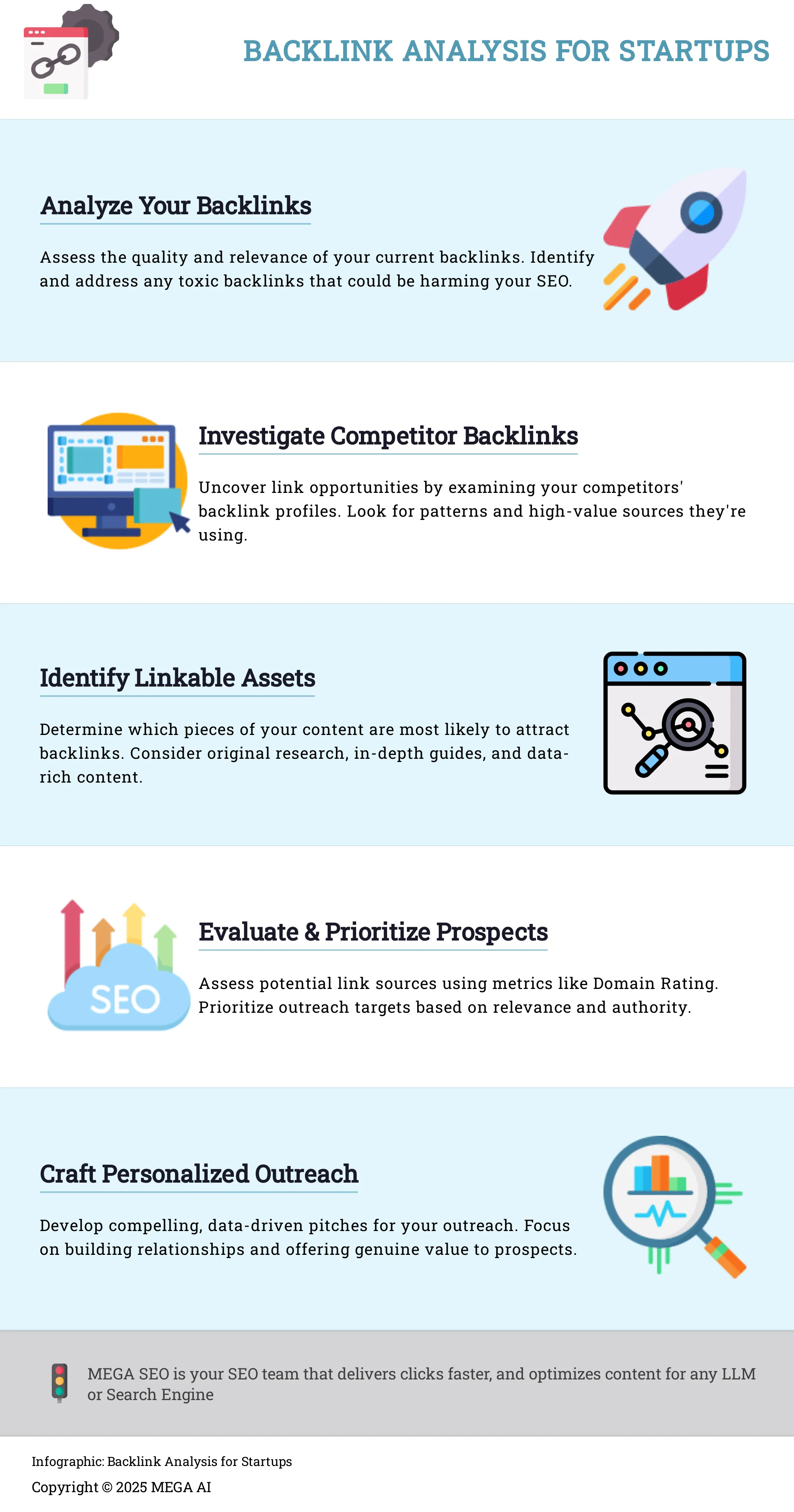
Manually sifting through hundreds or even thousands of links can be a monumental task, and frankly, not the best use of your time. This is where technology lends a helping hand. As the team at BacklinkWorks explains, "AI-powered tools can process vast amounts of data quickly and accurately. Instead of sifting through hundreds of links manually, marketers can rely on AI to analyze link profiles and flag issues or opportunities for improvement." Platforms like MEGA AI leverage these capabilities, offering automated SEO features that can streamline your backlink analysis, helping you make smarter decisions about where to focus your link-building efforts. By understanding your link profile, you can refine your strategy to attract links that truly matter.
Why Link Quality Matters More Than Quantity
When it comes to backlinks, the old saying "quality over quantity" absolutely holds true. It’s tempting to chase a high number of backlinks, believing more is always better. However, search engines are sophisticated; they can tell the difference between a link from a highly respected industry authority and a link from a low-quality, irrelevant site. As the experts at Vazoola point out, "You should focus on the quality of backlinks rather than their quantity because search engines prioritize valuable links over numerous low-quality ones."
Acquiring links from spammy or irrelevant websites can actually harm your SEO efforts rather than help them. In fact, "One major link building mistake to avoid is acquiring backlinks from low authority websites." A single, high-quality backlink from a reputable source that is relevant to your niche can be far more beneficial than dozens of links from questionable sites. Prioritizing quality means focusing on the relevance of the linking site, its authority in your industry, and the naturalness of the link, ensuring each one contributes positively to your site's credibility and search performance.
Key Metrics to Evaluate Backlinks
To determine the quality of a backlink, you need to look at specific metrics that give you clues about its value. One of the most commonly referenced is Domain Rating (DR) or Domain Authority (DA), depending on the tool you use. As Ahrefs explains in their video on backlink analysis, "Domain Rating, or DR, which represents the overall strength of a backlink profile of an entire website." A higher DR generally indicates a more authoritative website, making a link from it more valuable in the eyes of search engines.
Beyond domain-level metrics, consider the relevance of the linking page and the website as a whole to your own content. Is the topic similar? Does the link make sense in context? Screpy highlights that "AI can quickly evaluate the quality, relevance, and authority of backlinks, helping SEO professionals to prioritize valuable links and discard potentially harmful ones." Other factors to consider include the anchor text used for the link (is it natural and relevant?) and the number of other outbound links on the linking page. Understanding these metrics allows you to assess potential link opportunities effectively and build a strong backlink profile.
Choosing the Right Tools for Backlink Analysis
Selecting the right tools for backlink analysis is a bit like choosing the perfect lens for a camera; the right one brings the important details into sharp focus, making your job much easier. With so many options available, it’s helpful to understand what different software can offer. The goal is to find tools that not only provide data but also give you actionable insights to strengthen your link building efforts and overall SEO strategy. Think of these tools as your partners in uncovering hidden opportunities and maintaining a healthy backlink profile, which is essential whether you're a startup trying to grow or a small business aiming to improve your online visibility.
An Overview of Popular Analysis Software
When you start looking into backlink analysis software, you'll find a range of options, many of which are incredibly powerful. Modern tools, especially those enhanced by artificial intelligence, can process vast amounts of data far more efficiently than manual methods ever could. Instead of spending hours sifting through spreadsheets, these platforms can quickly analyze link profiles, highlight potential issues, and identify areas for improvement. You’ve likely heard of names like Ahrefs, SEMrush, or Moz; these are well-known in the industry for providing detailed insights, including competitor backlink data and tracking your own link growth. For startups and small businesses, leveraging such tools can mean saving valuable time and resources while still competing effectively.
Key Advanced Features in Modern Tools
Beyond basic link counting, today’s advanced analysis tools offer features that can significantly refine your link building strategy. AI plays a crucial role here, enabling tools to identify potentially harmful backlinks that could negatively impact your site's ranking, or suggest improvements for your anchor text distribution. Some platforms can even help you discover internal linking opportunities to better distribute link equity across your site. These advanced capabilities, often driven by AI, help you not only find promising link building opportunities but also predict and maximize their long-term value. Regularly tracking your backlink profile with these features allows you to understand the real impact of your efforts and make timely adjustments. For instance, platforms like MEGA AI offer automated SEO features that streamline tasks such as identifying optimization opportunities within your existing content, which complements a strong backlink profile by ensuring your pages are worthy of those valuable links.
How to Assess Your Current Backlink Profile
Reviewing your backlink profile is key for off-page SEO. It’s about understanding link quality and relevance, not just quantity. A thorough assessment shows what’s working, identifies ranking issues, and uncovers new opportunities. Regularly checking link sources helps improve your site's authority. This involves evaluating links, spotting harmful ones, and recognizing patterns. Advanced SEO tools can simplify this, offering a clear overview.
Steps to Evaluate Link Quality and Relevance
When checking your backlinks, prioritize quality over quantity. A few strong, relevant links offer more SEO value than many weak ones. To assess link quality, start by looking at the linking website's authority; tools often provide metrics like Domain Authority. A link from a respected industry site is highly beneficial.
Next, consider topical relevance: does the linking page's content align with yours? For example, a link from a dog training blog to your dog food article is relevant. Also, review anchor text and nearby content for natural topic alignment. Instead of manual sifting, marketers can use AI to analyze link profiles, efficiently processing data to spot issues or opportunities.
How to Identify and Address Toxic Backlinks
Not all backlinks are helpful; some can negatively impact your site's SEO. These 'toxic' backlinks often come from spammy, low-quality, or irrelevant websites. A common mistake is acquiring backlinks from low-authority sites. Regularly tracking your backlinks is crucial for finding these harmful connections.
Look for red flags like sites with little original content, excessive ads, or automated comment links. If you find such links, address them. Spammy backlinks can damage your SEO. You can disavow these links using search engine tools, which tells them to ignore these connections. Use this feature carefully, as incorrect disavowals can also be harmful. Consistent monitoring is key for a healthy backlink profile.
Analyzing Your Backlink Patterns for Insights
Beyond individual link quality, studying overall patterns in your backlink profile offers valuable insights. During your backlink analysis, focus on identifying patterns to learn how competitors get good links and what strategies work for you. For instance, do most high-quality links go to specific content like blog posts or free tools? This shows what content attracts linkers in your niche.
Also, find which of your pages draw the most backlinks. SEO tools often have a 'Best by Links' report, helpful for seeing which pages attract links. This information guides your internal linking and highlights your best 'linkable assets.' Understanding these patterns helps refine your content strategy.
Using Competitor Analysis to Find Link Opportunities
Understanding where your competitors get their backlinks is a smart way to find new opportunities for your own site. It’s like getting a peek into their playbook, allowing you to see which websites already find their content valuable enough to link to. This isn't just about finding a list of sites to contact; it's about dissecting their link building strategy to understand what works in your specific niche. By analyzing their link profiles, you can discover websites that are already linking to similar content, making them prime candidates for your outreach efforts. This approach not only saves you considerable time but also helps you identify proven link sources that are genuinely interested in your industry.
Think of it as learning from those who are already succeeding. If a particular website links to several of your competitors, there's a good chance they might be interested in your content too, especially if you can offer something unique, more comprehensive, or a fresh perspective. This process helps you build a highly targeted list of prospects who are already engaged with your industry and receptive to relevant content. Furthermore, knowing what kind of content attracts links for your competitors can inspire your own content creation efforts. MEGA AI's SEO tools can further streamline this by helping you efficiently gather and analyze competitor backlink data, giving you a clear head start in developing a more effective link building campaign.
How to Find and Evaluate Competitor Links
When you start looking at your competitors' backlinks, your goal is to understand their strategy, not just to count the links. Look for patterns. For instance, if you notice a sudden spike in their link graph, try to investigate what happened around that date. Did they launch a new product, publish a significant piece of content, or perhaps get some valuable press coverage? This kind of backlink analysis helps you decipher how they're acquiring those valuable links.
You can also use reports like "New Referring Domains" to quickly assess the quality of their recent link building efforts. This is a great way to see if they're genuinely earning good links from reputable sources or if they're accumulating low-quality, potentially harmful ones. Focus your energy on identifying the tactics that lead to high-quality placements, as these are the strategies worth considering for your own efforts.
Techniques to Uncover Link Opportunities
One effective technique to uncover specific link opportunities is to filter competitor backlinks by "link type," specifically looking for "content" links. This filter narrows down the results to show you links that are embedded within the body of an article or blog post. These are often high-quality editorial links, which search engines tend to value, and finding these placements can give you a list of authoritative sites to target for your own content.
While some marketers still use search operators to scrape Google for link prospects, this method can often return many irrelevant results or pages that don't actually link out to external sites. A more focused approach, like analyzing competitor backlinks for these editorial placements, is generally more efficient. It helps you pinpoint websites that are actively linking to content similar to yours, making your outreach more targeted and likely to succeed.
Spotting Key Industry Link Trends
As you analyze competitor backlinks, you'll start to notice common patterns in how links are acquired within your industry. These might include consistent guest posting campaigns on specific types of blogs, listings in well-regarded directories, or links from comprehensive resource pages. You might also see links originating from forum discussions, PR activities, strategic redirects, or what appear to be natural editorial placements within relevant articles. Recognizing these link building tactics can significantly inform your own strategy.
Keep in mind that link building strategies are not static; they evolve. The methods a website used to build links successfully a couple of years ago might be completely different from their current approach. Therefore, continuously monitoring competitor activities and broader industry trends will help you adapt and refine your own link building efforts, ensuring you're always using the most effective techniques available to you.
Advanced Ways to Discover Link Opportunities
Alright, so you've taken a good look at your own backlink situation and had a glance at what your competitors are up to. Now, it’s time to explore some more refined ways to find those valuable link opportunities. Going past the usual methods is really important if you want to build a strong backlink profile that genuinely helps your SEO. These advanced approaches do need a bit more careful thought and strategy, but the reward—high-quality, relevant links—can be substantial.
Think of it as venturing off the main highway; the most interesting discoveries often lie on the quieter side roads. We'll explore how to find these less obvious chances, like making the most of broken links or figuring out what makes your content so good that other site owners can't help but link to it. The focus here is on offering real value and making authentic connections, which are fundamental for long-term link building success. For startups and small businesses aiming to grow, getting to grips with these strategies is a game-changer. And if you're using tools to help with your SEO efforts, like those offered by MEGA AI, these insights will guide your automated processes toward the best possible prospects, making your campaigns even smarter.
Mastering Broken Link Building
Broken link building is a tried-and-true method that still works wonders. The idea is simple: you find broken links on other websites, then offer your own relevant content as a replacement. It's a win-win because you're helping the site owner fix an issue while potentially gaining a backlink. A key thing to remember is to avoid acquiring backlinks from low-authority sites; instead, concentrate on genuine outreach and interactions.
To get good at this, first pinpoint authoritative websites in your field. Use tools to scan these sites for dead outbound links. When you find one, see what content it originally linked to. Then, you can either create something even better or find an existing piece of your own content that fits. Your outreach should be polite, clearly explain the broken link, and suggest your resource. This method really shines when you can offer truly helpful content that fills the gap.
Effective Resource Page Link Prospecting
Resource pages are essentially curated lists of useful links on a particular subject. Getting your site listed on relevant ones is a great way to earn quality backlinks, as these pages are designed to direct users to valuable external content. The trick is finding resource pages that match your niche. Try using Google search operators like "your keyword" + "resources" or "your keyword" + "useful links."
When evaluating potential pages, focus on those that are well-kept and on reputable domains. Ahrefs suggests a smart tactic: if your tool allows, filter for links designated as ‘content.’ This helps pinpoint links embedded within substantial text, often indicating higher quality editorial placements. After finding a good prospect, check its existing links to see what kind of resources they feature. Then, send a friendly message explaining why your content would be a great fit for their audience.
How to Identify Your Best Linkable Assets
A linkable asset is content on your site so valuable or unique that others naturally want to link to it. Creating or identifying these is key to effective link building. Consider what types of content usually attract links in your field. You can analyze top pages that get backlinks for competitors; often, these are unique research or in-depth guides.
Look at your own content: do you have original research, detailed guides, free tools, or strong case studies? These are excellent starting points. If not, think about what unique insights you could offer. Maybe conduct a survey, compile industry data, or develop a comprehensive guide. Tools that assist with content creation can be very helpful here. The aim is to produce something genuinely useful that people in your industry will want to reference and share.
How to Evaluate and Prioritize Link Prospects
Once you've gathered a list of potential websites for backlinks, the real work of sifting and sorting begins. It's not enough to just find sites; you need to figure out which ones are truly worth your outreach efforts. In the world of link building, quality trumps quantity every single time. A handful of strong, relevant backlinks from authoritative sites will do more for your SEO performance than dozens of low-quality, irrelevant ones. This means establishing a clear, systematic process for evaluating each prospect and prioritizing your targets is crucial.
Think of it like this: your time and resources are valuable. You want to invest them where they'll yield the best return. By carefully assessing potential link sources, you can focus your energy on opportunities that are most likely to result in high-value backlinks. This strategic approach not only improves your chances of success but also helps you build a robust and natural backlink profile that search engines will recognize and reward. It’s about working smarter, not just harder, to ensure your link building contributes meaningfully to your overall digital marketing goals. Let's explore how you can refine this evaluation and prioritization process.
Using Metrics to Assess Potential Link Sources
When you're looking at a potential website to get a link from, certain metrics can give you a good idea of its authority and trustworthiness. Think of metrics like Domain Rating (DR), which represents the overall strength of a backlink profile of an entire website. Another useful one is the URL Rating (UR), a metric that represents how strong a backlink profile of a target URL is. These numbers help you quickly gauge if a site carries enough weight to pass on valuable link equity.
Manually sifting through hundreds of potential links and their metrics can be overwhelming. This is where AI-powered tools can be incredibly helpful. Instead of sifting through hundreds of links manually, marketers can rely on AI to analyze link profiles and flag issues or opportunities for improvement, processing vast amounts of data quickly and accurately. This allows you to focus your energy on the most promising prospects without getting bogged down in manual analysis.
Smart Ways to Prioritize Outreach Targets
With your list of potential link sources and their metrics, it's time to prioritize. A great starting point is to look at what your competitors are doing. When you analyze competitor backlinks, focus your energy on identifying patterns to decipher how your competitors are getting their good links. Are they frequently featured on certain types of blogs, or do they get a lot of links from resource pages? Understanding their strategies can reveal high-value targets you might have missed.
It's also wise to use a variety of link-building tactics. Don't put all your eggs in one basket by only pursuing one type of link. Aim to build links to various pages across your site, not just your homepage. This approach helps create a more robust and natural-looking backlink profile, which search engines tend to favor. This diversity in your link-building efforts contributes to a healthier overall SEO strategy.
Filtering for Top-Tier Editorial Links
Your goal should be to secure editorial links – that is, links given naturally by other websites because your content is valuable and relevant. These are the gold standard. When evaluating a site, you can take a quick peek at the referring domain alongside the domain rating and you’ll have a rough idea of whether the links are good or not. A site with strong DR and links from other reputable sources is generally a good sign.
Ultimately, the context of the link matters immensely. A link from a highly relevant article on an authoritative site in your niche is far more valuable than a random link from an unrelated site, even if that site has a high DR. Building links in the right context strengthens your SEO efforts and makes your website more authoritative and trustworthy in the eyes of search engines and users. This careful filtering ensures your outreach efforts are focused on opportunities that will truly make a difference.
Creating Outreach Strategies That Get Results
Once you've found promising link prospects, effective outreach is the next crucial step. Many link-building efforts stumble here because generic emails often get ignored. To achieve results, your outreach must be thoughtful, personalized, and clearly offer value. It’s about showing you’ve done your homework and have something genuinely useful for them and their audience.
Personalizing Your Outreach, Even at Scale
Personalizing every outreach email might seem challenging when aiming for scale, but it's what makes your message stand out. Recipients easily spot generic requests. Small, thoughtful touches—like mentioning a recent article they wrote or a point from their social media—show you've done your research.
The goal is balancing efficiency with authenticity. You don't need unique essays for everyone; prioritize genuine interactions. As Clickass highlights, "Manual outreach, engaging in genuine interactions...are key elements." Use templates as a base, but weave in specifics relevant to the prospect. This respect improves response rates. While tools can help you manage your outreach efforts, that personal element is vital.
How to Create Compelling, Data-Driven Pitches
A strong outreach pitch is more than a link request; it's a value proposition. Data is crucial here. Don't just say your article is great; demonstrate its relevance and benefit to their audience. Maybe your content fills an information gap, offers fresh statistics, or presents a novel viewpoint.
AI-driven tools can significantly aid this. Backlink Works notes, "AI-powered tools can process vast amounts of data quickly...marketers can rely on AI to analyze link profiles..." Imagine using an SEO analysis tool to find their popular article linking to an old resource. You can then pitch your up-to-date content as the ideal replacement. This data-informed approach makes your outreach compelling.
Building Relationships with Strategic Communication
View link building less as one-time requests and more as building lasting professional relationships. When outreach focuses on mutual value, you're doing more than asking for a link. Consider offering to share their content, proposing a guest article, or engaging with their work thoughtfully before mentioning a link.
Strategic communication underpins this. Emphasize how a connection can be mutually beneficial. Outreach Monks states, "Building links in the right context strengthens your SEO efforts..." When you establish trust, people are more inclined to link to your content, potentially leading to future collaborations. Each interaction can be a step toward a valuable professional connection, often requiring consistent engagement to nurture.
Putting Your Link Building Campaign into Action
With your analysis complete and opportunities identified, it's time to move your link building campaign from theory to practice. This phase is all about execution, monitoring, and refinement to ensure your efforts yield the best possible results.
Setting Up Systems to Track Your Progress
Once your link building efforts are underway, consistent monitoring is essential. Regularly tracking your backlinks helps you understand which strategies are effective and where adjustments are needed. Think of it as a health check for your link profile. Various SEO platforms offer detailed backlink data, showing new links acquired, lost links, and linking domain authority. Setting up alerts for these changes can keep you informed. This proactive approach allows you to quickly address issues or capitalize on positive developments, keeping your efforts on track for optimal results.
How to Measure Real Impact and ROI
Measuring the true impact of your link building means looking beyond just the number of links. You want to understand the return on your investment (ROI). Modern tools, especially those powered by AI, can process vast amounts of data to provide this clarity. Instead of manually sifting through links, these systems analyze link profiles, flag important changes, and identify opportunities. By integrating such advanced analytics, you can better predict the long-term value of your links. Focus on metrics like referral traffic, search ranking improvements for target keywords, and ultimately, conversions. This view demonstrates the real business value of your link building.
Adjusting Your Strategy Based on Performance Data
The data from tracking and measuring ROI is invaluable for refining your approach. Link building isn't a one-time task; it requires ongoing adjustments. If certain tactics aren't delivering, it's time to pivot. For example, guest posting on niche blogs might yield higher quality links than directory submissions for your industry. Aim to diversify your link-building tactics to build connections to various pages, creating a robust and natural backlink profile. Building links in the right context, where they add value and align with the linking page's content, significantly strengthens your SEO. This makes your website appear more authoritative to search engines and users.
Fitting Backlink Analysis into Your SEO Strategy
Integrating backlink analysis into your broader SEO strategy isn't just a good idea; it's essential for sustainable growth. It ensures your link building efforts are purposeful, aligned with your content, and adaptable to the ever-changing landscape of search. By understanding how backlinks fit into the bigger picture, you can make more informed decisions and achieve better results. This approach helps you build a resilient online presence that consistently performs.
Aligning Link Building with Your Content Plan
Your link building efforts and content plan should work hand-in-hand. Think of it this way: great content gives people a reason to link to you. A common misstep is acquiring backlinks from websites that don't carry much authority or relevance to your own. Instead, focus on creating truly compelling content that earns links organically. For instance, unique research studies and super actionable guides on significant topics tend to attract a lot of links because they offer genuine value. When you're planning your content, consider what unique insights or in-depth information you can provide. This makes your link building more effective because you're offering something genuinely worth referencing and helps build a strong, authoritative profile over time.
Balancing On-Page and Off-Page SEO Efforts
A strong SEO strategy needs both on-page optimization and off-page efforts like backlink building; these two elements truly support each other. High-quality backlinks pointing to well-optimized pages send strong signals to search engines about your content's relevance and authority. Building links within the right context really strengthens your SEO efforts, making your website appear more authoritative to both search engines and users. Remember that your on-page SEO—things like keyword usage, content structure, and site speed—lays the foundation. Our SEO tools can help ensure this foundation is solid, allowing your off-page work to have maximum impact. Off-page SEO, particularly link building, then amplifies the impact of that groundwork, creating a holistic approach where every piece works together.
How to Adapt to Search Algorithm Changes
Search engine algorithms are always evolving, and your link building strategy needs to keep pace. The methods for building and earning links can change significantly over time, so what worked a couple of years ago might not be as effective today. This is why regularly tracking your backlinks is so important; it helps you understand the impact of your strategies and see what's currently resonating with search engines and what adjustments might be needed. Stay informed about major algorithm updates and be prepared to adjust your tactics. For example, if an update devalues certain types of links, you'll want to shift your focus. The goal is to build a natural, diverse, and high-quality link profile that can withstand these changes and continue to support your site's visibility.
Using Statistics and Data to Earn More Backlinks
One of the most effective ways to attract high-quality backlinks is by becoming a source of valuable information. When you publish original data, insightful statistics, or compelling visualizations, other websites are more likely to reference and link back to your content. This approach not only builds your backlink profile but also establishes your brand as an authority in your niche. Think about the kind of content that makes you stop and take notice; often, it's data-driven and offers a fresh perspective. This strategy works because you're providing genuine value, making it a natural choice for others to cite you as a credible source.
Creating this type of content might seem like a big undertaking, but it doesn’t always require a massive research budget or a dedicated data science team. You can leverage your own customer data (anonymously and ethically, of course), conduct simple surveys using accessible tools, or curate publicly available information into a new, insightful format. The key is to present information that is fresh, relevant to your audience, and easy for others to cite. Platforms like MEGA AI can even assist in generating content around your findings, helping you articulate your data in a compelling way that resonates with readers and encourages shares. By focusing on quality and originality, you create assets that work for you long after they're published.
Developing Original Research and Data-Rich Content
Publishing original research is a powerful strategy for earning backlinks. When you're the primary source of new data or a unique analysis, other sites in your industry will naturally link to your findings when they discuss related topics. As the team at Ahrefs shared, "Half of our most linked to pages are unique research studies." This really underscores how statistics and in-depth, actionable guides resonate well, particularly within the SEO and marketing space.
To get started, consider what unique insights your business can offer. Could you survey your customers about their preferences or common challenges they face? Can you analyze trends from your own business data, like sales patterns or customer behavior? Even compiling and analyzing publicly available data in a novel way can result in a highly linkable asset. Once you have your research, present it clearly, perhaps with charts and concise summaries, making it easy for others to understand and reference your work.
Designing Infographics That Attract Links
Infographics are a fantastic way to make complex data digestible and highly shareable, which in turn can attract backlinks. People are often more willing to link to a visually appealing infographic that clearly explains a concept or presents statistics than to a dense block of text. Think of them as the visual summary of your data-rich content, making your key points accessible at a glance.
Creating valuable content is essential for link acquisition, and infographics are a prime example of this. You can design infographics that summarize key findings from your original research, illustrate a step-by-step process relevant to your industry, or compare different products or services. The more useful and well-designed your infographic is, the more likely other websites will embed it in their own content, providing a valuable backlink to your site as the original source.
Showcasing Industry Trends with Your Data
Another effective method for earning backlinks is to use data to showcase and interpret industry trends. By analyzing data and presenting your insights on where your industry is heading, you position your business as a forward-thinking leader. This type of content is often referenced by journalists, bloggers, and other businesses looking to understand the current landscape and make informed decisions.
You can gather data from industry reports, public databases, or your own internal analytics to identify emerging patterns. Present these trends with clear explanations and, if possible, visualizations to make them more impactful. AI tools can play a significant role here; as Screpy points out, "By incorporating AI tools into your SEO strategy, you’re set to not only find the best link building opportunities but also to predict and maximize their long-term value." Tools like MEGA AI's Maintenance Agent can also help keep your trend reports current by identifying new information to add, ensuring your content remains relevant and link-worthy over time.
Related Articles
- Basics of Link Building: Definition, Importance, and Types of Links - MEGA SEO | Blog
- Link Building Strategies: The Complete Guide
- Comprehensive Backlink Audit: A Step-by-Step Guide
- Mega Backlink Strategy: The Ultimate Guide (2024)
- How to Use Ahrefs for Competitor Analysis: Boost Rankings
Frequently Asked Questions
What's the first thing I should do when I start looking at my website's backlinks? Think of it like a health check for your site. You'll want to get a clear picture of who is currently linking to you. This means looking at the quality and relevance of those links, not just how many you have. Understanding your starting point helps you see what's working well and where you might need to make some improvements.
Why is it better to have a few really good backlinks than lots of mediocre ones? Search engines are pretty smart these days and can tell when a link comes from a respected, relevant website versus one that's low-quality or unrelated to your business. A single strong link from an authoritative source in your field can do much more for your site's credibility and search ranking than a pile of links from sites that don't really add value.
How can I find out what kinds of websites are linking to my competitors? Looking at your competitors' backlinks is a great way to find potential link opportunities for your own site. You can see which websites already link to content similar to yours. This gives you a good idea of who might be interested in what you have to offer and helps you understand what link-building tactics are effective in your specific industry.
I've heard about "toxic" backlinks. How do I know if I have any and what should I do? Toxic backlinks usually come from spammy, irrelevant, or very low-authority websites and can actually hurt your site's performance. You'll want to regularly check your backlink profile for links that look suspicious or unnatural. If you find links that you believe are harmful, search engines provide tools to disavow them, which essentially tells them to ignore those links.
Beyond just getting more links, how does backlink analysis fit into my overall SEO plan? Backlink analysis is a key piece of your broader SEO puzzle. It helps ensure your link-building efforts are aligned with your content strategy, meaning you're earning links to pages that are well-optimized and valuable. It’s about creating a balance where your on-page SEO (like great content and site structure) and your off-page SEO (like quality backlinks) work together to improve your site's authority and visibility.